
Review · ROME
Rome: Pasta Cooking Class, Dinner & Wine in Authentic Restaurant
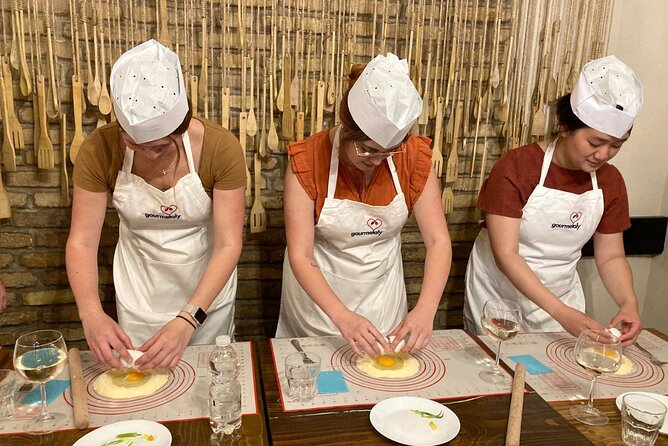
The best part of this evening is that you do not merely watch a chef toss pasta. You work with fresh ingredients, prepare sauces, fry a Roman specialty, and sit down to eat what you made in a 12th-century restaurant in the Jewish Ghetto. Chef Gabriele teaches the kitchen craft, while guides such as Lisa, Anastasia, Daniela, and Benedetta help with translation and local stories.
I like the small maximum of 10 people, which gives the class a personal feel, and I like that it includes a full dinner rather than a token tasting. The cacio e pepe, amatriciana, seasonal fried appetizer, ricotta and sour cherry tart, wine, water, apron, and cookbook make this feel like a complete evening.
The main consideration is the menu’s use of gluten, dairy, eggs, and other common allergens. The class can welcome vegetarians and vegans, but special food needs cannot be guaranteed, and this is not a kosher cooking class.
What makes this Roman cooking class worth considering
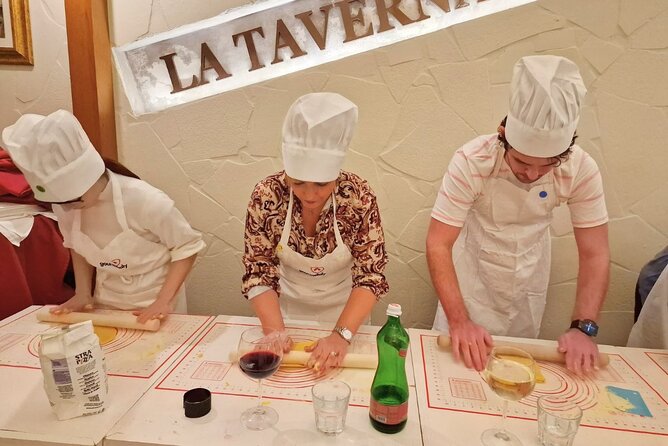
- A real hands-on pasta lesson: You make homemade pasta from scratch, prepare sauces, and cook under the chef’s direction.
- A 12th-century setting: The class takes place in an ancient eatery on Via del Portico d’Ottavia, in Rome’s Jewish Ghetto.
- More than one pasta style: You work with Roman favorites including cacio e pepe and amatriciana, plus arrabbiata for those avoiding pork.
- Seasonal Roman fried food: Summer brings stuffed zucchini flowers with mozzarella and anchovy. Winter brings fried artichoke.
- A guide who bridges food and place: Your host translates the chef and shares stories about the Jewish district and its food traditions.
- Dinner, drinks, and souvenirs included: Wine and water flow during the class, and you leave with a cotton apron and cookbook.
Cooking Roman pasta in the Jewish Ghetto
Meet at Piazza Mattei, one of Rome’s prettiest small squares, before heading into the nearby restaurant. The location matters. This is not a cooking school in a generic commercial district. You are working in the Jewish Ghetto, an area with its own food customs, long story, and strong connection to Roman cooking.
Your host stays with you throughout the class. That is useful because the chef and the guide have different jobs. Chef Gabriele leads the cooking, while the guide translates his instructions and adds context about the neighborhood, its food, and local traditions. Past classes have featured Lisa, Anastasia, Daniela, Benedetta, and Eleanor, so the exact guide depends on the date.
The guides have also helped make birthdays and family evenings feel personal. If you are marking a special occasion, tell the operator when you book, though the supplied details do not promise a specific celebration service.
The class runs for about two and a half hours. That is long enough for genuine participation, but short enough to fit into an evening without taking over your entire day. The food is intended to cover dinner, so you do not need to schedule a separate meal afterward.
More Pasta Classes with Wine in Rome
- Rome: Pasta & Tiramisu Class with Fine Wine by the Vatican
★ 4.9 · 4,852 reviews - Rome: Pasta Making Class with Wine, Limoncello, and Dessert
★ 4.9 · 3,177 reviews - Rome Cooking Class: Make Pasta and 3 Spritz Cocktails
★ 5.0 · 2,937 reviews
A historic restaurant instead of a classroom
The cooking takes place in an ancient eatery inside a building dating to the 12th century. The restaurant has also appeared in Stanley Tucci’s Searching for Italy, a detail that will appeal to anyone who enjoys seeing familiar food places on screen.
The setting gives the lesson more character than a purpose-built classroom. You are surrounded by an old Roman district while learning dishes that are closely tied to the city. At the same time, an old restaurant is not necessarily designed like a modern teaching kitchen. Expect a working food venue rather than a polished culinary studio.
You should dress for an active evening. The class operates in all weather, and the meeting point is outdoors in Piazza Mattei before you enter the restaurant. The activity ends back at the starting point, with no hotel pickup or drop-off.
Making pasta from scratch with Chef Gabriele
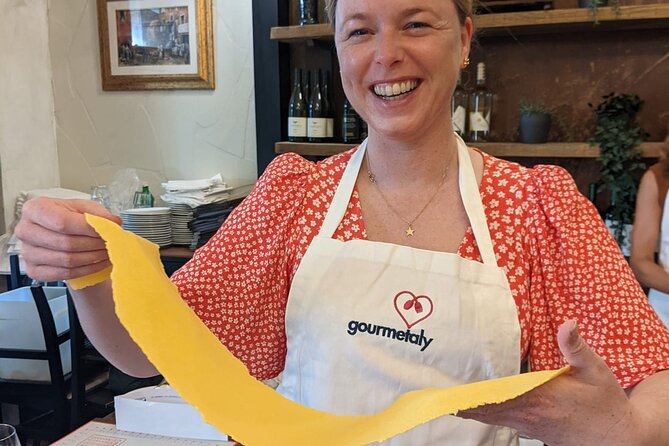
Chef Gabriele learned to cook with his grandmother, and the class centers on traditional Roman methods rather than restaurant tricks that are hard to repeat at home. You prepare pasta by hand, work with fresh ingredients, and learn how to bring the dough and sauces together.
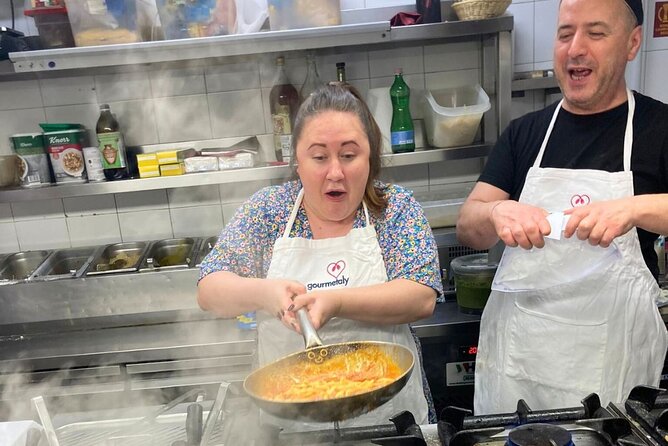
The important lesson is timing. Roman pasta looks simple on the plate, but dishes such as cacio e pepe depend on technique. Pecorino Romano and black pepper form the base, and the sauce must come together without turning lumpy or dry. You get to try the cooking under supervision rather than simply watching a demonstration.
Amatriciana gives you a second Roman classic, built around tomato, pecorino Romano, and guanciale. For people who do not eat pork, the menu also includes tonnarelli all’arrabbiata, a vegetarian sauce of tomato, chili, and parsley. The class therefore offers some flexibility, though you should not assume every dietary request can be changed.
One appealing feature is the chef’s personality. The class is meant to be social and light, not a silent technical course. Past sessions have included singing, jokes, and plenty of interaction with Chef Gabriele. That can make the evening more memorable, though it may not suit someone seeking a formal, quiet cooking lesson.
The seasonal fritto Romano course
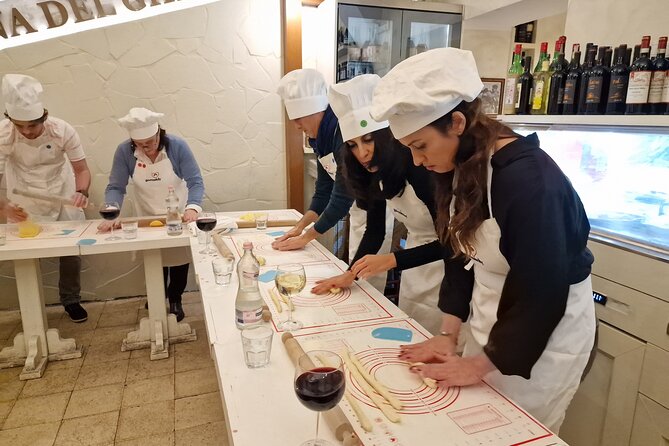
Before the pasta, you prepare a Roman fried specialty. In summer, that means a stuffed zucchini flower with mozzarella and anchovy. In winter, it is fried artichoke.
This seasonal switch is a good touch. It follows what is available rather than forcing the same plate all year. The zucchini flower is delicate and distinctly Roman, while the artichoke connects with the Jewish Ghetto’s well-known food traditions.
The fried course also adds a useful skill to the evening. You clean and prepare the vegetables before cooking them, so you are not just eating a finished appetizer placed in front of you. Keep in mind that the anchovy in the summer version makes it unsuitable for some pescatarians and for anyone avoiding fish. Ask about the current seasonal dish if that matters to you.
Same flour, a different shape to roll:
- 3 in 1 Cooking Class near Navona: Fettuccine, Ravioli & Tiramisu
★ 5.0 · 7,376 reviews - Rome: 3-in-1 Fettuccine, Ravioli, and Tiramisu Cooking Class
★ 4.9 · 2,704 reviews - Rome: Fettuccine Pasta Cooking Class in Rome’s City Center
★ 4.8 · 2,414 reviews - Learn to Make Pasta & Tiramisu with Wine and Limoncello Included
★ 5.0 · 2,345 reviews
Two sauces, several pasta plates
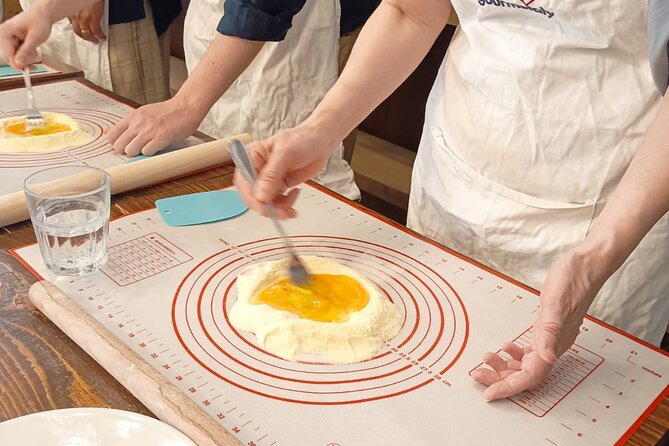
The menu is more generous than the basic idea of one bowl of pasta. You prepare two sauces from fresh ingredients and work toward several traditional Roman flavors.
Cacio e pepe is the cleanest expression of the city’s pasta style: pecorino Romano and black pepper, with no long ingredient list to hide mistakes. Amatriciana brings tomato and guanciale for a fuller, more savory plate. Arrabbiata adds chili and parsley and serves as the main option for no-pork eaters.
The exact way the dishes are shared may depend on the class setup, but the stated menu includes homemade pasta with cacio e pepe and amatriciana, along with tonnarelli all’arrabbiata. You should expect to taste the dishes you help create at the table afterward.
This is where the class offers good value. You are not paying just for a recipe card or a chef’s talk. You are receiving instruction, food preparation, a sit-down meal, drinks, and a chance to repeat the techniques at home.
Dinner at the table, with wine along the way
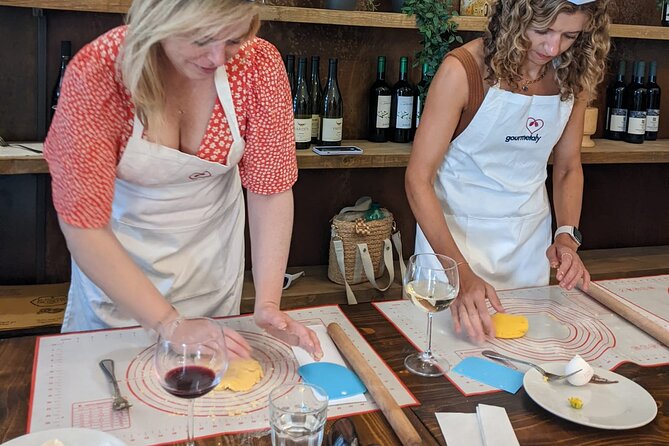
After the kitchen work, you sit down to eat your creations. Wine and water are served throughout the class, not only with the final meal. That helps the evening feel like a Roman dinner rather than a rushed workshop.
The dessert is torta di ricotta e visciole, a ricotta cheesecake with black sour cherry jam. It is described as a tasting portion, so do not expect a large dessert course. It is still a fitting end to the meal, especially because ricotta and sour cherry are closely linked with Roman Jewish baking.
A free-flowing wine service is included, but the information does not specify the wine selection. If you do not drink alcohol, water is available. Bottled water is also included.
The portion of food should be enough to cover dinner. Still, the tour excludes additional food outside the planned menu, so someone with a very large appetite may want to keep expectations sensible. You are attending a cooking class with dinner, not booking a multi-course fine-dining experience.
A group size that keeps the class personal
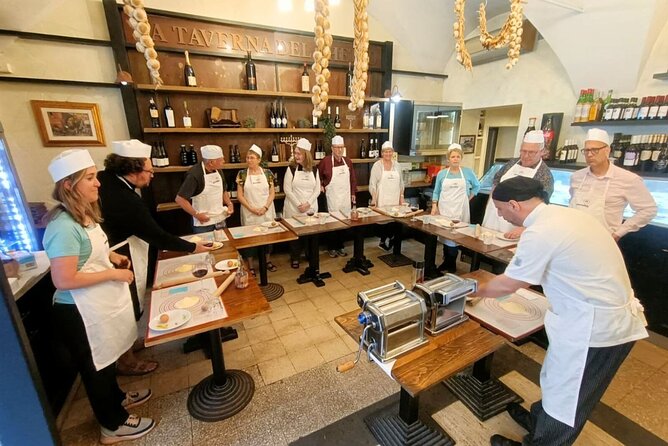
The class caps participation at 10 people. That is one of its strongest practical features. In a large cooking group, you can end up watching from the edge while the chef handles the important steps. With 10 or fewer, you have a better chance to handle the dough, ask questions, and receive direct help.
Some sessions are especially small. One evening had only two couples, which created an unusually personal experience. You should not count on that number, but the 10-person limit still keeps the format manageable.
The group setting also helps if you are visiting Rome alone or as a couple. Cooking puts people at the same table quickly, and the shared meal gives you a natural way to meet others. Families can join, too. Children are welcome, though parents should decide whether their child will enjoy food preparation and a two-and-a-half-hour evening format.
The class is offered in English, with a guide assisting in translation. That setup is helpful when the chef’s instructions need to move quickly between demonstration and practice.
What the price includes at $104.25
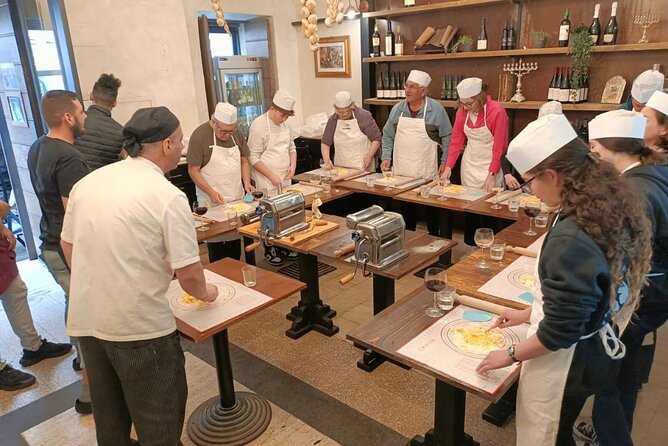
At $104.25 per person, this is not the cheapest way to eat pasta in Rome. You can find a plate of cacio e pepe for far less. The comparison changes when you count what is included: hands-on instruction, all ingredients, cooking equipment, seasonal fried food, several pasta preparations, dessert, wine, water, dinner, a cotton apron, and a cookbook.
You also receive local orientation in the Jewish Ghetto through the host’s stories and explanations. That neighborhood context gives the meal more meaning than a cooking lesson held anywhere in the city.
The value is strongest if you want an activity as well as food. If your main goal is simply to eat excellent pasta, spend the money at a restaurant instead. If you want to learn a few dishes, meet people, and make dinner part of the evening’s entertainment, the price is easier to justify.
The cookbook and restaurant guide add a practical bonus. You can use the recipes after returning home, and the apron is a useful souvenir rather than another small trinket destined for a drawer.
Dietary needs and important limits
Vegetarians are welcome, and the arrabbiata provides a vegetarian pasta option. The menu also includes pork in the amatriciana, and the summer fried zucchini flower contains anchovy. If you avoid pork or fish, tell the host before cooking and rely on the dishes that suit your diet.
The class is described as suitable for vegans, but the menu includes pecorino, mozzarella, ricotta, eggs, and other animal products. Because special food requirements cannot be guaranteed, a vegan should confirm the arrangement before booking rather than assume every listed dish can be replaced.
Common allergens may be present, including milk, eggs, soya, mustard, nuts, and gluten. The class is not recommended for anyone allergic to gluten. It is also not kosher, despite taking place in Rome’s Jewish Ghetto.
These are not minor details. The cooking is built around pasta, cheese, and fried food, so this is a poor match for serious allergies or strict dietary rules. Contact the operator before booking if you have a health condition that affects what you can eat.
Who should book this evening
I would choose this class if you want to combine a meal with a real activity. It suits couples, families, solo visitors, and small groups who enjoy cooking and conversation more than a formal restaurant night.
It is especially good for:
- First-time visitors who want an introduction to Roman food and the Jewish Ghetto
- Families with children who can take part in a kitchen activity
- People who want to learn repeatable pasta recipes
- Anyone interested in local food traditions and neighborhood stories
- Couples looking for a shared evening rather than a passive dinner
- Diners who appreciate wine served during the class
I would skip it if you dislike group activities, cannot eat gluten, require a strictly kosher meal, or want a carefully controlled menu for serious allergies. It also may not suit you if you already have several food-focused tours planned and would rather spend the evening at a restaurant.
The experience is best booked well ahead. It averages about 86 days of advance booking, which suggests that popular dates can fill before your Rome trip is close. Free cancellation is available until 24 hours before the start time, but changes or cancellations inside that window are not refunded.
Should you book this Roman pasta class?
Book it if you want to learn by doing, eat a full Roman dinner, and spend time in a historic part of the city. The combination of Chef Gabriele’s hands-on teaching, an English-speaking guide, a maximum of 10 participants, seasonal fried food, wine, and dessert gives the evening more substance than a basic pasta demonstration.
The strongest reason to choose it is the balance between kitchen work and place. You learn cacio e pepe and amatriciana, but you also hear about the Jewish Ghetto and its food culture. At $104.25, it is a fair choice for an activity that replaces dinner and leaves you with recipes and an apron.
Check the allergy and dietary details first. If the menu works for you, this is a warm, social way to get beyond Rome’s famous sights and into the food that locals actually put on the table.
FAQ
Where does the cooking class meet?
Meet at Piazza Mattei, near Via del Portico d’Ottavia in Rome’s Jewish Ghetto. The listed starting address is Via del Portico d’Ottavia, 8, 00186 Rome.
How long does the experience last?
The class lasts approximately two hours and 30 minutes. It ends back at the meeting point.
How many people can join the class?
The maximum group size is 10 participants.
Is the class offered in English?
Yes. The experience is offered in English, and the host helps translate the chef’s instructions.
What food is included?
The meal includes homemade pasta, cacio e pepe, amatriciana, vegetarian arrabbiata, a seasonal fried appetizer, and ricotta and sour cherry tart. The seasonal appetizer is fried zucchini flower in summer or fried artichoke in winter.
Are wine and water included?
Yes. Italian wine and water are served throughout the cooking class. Bottled water is also included.
Can vegetarians, vegans, and children join?
Children are welcome, and vegetarians and vegans can join. Special food requirements cannot be guaranteed, so you should confirm your needs before booking.
Is the class kosher or suitable for gluten allergies?
No. The class is not kosher and is not recommended for people allergic to gluten. Milk, eggs, soya, mustard, nuts, and other allergens may be present.
More Pasta Classes with Dinner in Rome
- Pasta Making & Wine Tasting with Dinner in Frascati from Rome
★ 5.0 · 1,326 reviews - Rome: Pasta Making with Wine Tasting and Dinner in Frascati
★ 4.9 · 979 reviews - Pasta&Tiramisu Workshop: Craft Your Dinner with Free Flowing Wine
★ 5.0 · 121 reviews - Gnocchi and meatballs | Cooking class and dinner at my house in Rome
★ 5.0 · 7 reviews
Fresh off the board around Rome
- Spritz and Pasta! Spritz, Fettuccine & Tiramisù★ 5.0 · 2 reviews
- Trastevere Food Tour with Pasta-Making Class★ 5.0 · 5 reviews
- Rome: Pasta and tiramisu class with wine pairing at Come Na Vorta★ 5.0 · 30 reviews
- Top Class in Fettuccine, Ravioli, and Tiramisu★ 5.0 · 7 reviews
- Traditional Pasta Cooking Class with Tiramisu Small Group★ 5.0 · 7 reviews
- The Pasta Factory Class★ 4.5 · 21 reviews
- The Original Fettuccine Alfredo Experiences in Roma★ 4.5 · 38 reviews
- Private 4 Roman Pastas Tasting Tour in Rome★ 5.0 · 6 reviews
Pasta Classes with Wine, class by class.
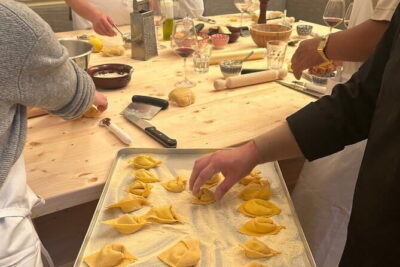

Pasta & Tiramisu Class with Fine Wine by the Vatican
Read our review →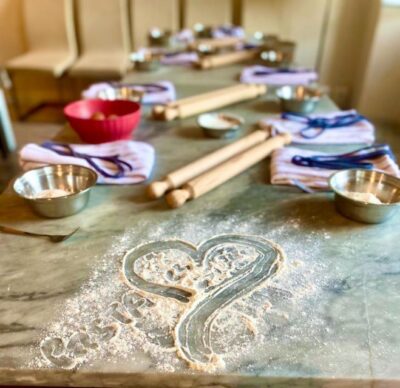
Pasta Making Class with Wine, Limoncello, and Dessert
Read our review →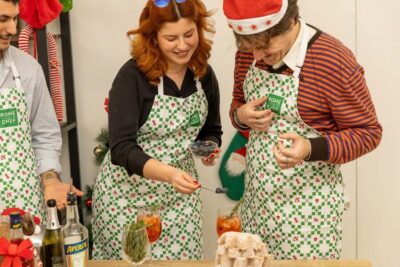
Rome Cooking Class: Make Pasta and 3 Spritz Cocktails
Read our review →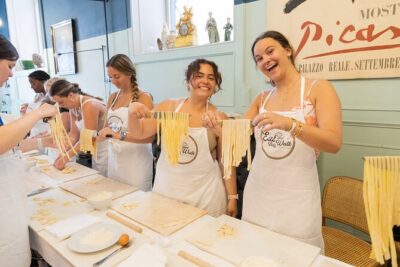
Learn to Make Pasta & Tiramisu with Wine and Limoncello Included
Read our review →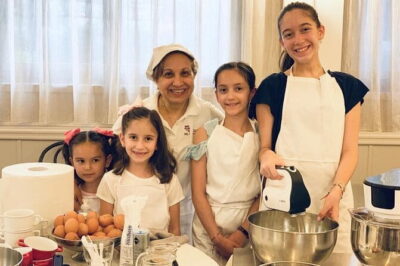
Cooking Class Pasta & Tiramisu Making Unlimited Wine
Read our review →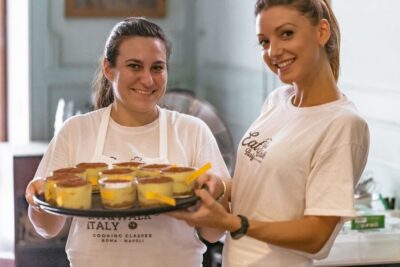
Fettuccine & Tiramisù: Cooking Class with Wine & Limoncello
Read our review →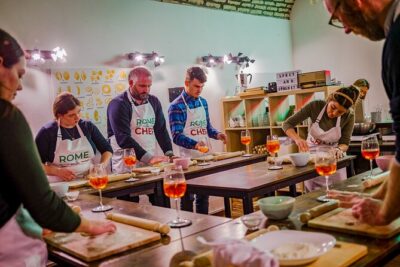
Pasta Cooking Class Near the Colosseum with 3 Spritz Cocktails
Read our review →Lists this class appears in