
Review · AREZZO
Traditional Tuscan Pasta & Tiramisu Masterclass in Arezzo
The best part of this Arezzo cooking class is that you do not just watch someone twirl pasta. You work with your hands in a local home, beginning with an Italian aperitivo before making pici, potato tortelli, and tiramisu. The small group, capped at six, keeps the lesson personal.
I like the direct link to family cooking, especially the use of local ingredients from the garden and the chance to roll pasta in the traditional way. I also like that the meal, local wine, water, and coffee are included, so the class ends around a shared table rather than with a rushed goodbye. The main consideration is the price, $177.52 per person, which is a serious spend for three hours.
At a glance
- Cook in a local home: Your host welcomes you into a family setting rather than a restaurant kitchen.
- Make three Italian classics: The menu includes pici with garlic sauce, potato tortelli, and tiramisu.
- Start with an aperitivo: The opening drink and snacks give the class a relaxed Italian rhythm.
- Keep the group small: A maximum of six people should allow more hands-on time and easier questions.
- Eat what you prepare: Wine, water, and coffee are included with the finished meal.
- Meet in central Arezzo: The class begins and ends at Via Cavour in Arezzo and is near public transportation.
Why this Arezzo class feels different
Many cooking classes put you at a long counter while an instructor performs the important steps. This one is built around a home kitchen and family recipes. That matters because Italian cooking is often less about a fixed formula and more about feel: the texture of dough, the amount of filling, and the point at which a sauce is ready.
Your host welcomes you as part of the family, according to the way the class is presented. That does not mean you should expect a formal restaurant lesson with printed theory or a professional kitchen setup. Instead, you can expect a social, hands-on session where the cooking and the conversation share equal space.
The strongest personal touches come through in the hosts connected with the class. Alfredo and Orlanda have welcomed cooks into their home and used ingredients from their garden. Dina and her family have also hosted the experience, helping people settle in before they begin. Since different bookings may involve different hosts, the exact personality of the afternoon can vary, but the family-home format is central to the experience.
The class has a 4.8 rating from six reviews. That is a very good sign, but the sample is small, so I would treat it as encouragement rather than a guarantee that every session will feel identical.
More Tiramisu Classes in Italy:
- 3 in 1 Cooking Class near Navona: Fettuccine, Ravioli & Tiramisu
★ 5.0 · 7,376 reviews - Florence: Pasta & Tiramisu Cooking Class with Unlimited Wine
★ 4.9 · 6,708 reviews - Rome: Pasta & Tiramisu Class with Fine Wine by the Vatican
★ 4.9 · 4,852 reviews
Starting with an Italian aperitivo
The class opens with an Italian aperitivo. This is a smart choice. You get a chance to settle into the home, meet the cook and the other people in your group, and ease into the evening before flour reaches the work surface.
An aperitivo also gives the class a more natural pace. You are not immediately asked to perform a cooking task while still finding your way to the meeting point. Instead, the opening creates a little breathing room and sets up the meal to come.
The exact aperitivo selections are not specified, so you should not book this expecting a particular drink or list of snacks. The confirmed inclusions are local wine, water, and coffee with the meal. If you have dietary needs, ask about them before booking, since the published information does not give ingredient substitutions.
Making pici, Tuscany’s rustic noodles
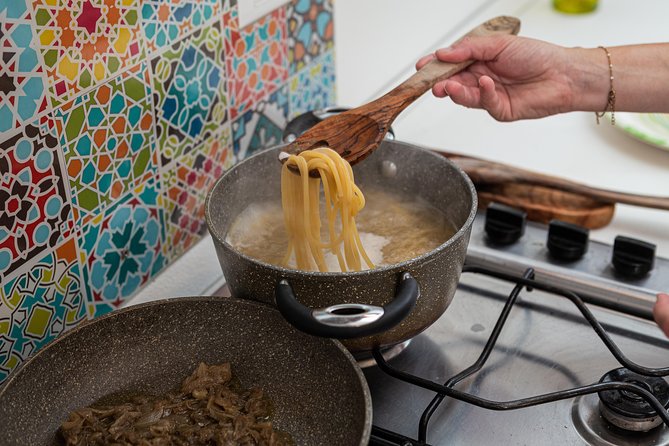
Pici is the first main dish listed, served with a garlic sauce. These thick, hand-rolled noodles are a fitting choice for a Tuscan class because they are rustic, simple, and shaped by hand rather than produced with a pasta machine.
You will likely spend time rolling the dough into long strands. The point is not perfect uniformity. Pici has a handmade look, and that is part of its charm. One of the hosts’ sessions included traditional pasta rolling, which made the lesson both useful and fun. You can expect to learn through doing, not just through watching.
The garlic sauce keeps the dish focused on the pasta. With a short ingredient list, the dough and its texture matter. This is the kind of recipe you can repeat at home without needing specialist equipment or a long shopping list.
I especially like pici for visitors who want a connection to Tuscany rather than a generic pasta demonstration. You are learning a dish tied to the region, and the simple preparation gives you a better chance of remembering the method after you leave Arezzo.
Shaping potato tortelli
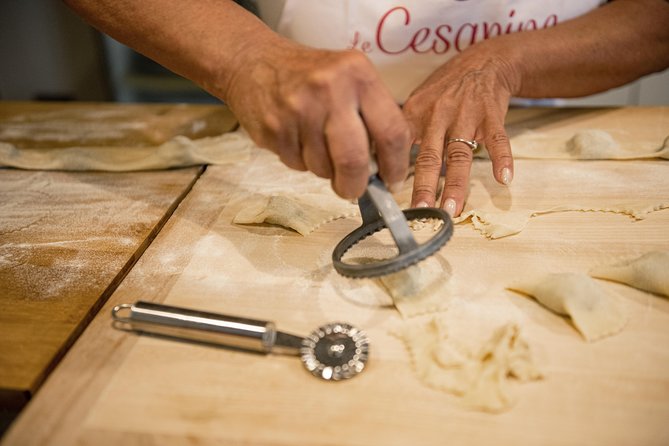
The second main is potato tortelli. Unlike pici, tortelli calls for a different set of skills. You need to work with filled pasta, which means handling the dough, adding the filling, and sealing each piece properly.
That contrast gives the class a useful range. You are not repeating the same rolling exercise twice. Pici teaches you about long, hand-formed noodles, while tortelli introduces the care needed for filled pasta. Small details matter here, especially the amount of filling and the seal around the edges.
The menu lists potato tortelli but does not specify its sauce or the exact filling ingredients beyond potato. I would treat that as a chance to learn the host’s family method rather than expect a fixed restaurant recipe.
This is also where a six-person maximum helps. Filled pasta can require individual attention, and a small group makes it easier for your host to correct a fold or show you how to seal a piece. There is no guarantee that everyone will receive one-to-one instruction at every moment, but the cap is much more favorable than a large class.
More Chef-Led Pasta Classes in Italy:
- Rome Cooking Class: Make Pasta, Dine & Drink Wine With Local Chef
★ 5.0 · 1,263 reviews - 2-in-1 Pasta and Tiramisu Cooking Masterclass in Rome
★ 5.0 · 832 reviews - Pasta Fettuccine, Ravioli and Tiramisu MasterClass
★ 5.0 · 391 reviews - Pasta and Pizza Master Class with Pick Up in Sorrento
★ 5.0 · 380 reviews
Finishing with homemade tiramisu
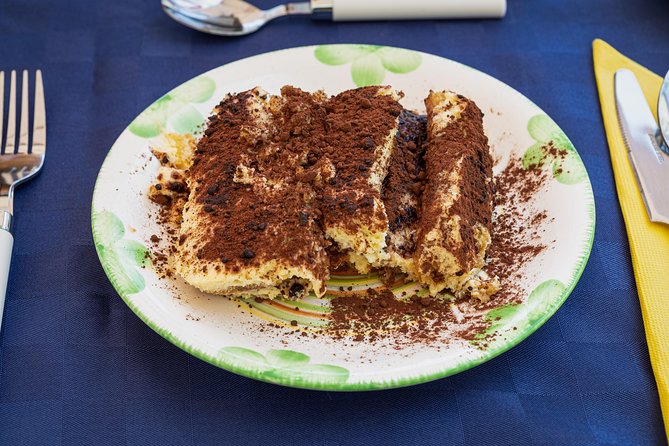
Tiramisu provides the sweet finish, and it is a good choice for a class because the preparation is familiar enough to understand but still rewards careful assembly. You will make the dessert as part of the same session, then eat it with the pasta dishes.
The class does not provide a detailed tiramisu recipe in advance, so you should not assume specific variations or ingredients. What you can count on is that tiramisu is the listed dessert and that it is part of the meal you prepare.
Cooking dessert alongside two pasta dishes also gives the three-hour session a clear rhythm. You move from aperitivo to preparation, then from the work surface to the table. The result is more than a lesson. It is a complete Italian meal built by the people in the room.
If your main interest is pasta, tiramisu may feel like a smaller part of the experience. If you want a broad introduction to home cooking, it adds a useful second skill and gives the class a proper ending.
The meal is part of the lesson
After the cooking, you taste everything you have prepared. Local wine, water, and coffee are included, which adds real value to the listed price. You are not paying for a class and then needing to find another meal immediately afterward.
Eating your own work also changes the mood. You can compare the pici and tortelli, notice how the handmade shapes affect the sauce, and ask questions while the host is still nearby. The meal becomes a final practical lesson rather than a separate restaurant stop.
The wine matters in a modest but useful way. It helps create the feeling of a shared Italian meal, but you should not read the inclusion as a wine tasting. The details only confirm local wines, water, and coffee. If you do not drink alcohol, the meal still includes nonalcoholic options.
The experience is likely best scheduled when you have enough time afterward. Although the duration is about three hours, cooking and eating with a family can feel more social than a timed demonstration. The published end point is the same as the meeting point, so you do not need to arrange a separate return transfer.
What the $177.52 price buys you
At $177.52 per person, this is not a bargain cooking lesson. You are paying more than the cost of a casual pasta meal in Arezzo, so the value depends on how much you want the home setting and participation.
The price includes several elements:
- About three hours of instruction and cooking
- A local home setting
- An aperitivo
- Preparation of pici, potato tortelli, and tiramisu
- A meal made by the group
- Local wine, water, and coffee
- A small group of no more than six people
For me, the strongest value comes from the private-feeling format. You are not simply buying food. You are buying time with a home cook, hands-on practice, and a meal that you help create. That is a better fit for someone who values local contact and a memorable activity over a low-cost lunch.
The value is weaker if you mainly want to eat traditional Tuscan food. A restaurant will probably cost less and require no work. This class makes sense when the cooking itself is the point.
The small group helps justify the cost. Six people is still enough for a lively table, but not so many that you are likely to disappear into a crowd. With such a small maximum, book early if your dates are fixed.
Location, timing, and practical details
The meeting point is Via Cavour, 52100 Arezzo AR, Italy. The activity begins and ends there, and the location is near public transportation. That makes it easier to fit into a day in Arezzo without arranging a private car.
The class lasts approximately three hours. Allow a little flexibility around the schedule because the food preparation and shared meal are both part of the experience. You will get more from it if you do not place a tight museum visit or train departure immediately afterward.
The ticket is mobile, which is useful when you are moving around Italy with a phone rather than a folder of printed documents. Confirmation is provided at booking. The class is offered in English, so English-speaking participants can follow the instruction and ask questions directly.
The published information does not specify the exact home address beyond the meeting point, the start time, detailed accessibility arrangements, or a full ingredient list. If you need precise information about mobility, allergies, or dietary restrictions, contact the provider before booking rather than guessing.
Cancellation is free up to 24 hours before the local start time. If you cancel inside that window, the amount paid is not refunded, and changes made less than 24 hours before the start are not accepted. That policy is worth noting because a home cooking class depends on a small number of confirmed participants.
Who will enjoy this class most
I would recommend this experience to you if you like learning through your hands. It suits people who want to understand how Italian food is made, not just photograph a finished plate.
It is a particularly good match for:
- Couples who want a shared activity beyond sightseeing
- Families with older children who can take part in food preparation
- Solo visitors who like meeting a small group around a table
- Pasta fans who want to try both hand-rolled and filled pasta
- Food-focused visitors looking for a local home rather than a restaurant
- Anyone with enough time for a relaxed three-hour activity
The class may be less suitable if you dislike group activities, do not want to cook while on holiday, or need a strictly timed schedule. It is also not the best choice if you are seeking advanced culinary training. The experience is built around family cooking and cultural exchange, not professional certification.
You should also consider how much you enjoy informal hospitality. Alfredo and Orlanda’s sessions have used ingredients from their garden, while Dina and her family have made people feel relaxed on arrival. Those details suggest a warm, personal setting, but the tone may be less predictable than in a formal cooking school.
How to get the most from the three hours
Arrive ready to participate. The class is designed around cooking, so you will get more from it if you are willing to roll dough, shape pasta, and help with the dessert rather than simply observe.
Wear something comfortable and practical. The supplied details do not set a dress code, but cooking with flour and sauce is easier when you are not worried about delicate clothes.
Ask questions as you work. The value of a home class is often in the small decisions that do not appear in a recipe: how the dough should feel, how much filling belongs in tortelli, and how the host knows a dish is ready.
Keep your expectations realistic. You may learn family techniques and regional dishes, but you are not promised a printed recipe book, a professional kitchen, or a formal lesson in every aspect of Tuscan cuisine. What you do get is a focused meal built around three recognizable dishes.
Should you book the Arezzo pasta and tiramisu class?
Book it if you want a personal, hands-on food experience and the price fits your budget. The combination of pici, potato tortelli, and tiramisu gives you more variety than a single-recipe lesson, while the six-person limit keeps the setting intimate.
I would be more cautious if your priority is value in the narrow sense, a guaranteed menu of detailed ingredients, or a highly structured cooking-school format. At $177.52, the home setting and shared meal need to matter to you.
For a food-focused day in Arezzo, this is a strong choice. You leave with more than a full stomach. You have practiced Tuscan pasta by hand, shared a table with a local family, and learned methods that are simple enough to try again at home.
FAQ
Where does the cooking class begin?
The class begins at Via Cavour, 52100 Arezzo AR, Italy.
Where does the activity end?
The activity ends back at the meeting point on Via Cavour.
How long does the experience last?
The class lasts approximately three hours.
What dishes will I make?
You will make pici, homemade noodles served with garlic sauce, potato tortelli, and tiramisu.
Is food and drink included?
Yes. You taste the food you prepare, with local wines, water, and coffee included.
Is the class offered in English?
Yes. The experience is offered in English.
How many people can join the class?
The activity has a maximum of six people.
Can I cancel for a full refund?
Yes, if you cancel at least 24 hours before the experience start time. Cancellations made less than 24 hours before the start are not refunded, and changes inside that period are not accepted.
Fresh off the board around Italy
- Vicenza: Pasta & Tiramisu Cooking Class at a Local’s Home★ 5.0 · 5 reviews
- Verona: Pasta & Tiramisu Cooking Class at a Local’s Home★ 5.0 · 16 reviews
- Volterra: Fresh Pasta Cooking Class at a Tuscan Farmhouse★ 5.0 · 33 reviews
- Verona: Tortellini Cooking Class and Lunch with Mamma Ivana★ 5.0 · 20 reviews
- Verona: My Granny’s secrets making gnocchi★ 5.0 · 7 reviews
- Verona: Prosecco and Pasta Making Class at a Local’s Home★ 5.0 · 10 reviews
- Venice: Pasta Carbonara Cooking Class with Wine★ 5.0 · 3 reviews
- Venice: Share Your Pasta Love in a Local’s Home★ 4.8 · 20 reviews
Tiramisu Classes, class by class.
3 in 1 Cooking Class near Navona: Fettuccine, Ravioli & Tiramisu
Read our review →
Pasta & Tiramisu Cooking Class with Unlimited Wine
Read our review →
Pasta & Tiramisu Class with Fine Wine by the Vatican
Read our review →
3-in-1 Fettuccine, Ravioli, and Tiramisu Cooking Class
Read our review →
Learn to Make Pasta & Tiramisu with Wine and Limoncello Included
Read our review →
Become a Masterchef in Rome: Pasta, Ravioli and Tiramisù Class
Read our review →
Fettuccine & Tiramisù: Cooking Class with Wine & Limoncello
Read our review →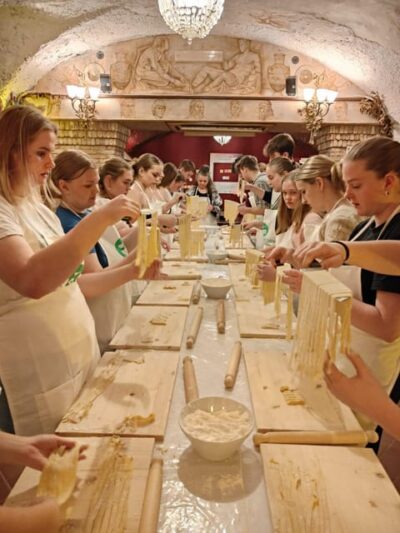
Pasta & Tiramisu Cooking Class near the Spanish Steps
Read our review →Lists this class appears in