Review · FLORENCE
Small-Group Pasta Cooking Class and Market Tour in Florence
Florence’s Sant’Ambrogio Market is the best place to begin a pasta lesson. You start among cheese, salami, prosciutto, meat, poultry, vegetables, herbs, and other local foods, then use those ingredients in a cooking class across the street. I like the market-to-table format and the fact that the group is limited to six people, so the class should feel personal rather than factory-made.
I also like that the teaching is handled by Italian chefs with Michelin-starred restaurant experience, including Andrea, Simone, and MasterChef Davide. You get wine, soda, all cooking supplies, an apron to take home, and a recipe e-book. The main consideration is the price, $181.39 per person, which is a serious sum for four hours, especially if you are not keen on cooking or tasting several foods at the market.
Key points at a glance
- Sant’Ambrogio comes first: You shop for seasonal ingredients with a chef before cooking.
- The group never exceeds six: This allows for more direct help at the worktable.
- Several chefs may lead the class: Andrea, Simone, and MasterChef Davide are named instructors associated with the experience.
- The food goes beyond basic pasta: Past classes have included fresh pasta, pesto, artichoke sauce, and duck ragout.
- A practical souvenir is included: You keep your apron and receive an e-book of recipes.
- The morning runs for about four hours: Meet at 9:00 a.m. and finish back at the starting point.
Why the Sant’Ambrogio market makes this class different
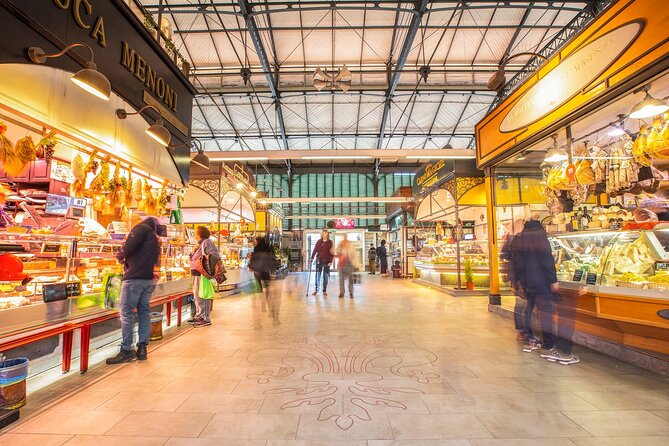
Many pasta classes begin with a bowl of flour and an explanation of the dough. This one begins with Florence’s food culture in motion. At Mercato di Sant’Ambrogio, you walk through the stalls with a chef and see the ingredients before they reach the kitchen.
That matters because Italian cooking often depends on choosing good raw materials, not hiding weak ones under heavy seasoning. You might look at seasonal vegetables, fresh herbs, meat, poultry, cheeses, and cured foods, then see how a chef turns those choices into a meal.
The market portion is also a useful way to see a side of Florence that is not built around museum tickets and grand churches. Sant’Ambrogio is a working food market, and the class gives you a reason to pay attention to the stalls. You are not simply wandering through with a camera. You are choosing ingredients for lunch.
A coffee stop is included in the market visit. The supplied details do not promise a particular coffee style or café, so I would treat this as a simple local pause rather than a full tasting session. Still, it helps set the pace for a morning that starts early.
More Market and Cooking Classes in Florence
- Pasta and Tiramisu Cooking Class with optional Local Market Tour
★ 5.0 · 515 reviews - MaMa Florence Guided Market Tour and 4 Course-Pasta Cooking Class
★ 5.0 · 15 reviews - Private Florence Market Tour and Pasta Making Class with Cinzia
★ 5.0 · 8 reviews
What you can expect at Mercato di Sant’Ambrogio
The meeting point is Piazza Lorenzo Ghiberti, 4 R, beside the market area. The start time is 9:00 a.m., so you should plan to arrive with enough time to find the address and settle in. The tour ends back at the meeting point.
You begin by walking through the market with your chef. The class has included tasting boards with cheese, salami, and prosciutto, as well as visits to butcher stalls and produce sellers. One lesson included Parmigiano Reggiano, artichokes, fava beans, basil, and other fresh ingredients.
Those details give you a good idea of the food focus. This is not just a lesson in shaping pasta. It can also be a lesson in how a cook builds a dish from what looks best that morning. Simone, for example, has been described as asking what participants liked and adapting the cooking plan around the market finds.
That flexibility sounds appealing, but it also means the exact menu may change. If you arrive expecting one fixed dish, you may need to accept a little uncertainty. The benefit is that your recipes can reflect seasonal produce instead of following the same script all year.
You may also meet Stefano, known in one class as the Cheese Wizard, during a tasting. This is a memorable detail for cheese lovers, though the available information does not promise that Stefano will lead every session. Consider it a possibility rather than a guarantee.
From market shopping to the kitchen
After the market, you move to the cooking space across the street. The market stop is listed as three hours, while the full activity lasts about four hours. That suggests the food shopping and tasting take up a large share of the morning, with the pasta work following in the kitchen.
The class supplies all materials needed to prepare the pasta. You do not need to bring special tools, ingredients, or cooking equipment. An apron is also provided, and you get to keep it as a souvenir.
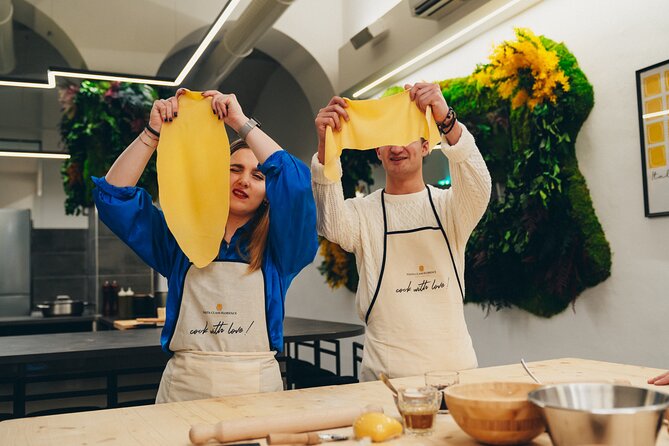
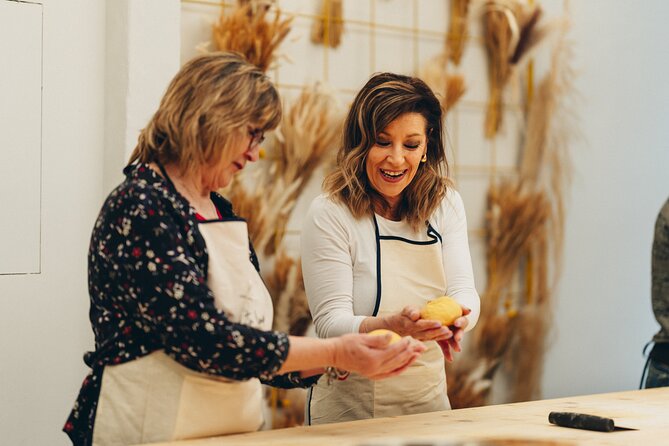
The small group size is important here. With no more than six people, you have a better chance of receiving direct help when you mix dough, roll it, shape it, or work on the sauces. Pasta dough can look simple, but small changes in texture matter. A tiny class is far more useful than a large room where you only watch a demonstration.
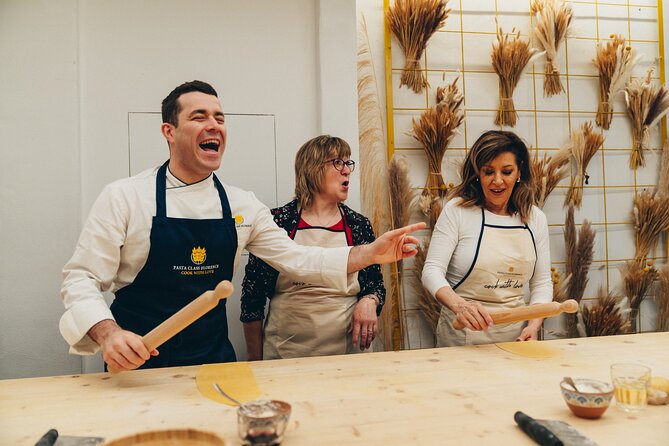
The chef team brings experience from Michelin-starred restaurants, but the teaching also appears to stay friendly and practical. Andrea is described as warm, funny, and experienced. MasterChef Davide is known for making families feel welcome, explaining techniques patiently, and keeping the room laughing.
That combination should suit you if you want real instruction without a stiff cooking-school mood. You can ask questions, make mistakes, and still enjoy the morning. At the same time, you should not expect a formal professional qualification. This is a practical food experience for home cooks.
The pasta and sauces you may make
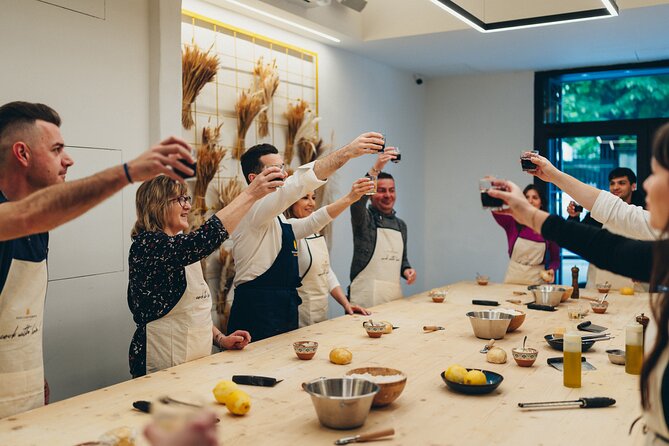
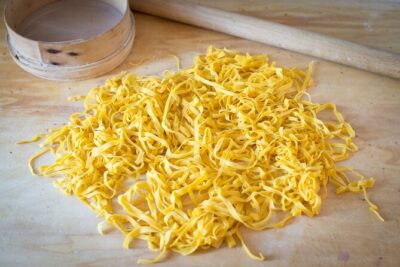
The exact menu is not stated in advance, but the dishes described from past classes are unusually varied. One session included three sauces with handmade fresh pasta: duck ragout, artichoke sauce, and pesto.
Duck ragout brings a deeper, more substantial flavor than the tomato sauces often used in beginner lessons. Artichoke sauce shows how a seasonal vegetable can become the center of a pasta dish. Pesto offers a different lesson, since the quality of basil, cheese, and other ingredients matters as much as the method.
This range is one of the class’s strongest features. You are not just learning to turn flour and eggs into pasta. You are also seeing how different sauces match different ingredients and moods.
The recipe e-book adds value after you leave. You can try the dishes at home rather than letting the lesson become a pleasant but short-lived memory. The supplied information does not state how many recipes the e-book contains, so I would not book this expecting a large digital cookbook. Think of it as a useful record of the dishes taught during the class.
If you have a family member who already makes pasta, you can still learn something here. The market choices, sauce work, and chef demonstrations broaden the lesson beyond a basic nonna-style dough tutorial.
Same flour, a different shape to roll:
- Florence: Pasta Cooking Class with Unlimited Wine
★ 4.9 · 10,285 reviews - Florence Pizza or Pasta Class with Gelato Making at a Tuscan Farm
★ 5.0 · 6,801 reviews - Florence: Pasta & Tiramisu Cooking Class with Unlimited Wine
★ 4.9 · 6,708 reviews - Florence: Pasta Cooking Class with Unlimited Wine
★ 5.0 · 6,413 reviews
The instructors and teaching style
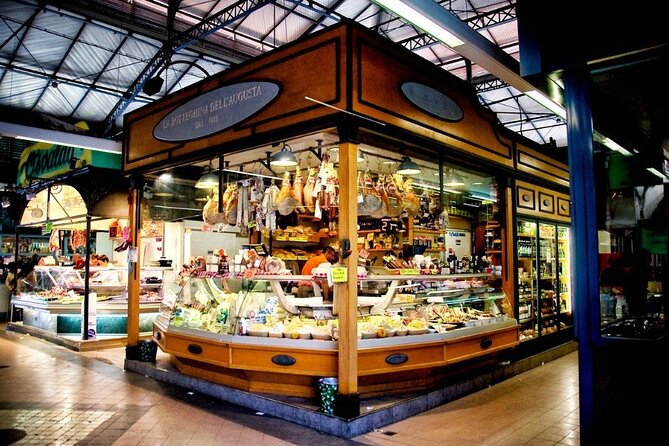
The experience is associated with several named chefs. Andrea has been praised for a warm and funny manner, while Simone has been described as a superb teacher who shaped the menu around personal tastes and market ingredients. MasterChef Davide has led family-friendly sessions with plenty of humor and hands-on guidance.
Because the group is so small, the personality of your assigned chef will shape the morning. That is worth keeping in mind. A cooking class is partly about technique, but it is also about the instructor’s ability to explain, encourage, and keep the pace comfortable.
The chefs’ Michelin-starred restaurant background adds credibility, but it does not mean you need advanced cooking skills. The strongest practical sign is that the pasta has been described as accessible enough to make again at home. That is the right standard for this kind of class. You want food that teaches you something without requiring professional equipment.
The class is offered in English. That removes a major language barrier for English-speaking visitors, especially when the lesson involves texture, timing, and hand movements. You should still pay attention during demonstrations, since pasta techniques are easier to copy when you watch closely.
What is included, and what is not
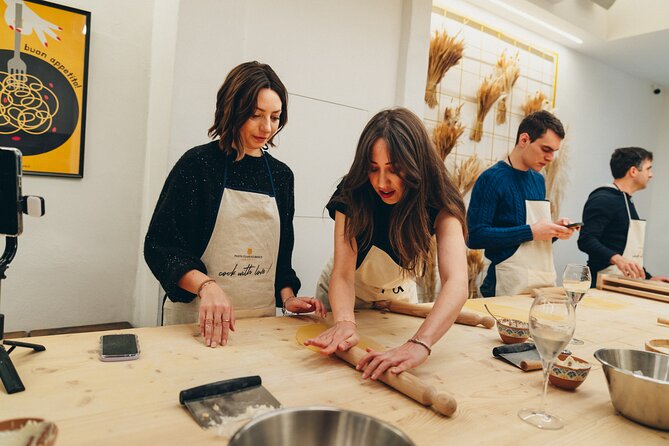
The price is $181.39 per person. That is expensive compared with a short demonstration or a simple pasta meal, but the cost covers a four-hour morning with a market tour, tastings, cooking instruction, ingredients, wine, soda, an apron, and the recipe e-book.
The value depends on how you use the class. If you enjoy food, want direct contact with a local market, and plan to cook the recipes later, the package offers more than a meal. You are paying for instruction, supplies, small-group attention, and a souvenir you can use.
Wine and soft drinks are included. The information does not specify how much wine is served, so you should not treat this as a wine tour. It is best understood as a pleasant drink with the food.
Hotel pickup is not included. You need to make your own way to Piazza Lorenzo Ghiberti. The meeting point is near public transportation, which helps, but the experience still requires you to handle the trip to and from the market yourself.
Free cancellation is available if you cancel at least 24 hours before the 9:00 a.m. start time. A cancellation made less than 24 hours before the class is not refunded, and late changes are not accepted. The cut-off uses Florence local time.
Who will enjoy this morning most
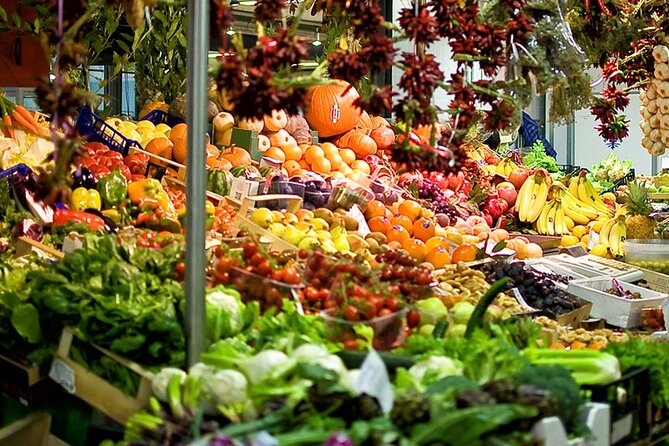
I would recommend this class to you if food is a major part of your trip. It suits couples, families, and small groups who want to spend a morning doing something rather than simply looking at another historic building.
It is also a good choice if you prefer instruction with a human touch. The named chefs are described as funny, patient, and attentive, and the six-person limit gives you a fair chance to take part. Families may especially enjoy Davide’s playful teaching style.
You should also book it if you want to understand Italian ingredients. Cheese, cured meats, produce, poultry, herbs, and sauces all play a role. The market visit gives the cooking a sense of place that a classroom alone would lack.
I would hesitate if you dislike group meals, do not eat meat or dairy, or want a very fixed menu. The information does not provide dietary options, substitution rules, or a complete menu. Since the market purchases can shape the cooking, you should ask the provider directly before booking if you have food restrictions.
The early start may also be a factor. A 9:00 a.m. meeting time means this is not a lazy late-morning activity. For many people, though, the timing is a plus: you finish around midday with the rest of the afternoon free.
Practical details for planning your day
You receive confirmation when you book, and a mobile ticket is accepted. The activity is offered in English and is near public transportation. Most people can participate, although the supplied details do not give a specific accessibility description.
Allow about four hours for the full experience. The market portion is listed as three hours, so do not schedule another activity too tightly against the end. The official end point is the same as the meeting point, which makes planning easier.
Wear something you do not mind cooking in. An apron is supplied, but flour, sauces, and market food can still make a kitchen morning less formal than a museum visit. Comfortable clothing will make it easier to focus on the food.
The group maximum of six is one of the most important practical facts. This is not a large tour where you stand at the back and watch. You should still remember that the class is shared, so each person will have to take turns with some tasks.
Should you book the Sant’Ambrogio pasta class?
I would book this if you want a food lesson that connects Florence’s market life with a meal you can recreate at home. The strongest reasons are the small group, the market shopping, the named chefs, and the chance to work with ingredients such as artichokes, basil, Parmigiano Reggiano, and fresh pasta.
The price is high, but the class includes much more than a plate of pasta. You get about four hours, drinks, ingredients, equipment, an apron, and recipes. The value is best for people who will remember the techniques and use them again.
Skip it if you want a cheap meal, dislike hands-on cooking, or need a guaranteed menu that meets specific dietary needs. For everyone else, this is a thoughtful way to spend a Florence morning, with enough instruction to make the experience useful after you return home.
FAQ
Where does the pasta class begin?
It begins at Piazza Lorenzo Ghiberti, 4 R, 50122 Firenze FI, Italy.
What time does the experience start?
The start time is 9:00 a.m.
Where does the activity end?
It ends back at the meeting point.
How long does the experience last?
The full activity lasts approximately four hours.
How many people can join the class?
The group has a maximum of six participants.
Is the class offered in English?
Yes. The experience is offered in English.
Is a market visit included?
Yes. You visit Mercato di Sant’Ambrogio with the chefs and select ingredients for the cooking experience.
What is included with the cooking class?
The price includes pasta-making materials, an apron to keep, Italian chefs, a recipe e-book, red and white wine, and soda.
Is hotel pickup included?
No. Hotel pickup is not included.
Can I cancel for a full refund?
Yes, if you cancel at least 24 hours before the local start time. Cancellations made less than 24 hours before the start are not refunded.
More Small Group Pasta Classes in Florence
- Florence Small-Group Pasta Class with Seasonal Ingredients
★ 5.0 · 532 reviews - Small Group Pasta Making Class Wine Tasting in a Tuscan Castle
★ 5.0 · 142 reviews - Small group PURO Vegan pasta and bruschette Class in Florence
★ 5.0 · 24 reviews - Tuscan Pasta Masterclass Small-Group Cooking Experience
★ 5.0 · 17 reviews
Fresh off the board around Florence
- Hands on Deluxe Traditional 4-course dinner with fresh pasta★ 5.0 · 15 reviews
- The Art of Pasta and Wine Tasting with Local Sommelier★ 5.0 · 16 reviews
- Vegan Cooking Class in Florence: Pasta Making & Wine!★ 5.0 · 2 reviews
- Gluten free pasta and dessert class 6 guests max★ 5.0 · 2 reviews
- Tuscan Pasta Masterclass Small-Group Cooking Experience★ 5.0 · 17 reviews
- Cooking class and home made pasta in Florence with LA VIVANDIERA!★ 5.0 · 5 reviews
- MaMa Florence: The Art of Corzetti – Hands-On Pasta Class★ 5.0 · 15 reviews
- Hands-On Pasta Making Class in Central Florence with Patrizia★ 5.0 · 5 reviews
Small Group Pasta Classes, class by class.
Pasta and Tiramisu Small Group Cooking Class with Wine
Read our review →
Florence Small-Group Pasta Class with Seasonal Ingredients
Read our review →
Rome Small Group Pasta Making Class with Wine and Italian Chef
Read our review →
Small Group Pasta and Tiramisu Class at Local’s Home in Venice
Read our review →
Cesarine: Small group Pasta and Tiramisu class in Varenna
Read our review →
Small-Group Cooking Class in Positano: Gnocchi, Tiramisù & Drinks
Read our review →