
Review · ITALY
Rome: Pasta and Gelato Cooking Class with Wine or Beer
Fresh pasta and gelato are the stars here, and you make both in a small Roman kitchen just above the Trionfale Food Market. I like the hands-on pasta work, from mixing eggs and flour to cutting your own fettuccine, and I like that you leave with recipes you can use at home. The English-speaking chefs, including Sonia and Mateo, keep the lesson friendly and clear.
The main thing to know is that you may not handle every final step yourself. Kitchen staff cook the pasta and finish the gelato, so this is a guided class rather than a full restaurant-kitchen apprenticeship. The gelato has also received mixed praise, especially when the choices are plain and stracciatella.
Key points at a glance
- Above the Trionfale Food Market: Meet at Pummarè Restaurant, just steps from the Vatican, at the top of the graffiti-covered stairs.
- Two Italian staples in two hours: Make fresh fettuccine, prepare two gelato flavors, then sit down to eat.
- Useful pasta technique: You knead, roll, and cut the dough by hand instead of only watching a demonstration.
- English-speaking instruction: Sonia and Mateo are among the chefs who have led the class.
- Dietary flexibility: Vegetarian, vegan, and gluten-free options are available when requested at booking.
- A social finish: Your pasta is served with wine, beer, or a soft drink in a welcoming restaurant setting.
Making pasta above Rome’s Trionfale Market
This class begins in a useful Roman setting, not an anonymous cooking studio. Pummarè Restaurant sits above the Trionfale Food Market, one of the city’s well-known food-shopping areas, and the meeting point is at the top of a staircase with graffiti. A taxi station is directly in front, which helps if you are carrying luggage, traveling with children, or arriving after a long day on foot.
You should arrive 15 minutes early. That buffer matters here because the location is described by its stairs and restaurant rather than by a large street-level sign. If you are late, contact the local partner at +39 327 306 8995.
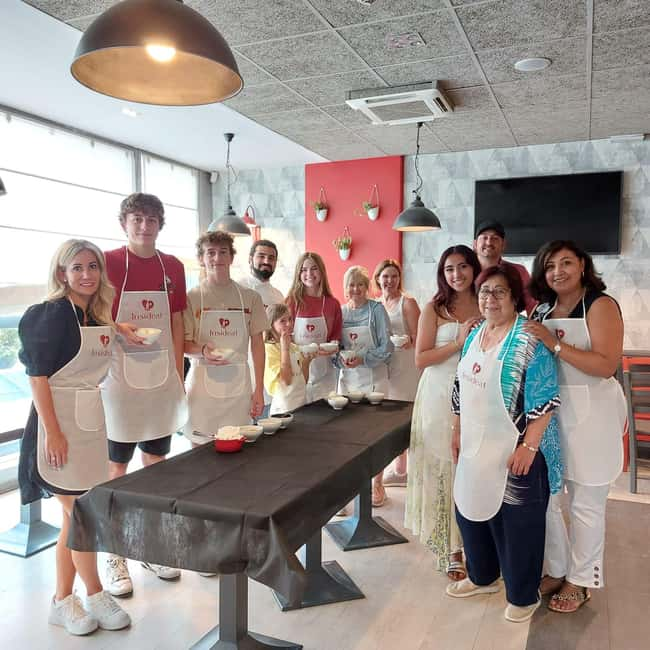
Once settled, you are introduced to the chef and the other people in the class. The instruction is in English, and the tone is meant to be social rather than formal. Sonia has been praised for her patience and easy manner, while Mateo has been singled out for explaining more than expected. That suggests the teaching quality can depend on the chef leading your particular session, but both names come with strong feedback.
A small welcome bite may appear while the class gets organized. Bruschetta has been served before, along with gluten-free crisps and cheese for one celiac participant. It is a modest detail, but a welcome one if you arrive hungry. You should still eat lightly before class if you need to, since the meal includes pasta, gelato, and a drink.
More Gelato Making Classes in Italy:
- Florence Pizza or Pasta Class with Gelato Making at a Tuscan Farm
★ 5.0 · 6,801 reviews - Florence: Pizza or Pasta Class with Gelato at a Tuscan Farm
★ 4.9 · 1,181 reviews - Florence: Premium Pasta and Gelato Cooking Class
★ 4.9 · 877 reviews
Gelato first, with two flavors to prepare
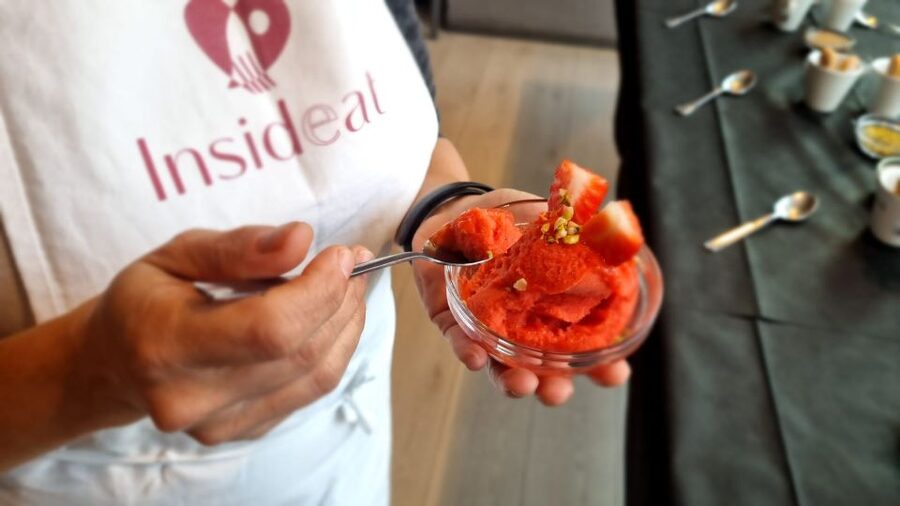
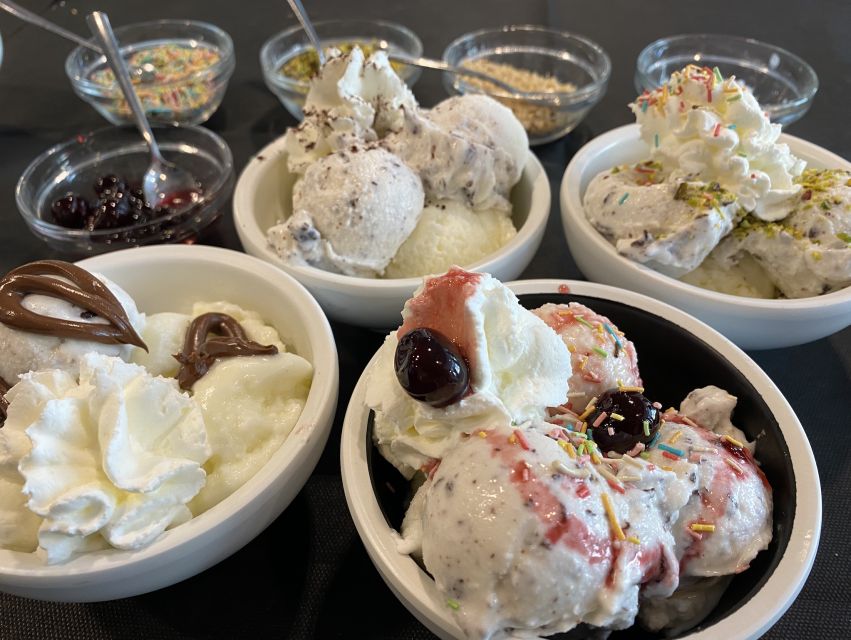
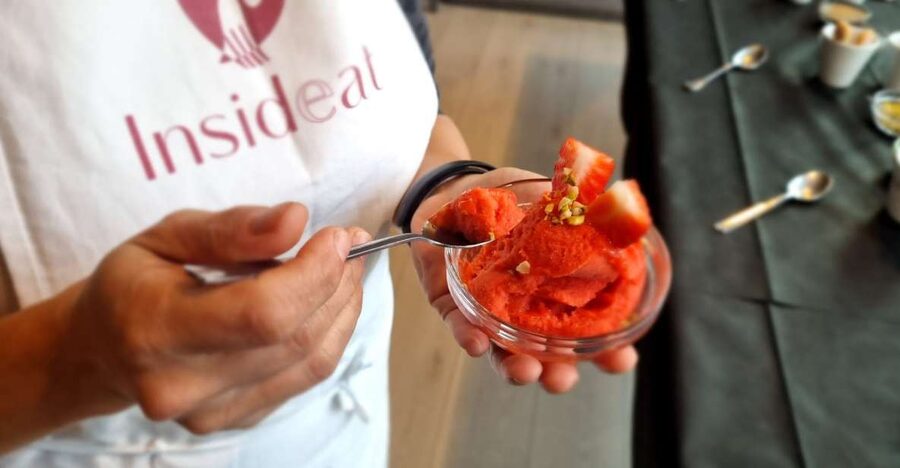
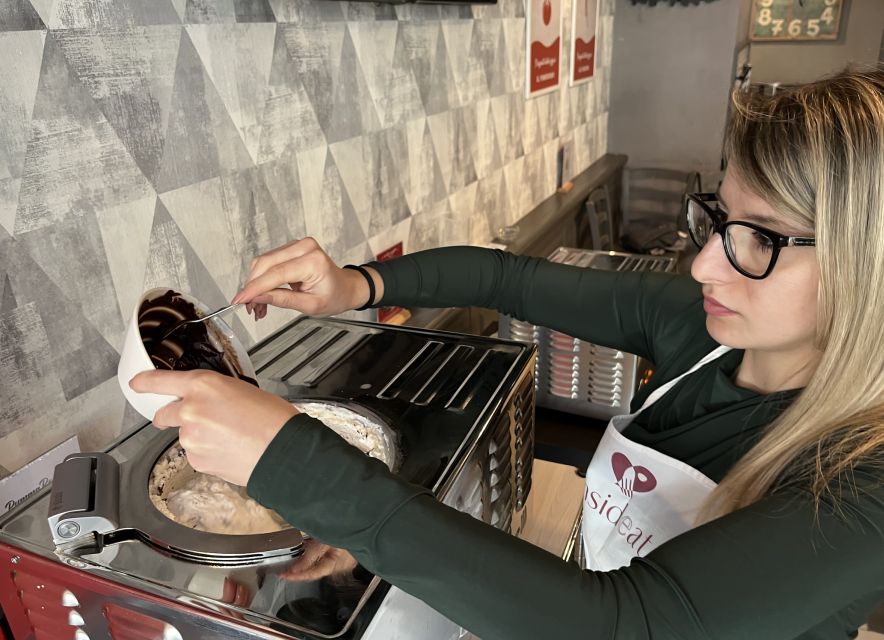
The lesson starts with gelato. You learn the basic difference between gelato and ice cream, help prepare the ingredients, and work on two flavors from scratch. You can add toppings to your finished portion, giving you a little room to make the dessert your own.
This part is valuable because Italian gelato is often treated as a simple scoop-and-go food. Here, you get a look at the ingredients and method behind the texture. The class explains how creamy gelato is made and why it differs from standard ice cream. For a home cook, that practical understanding may be more useful than a long lecture about Italian food.
The gelato is then placed to chill while you move on to the pasta. This is a smart use of the two-hour schedule. You are not sitting around waiting for dessert, and the class keeps changing pace.
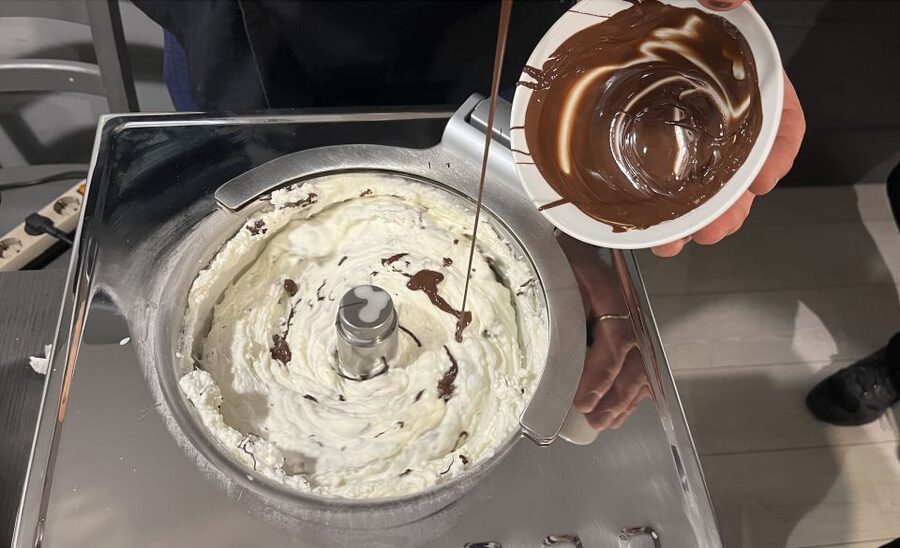
You should set your expectations carefully. One recent class used plain and stracciatella, the latter made with melted chocolate. That is a classic pairing, but it may feel limited if you booked mainly for a broad lesson in gelato flavors. One person found the gelato less impressive than expected, so I would treat this as an introduction to gelato-making rather than a professional pastry workshop.
The toppings help, but they do not turn the class into an unlimited flavor lab. If you want advanced frozen-dessert technique or several unusual flavors, this may not be the best match. If you want to understand the basic process and eat something you helped prepare, it makes more sense.
Kneading, rolling, and cutting your fettuccine
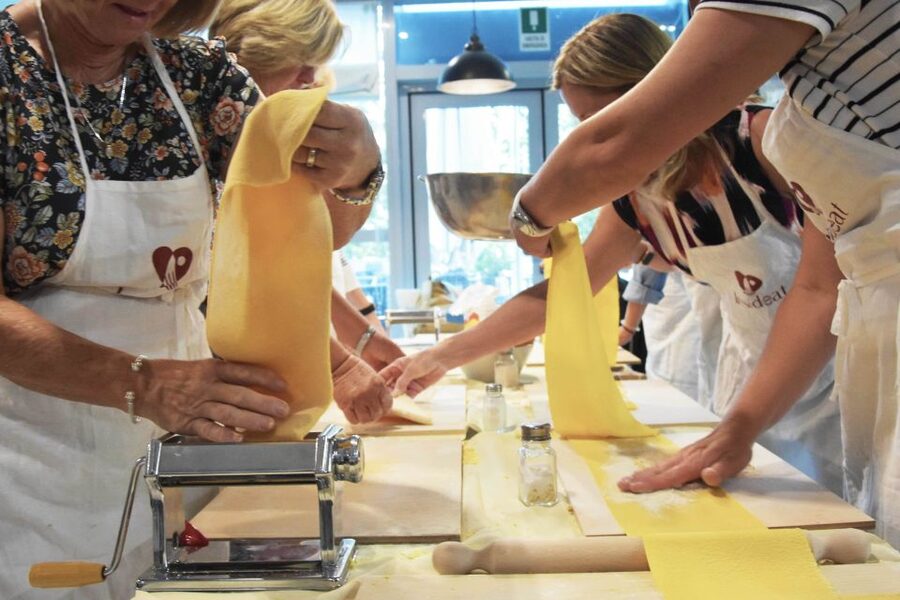
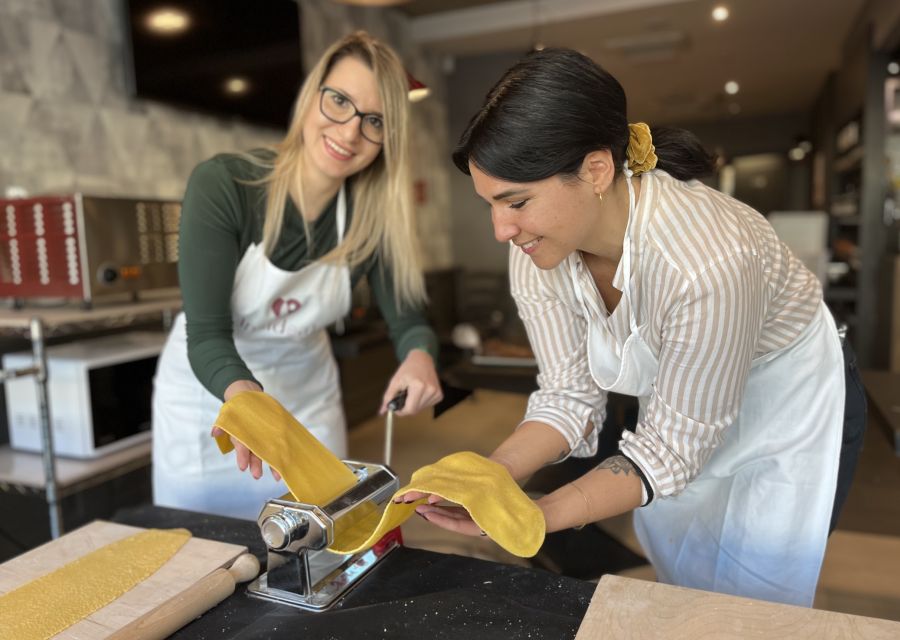
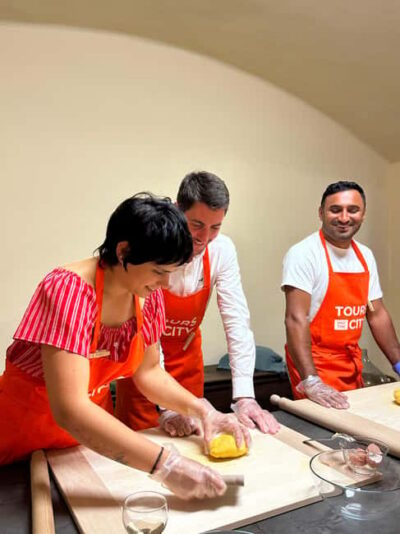
Next comes the part most people are likely to remember: fresh pasta. You combine eggs and flour, knead the dough, roll it out, and cut it into fettuccine. The chef demonstrates the traditional approach and guides you through the steps.
This is where the class earns its place on a Rome itinerary. You are not simply eating pasta in a restaurant. You feel how firm the dough should be, see how thin it needs to become, and practice cutting the strands. These are small skills, but they are the sort you can repeat at home with basic equipment.
The class is designed for beginners, so you do not need previous cooking experience. That matters if your group includes children or people who rarely cook. Two boys reportedly enjoyed the session even though cooking was not their usual choice, which says something about the pace and the amount of direct activity.
The social side also works well here. You are standing or working near other people, comparing dough and following the same steps. Couples can split tasks, families can work together, and solo visitors have an easy reason to start talking. The experience is less polished than a private chef lesson, but it is friendlier for that reason.
There is one important limit. The kitchen staff handle the final cooking of the fettuccine. You make the dough and shape the pasta, but you do not necessarily control the boiling time or sauce preparation. The chef then serves the pasta with a classic Italian sauce.
I see this as a fair trade for a two-hour class. Cooking fresh pasta for a whole group can create a bottleneck, and restaurant staff know how to finish it efficiently. Still, if you want every stage under your own hands, including cooking and sauce-making, ask about the exact format when booking.
Eating the pasta with wine or beer
After the work, you sit down and eat the pasta you made. Wine or beer is included, with a soft drink available as an alternative. This closing meal turns the lesson into a complete evening activity rather than a quick demonstration followed by a token taste.
The pasta appears to be the strongest part of the food experience. A recent participant found it excellent even after finding the gelato underwhelming. That split is useful when deciding how much weight to give each dish. Book this if handmade pasta is your main goal and gelato is a pleasant second course, not the other way around.
The restaurant setting adds warmth but also shapes the experience. You are not taking a pasta plate to a separate dining room with a long Roman menu. You are eating the food prepared during class, with the group and the staff around you. That keeps the focus clear and avoids turning the two-hour visit into a general restaurant meal.
The drink matters less for its sophistication than for the chance to pause and talk. If you do not drink alcohol, a soft drink is available. The class is also promoted for solo people, couples, families, and groups, and the meal gives each type of party a natural ending point.
More Pasta Classes with Wine in Italy:
- Florence: Pasta Cooking Class with Unlimited Wine
★ 4.9 · 10,285 reviews - Florence: Pasta & Tiramisu Cooking Class with Unlimited Wine
★ 4.9 · 6,708 reviews - Florence: Pasta Cooking Class with Unlimited Wine
★ 5.0 · 6,413 reviews - Rome: Pasta & Tiramisu Class with Fine Wine by the Vatican
★ 4.9 · 4,852 reviews
Dietary needs and family suitability
You should report dietary needs at the time of booking. Vegetarian options are available, and vegan and gluten-free arrangements are also offered. The gluten-free option has been used in practice: one celiac participant handled regular flour but received gluten-free pasta to eat, along with gluten-free crisps and cheese.
That detail comes with an important caution. The class takes place in a working food setting where ordinary flour is present. If you have celiac disease or a serious allergy, explain your needs clearly before arrival and confirm how cross-contact will be handled. A gluten-free plate does not automatically mean the whole work surface is gluten-free.
Children are welcome when accompanied by an adult. Unaccompanied minors are not allowed. The hands-on format should suit older children who can follow instructions and enjoy rolling or cutting dough, but the provided information does not give a minimum age. Ask before booking if your child is very young.
The wheelchair-accessible designation is useful, though the meeting point includes stairs described in the directions. Because of that apparent tension, I would confirm the exact accessible entrance and route with the provider before paying if step-free access is essential.
Location, timing, and what to bring
The two-hour duration fits neatly into a day near the Vatican. You can schedule it before or after sightseeing, but do not plan a rushed museum visit immediately afterward. Cooking classes often run at the pace of the group, and you will want time to eat the meal at the end.
Wear something comfortable and practical. You will work with flour, dough, ingredients, and toppings, so clothing that can handle a small splash or dusting of flour is sensible. The class information does not specify an apron, kitchen equipment, or exact seating arrangements, so you should not assume anything beyond the ingredients and instruction needed for the planned dishes.
Come hungry, but not so hungry that you cannot concentrate. The food is substantial for a two-hour activity, and the combination of pasta, gelato, a welcome snack in some sessions, and a drink can easily replace a light meal.
The location near the Vatican is convenient, but it is not inside Vatican City. You meet at Pummarè Restaurant above the market, with a taxi station in front. Save the coordinates, 41.90968322753906, 12.452739715576172, and allow extra time to identify the correct stairs.
Is the class good value?
No price is provided here, so I cannot judge the exact euro value. I can judge what you receive for the time: two food projects, a meal, a drink, English instruction, recipes, and techniques to repeat at home.
That is good value if you want an activity with a clear result and a social meal at the end. You are paying for instruction and participation, not just for a plate of pasta. The recipes also give the experience some life after Rome, since you can try the dishes again for friends and family.
The value is weaker if you mainly want a long, detailed lesson in gelato science or a fully independent cooking session. The gelato selection may be basic, and staff take care of the final cooking steps. The class is best understood as a friendly introduction to two Italian favorites.
The current rating is 4.7 from 20 ratings, with particularly strong praise for the chefs’ patience, explanations, and friendly approach. The lower score focused on the gelato rather than the pasta or teaching, which gives you a fairly clear picture of the tradeoff.
Who should book this Rome cooking class?
I would recommend it to first-time visitors who want a break from monuments, families looking for a participatory activity, and couples who prefer making dinner to sitting through another restaurant meal. It also works for solo visitors because the shared tasks make conversation easy.
It suits beginners better than serious cooks seeking advanced instruction. The pasta technique is practical and traditional, while the gelato lesson gives you the basic method and a chance to add toppings. You will learn enough to repeat the recipes, but not every professional step.
You should think twice if gelato is your sole reason for booking, if you need a fully private class, or if you want to cook every stage from raw ingredients to plated food. In those cases, a class focused only on pasta or a smaller private lesson may fit better.
Final verdict: book it for the pasta and the people
Book this class if you want to make fresh fettuccine near the Vatican, eat what you prepare, and learn from an English-speaking chef in a relaxed restaurant setting. Sonia and Mateo have both received strong praise for their teaching, and the pasta portion offers the most reliable hands-on value.
Go in expecting a friendly two-hour introduction, not a professional culinary course. The gelato may be less exciting than the pasta, and the kitchen staff handle the final cooking steps. For a practical, social taste of Roman food culture with recipes to take home, that is a reasonable compromise.
FAQ
Where does the pasta and gelato class meet?
Meet at Pummarè Restaurant above the Trionfale Food Market, at the top of the stairs with graffiti. A taxi station is in front of the meeting point.
How early should I arrive?
Arrive 15 minutes before the class begins. If you are late, contact the local partner at +39 327 306 8995.
How long does the class last?
The activity lasts two hours. Starting times vary, so check availability when booking.
What language is the class taught in?
The instruction is in English.
What food will I make?
You will help make two gelato flavors and fresh fettuccine. The pasta is made by combining eggs and flour, kneading the dough, rolling it, and cutting it into noodles.
Is food and drink included?
Yes. You eat the pasta you make, taste the gelato, and receive wine, beer, or a soft drink. Bruschetta or another small snack may also be served while the class is getting organized.
Are vegetarian and gluten-free options available?
Yes. Vegetarian, vegan, and gluten-free options are available. Tell the local partner about dietary needs when booking.
Can children take part?
Children can participate when accompanied by an adult. Unaccompanied minors are not allowed.
Is the activity wheelchair accessible?
The activity is listed as wheelchair accessible. Because the meeting directions mention stairs, confirm the step-free route with the provider if you need guaranteed accessible entry.
Can I cancel the booking?
You can cancel up to 24 hours before the activity for a full refund. A reserve-now, pay-later option is also available.
Fresh off the board around Italy
- Vicenza: Pasta & Tiramisu Cooking Class at a Local’s Home★ 5.0 · 5 reviews
- Verona: Pasta & Tiramisu Cooking Class at a Local’s Home★ 5.0 · 16 reviews
- Volterra: Fresh Pasta Cooking Class at a Tuscan Farmhouse★ 5.0 · 33 reviews
- Verona: Tortellini Cooking Class and Lunch with Mamma Ivana★ 5.0 · 20 reviews
- Verona: My Granny’s secrets making gnocchi★ 5.0 · 7 reviews
- Verona: Prosecco and Pasta Making Class at a Local’s Home★ 5.0 · 10 reviews
- Venice: Pasta Carbonara Cooking Class with Wine★ 5.0 · 3 reviews
- Venice: Share Your Pasta Love in a Local’s Home★ 4.8 · 20 reviews
Gelato Making Classes, class by class.
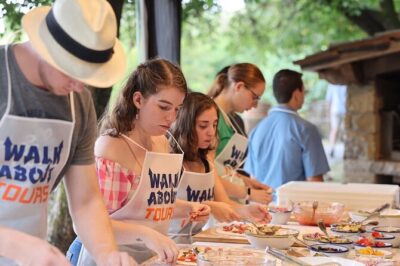
Florence Pizza or Pasta Class with Gelato Making at a Tuscan Farm
Read our review →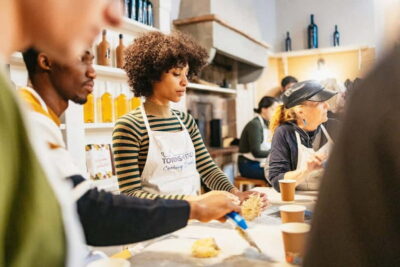
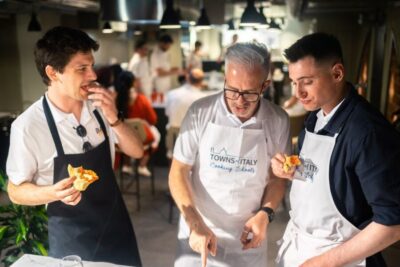
Pizza or Pasta and Gelato-Making Class with Wine
Read our review →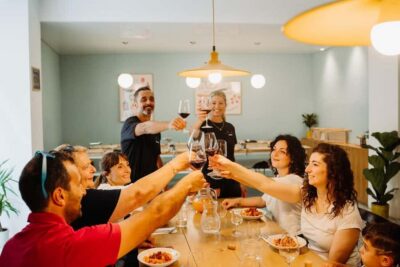
Pasta Cooking Class, Ragu, Spritz, Wine & Gelato
Read our review →
Super Fun Pasta & Gelato Class by Vatican with Wine + Oil Tasting
Read our review →
Milan Culinary Experience: Pasta & Gelato or Tiramisù Class
Read our review →
Pasta, Ravioli, and Gelato Class in a Glamorous Home
Read our review →Lists this class appears in