
Review · LECCE
Lecce: Pasta Making Class in 1400s-Era Courtyard with Wine
Making pasta by hand in a 1400s-era courtyard is a fine way to spend an evening in Lecce. You work with local cooks, shape Apulian pasta from flour and water, then eat what you make with wine inside the Faggiano Archaeological Museum.
I like the hands-on teaching and the chance to meet people from several countries around one table. I also like the setting: this is not a modern cooking studio, but a historic museum in the center of the old town. The main drawback is group size. Sessions can reach about 20 people, so you may need to share workspace and wait for close help.
Key points
- Historic setting: The class takes place at the Faggiano Archaeological Museum on Via Ascanio Grandi 58, in a courtyard dating from the 1400s.
- Two Apulian pasta shapes: You learn the basic methods for making Orecchiette and Sagne. Some sessions also refer to the second shape as maccheroni.
- Local instruction: Pasta teachers such as Nonna Teresa work with guides including Luciana and Therese, depending on the session.
- Meal included: You eat the pasta you make, with wine and, in some sessions, snacks, dessert, or an aperitivo.
- Social by design: This is a shared class with conversation and teamwork, not a quiet private lesson.
- Good booking flexibility: The activity lasts 2.5 hours, accepts cancellation up to 24 hours before the start, and offers reserve-now, pay-later booking.
A pasta class inside Lecce’s Faggiano Museum
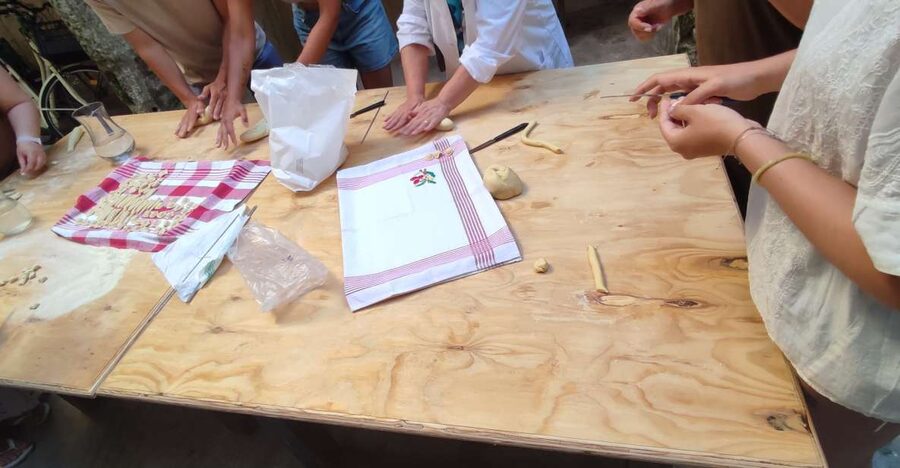
The meeting point is easy to identify: Via Ascanio Grandi 58, at the Faggiano Archaeological Museum. You arrange your own transport, but the address is in central Lecce, so it fits naturally into an evening of walking around the old town.
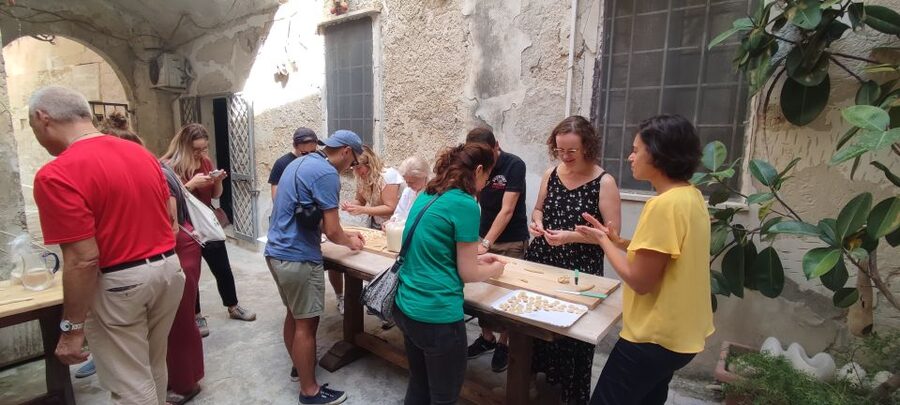
The setting does much of the work. Instead of learning in a generic restaurant kitchen, you sit in a courtyard connected with a museum and described as dating from the 1400s. That gives the class a sense of place before the flour even reaches the table.
I would allow a little extra time to find the entrance and arrive ready to begin. Bring your passport or identity card, as requested for the activity. The class runs rain or shine, so the weather does not change the plan.
The museum location is especially useful if you already plan to visit Lecce’s historic center. You can pair the class with an afternoon of Baroque churches and stone streets, then finish the day with a meal you helped prepare.
More Fresh Pasta Workshops in Italy:
- Rome: Pasta Making Class with Wine, Limoncello, and Dessert
★ 4.9 · 3,177 reviews - Pastamania – Florence Pasta Making Class
★ 5.0 · 3,050 reviews - Enjoy Spritz and Pasta Making in Piazza Navona
★ 5.0 · 1,681 reviews
Mixing flour and water the Apulian way
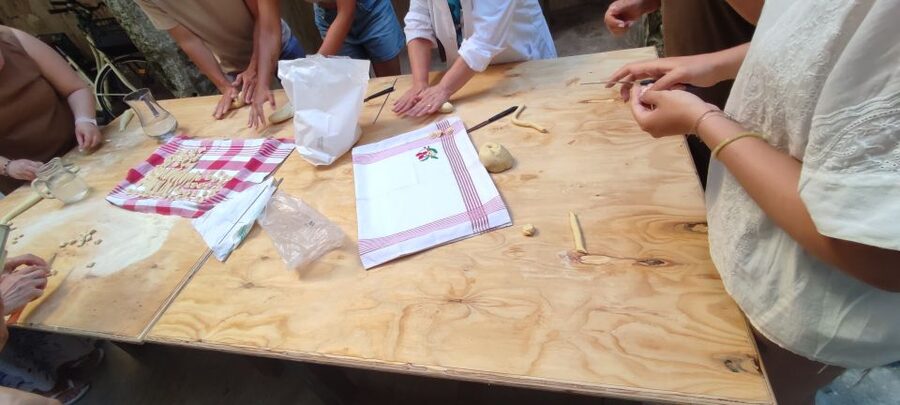
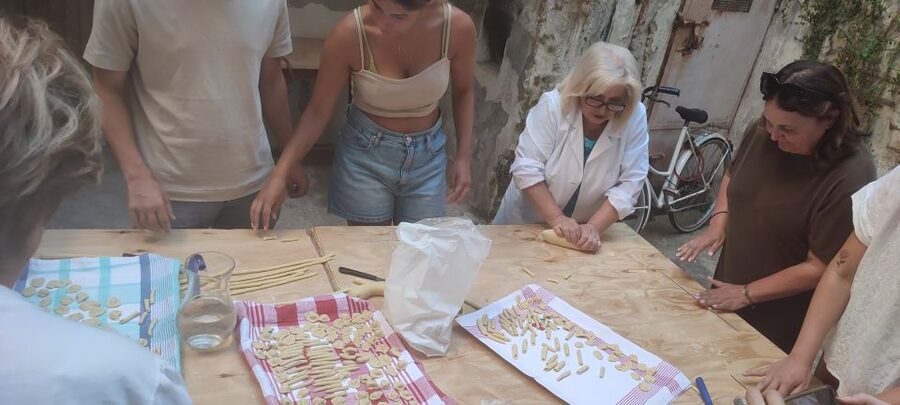
The lesson begins with the most basic ingredients: flour and water. A local cook demonstrates how to combine them and how to use the tools provided for the class.
That sounds simple, but hand-shaped pasta takes more control than you might expect. Several people found that the cooks made the work look easy, while shaping the pieces themselves took practice. This is part of the fun, but you should not expect every piece to look like the instructor’s first example.
The teachers guide you through the process rather than simply demonstrating from a distance. You work with the dough, receive corrections, and try again. The instruction can be direct, even stern at times, but it is meant to keep the pasta on track. If your first Orecchiette looks uneven, you are in good company.
The language support helps. Instruction is available in Italian, English, and French. Guides such as Luciana and Therese have been praised for explaining the steps clearly, while cooks including Nonna Teresa bring the practical skill of someone who has made these shapes many times.
Shaping Orecchiette and Sagne
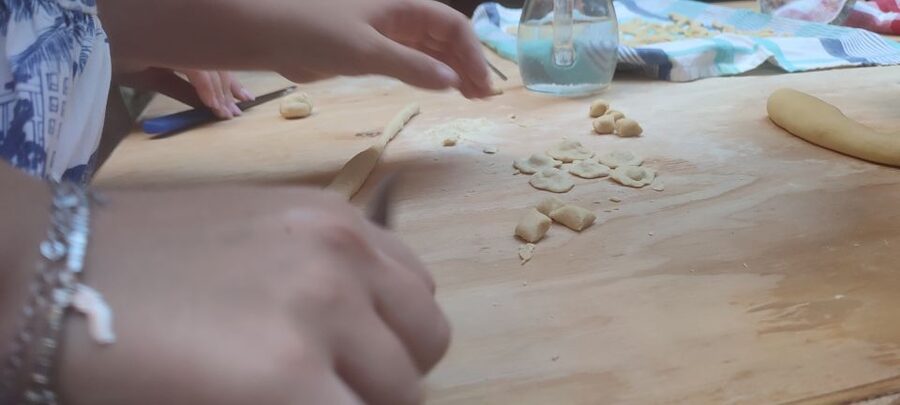
Orecchiette means little ears, a name that fits the small, cupped pasta shape. The point of the shape is not only appearance. Its hollow center and ridged surface help hold sauce, which is one reason it works so well in Apulian cooking.
You learn to cut and shape the dough by hand. The exact pace depends on the group, but the class is designed to let you take part rather than watch a professional do everything. Expect flour on your hands and a few pieces that look more like rustic buttons than perfect ears.
The second pasta is presented as Sagne in the activity details. Past sessions have also described it as maccheroni, so the name used during your class may vary. The useful part is that you learn a second technique and see how a different shape comes from the same basic dough.
I like this part because it gives you something practical to take home. You are not only tasting a local dish. You are learning a method you can try again in your own kitchen, even if the first attempt requires patience.
From worktable to shared dinner
Once the pasta is shaped, it is cooked and served to the group. You eat the pasta you helped prepare, usually with wine. The meal is a natural finish to the lesson and turns the class into a social evening rather than a short demonstration.
Some sessions include snacks or an aperitivo while the pasta cooks. One detailed account also describes dessert, local wine, and a simple tomato and basil sauce. The exact food served may vary, so I would think of the included meal as fresh pasta and wine rather than booking this as a full multi-course dinner.
The atmosphere is communal. You sit with other participants, compare pasta shapes, and talk while the meal comes together. People have joined from many different countries, and the shared work gives everyone an easy subject to discuss.
A few sessions have included local music while the pasta cooked. That is not listed as a guaranteed feature, so treat it as a possible extra rather than part of the promised schedule.
More Pasta Classes with Wine in Italy:
- Florence: Pasta Cooking Class with Unlimited Wine
★ 4.9 · 10,285 reviews - Florence: Pasta & Tiramisu Cooking Class with Unlimited Wine
★ 4.9 · 6,708 reviews - Florence: Pasta Cooking Class with Unlimited Wine
★ 5.0 · 6,413 reviews - Rome: Pasta & Tiramisu Class with Fine Wine by the Vatican
★ 4.9 · 4,852 reviews
Why the historic courtyard matters
Lecce is known for its warm local stone and ornate old-town architecture, but a cooking class lets you use the setting rather than simply look at it. You spend several hours in a working courtyard, handling dough and sharing food where the building itself becomes part of the evening.
The Faggiano family and museum connection have also given some sessions a more personal feeling. One participant described sharing a meal with members of the family and feeling as though friends and relatives were dropping by. That sort of welcome cannot be guaranteed for every date, but it helps explain why the experience feels more local than a standard restaurant meal.
The setting does not make the class private or small. If around 20 people attend, the courtyard may feel crowded. One advantage of the larger group is the easy social energy. The tradeoff is that the cook cannot spend equal time with every person at once.
If you want a quiet lesson with individual coaching, this may not be your ideal format. If you like meeting people and do not mind a little flour-covered chaos, the group setting works well.
How much personal instruction should you expect?
The teaching is practical and repeated. The local cooks show the movement, then watch you try it. They may correct your technique or ask you to repeat a step. That direct style suits people who want to learn by doing.
Your experience will depend partly on the size of the class and partly on how quickly you pick up the shaping method. Some people find Orecchiette more difficult than expected. You should not mistake an imperfect shape for a failed class. The meal is still part of the experience, and the point is to understand the method.
Guides help bridge language gaps and keep the group moving. English, Italian, and French are available, but the lesson also relies on watching the hands and copying the motion. You do not need advanced cooking skills.
Families can join as well. A family with children aged 10 and 14 found the class enjoyable, so it can work for older children who are comfortable sitting at a shared table and following instructions. Younger children may need extra help, but no specific minimum age is provided.
The $68 price and what it covers
At $68 per person, the price includes the professional cook, cooking equipment, the museum location, the pasta lesson, the pasta you prepare, and wine with the meal. For a 2.5-hour activity in central Lecce, that is a fair price if you value instruction and the social meal as much as the food itself.
You are paying for more than a plate of pasta. The price covers the setting, the teacher’s time, equipment, and the chance to make a regional dish yourself. It also saves you from arranging a separate dinner after the class.
Still, this is not the right choice if your main goal is a formal, private cooking lesson. The group format means you share attention, and transport is not included. You should also allow for the possibility that the class will feel lively rather than polished.
The value is strongest for an evening activity that combines food, conversation, and local context. It is less compelling if you only want to eat a quiet meal or take a short pasta-making demonstration.
Timing, languages, and practical details
The class lasts 2.5 hours, with start times depending on availability. Evening sessions make sense because you finish with dinner, but check the exact time when booking so it fits your Lecce plans.
The meeting point is the Faggiano Archaeological Museum at Via Ascanio Grandi 58. Transport is not included, so you make your own way there. Since the activity is in the center of Lecce, it is best suited to people staying in or already visiting the old town.
Instruction is offered in Italian, English, and French. The activity is wheelchair accessible. The tour takes place in all weather, and it may be canceled if the minimum number of participants is not reached. In that case, you will be notified and refunded.
Cancellation is flexible up to 24 hours before the activity for a full refund. You can also reserve now and pay later, which helps if your Lecce plans are still taking shape.
Who will enjoy this class most?
I would choose this experience if you want to:
- Learn a pasta shape you can attempt at home
- Eat a meal connected to the work you have just done
- Meet people from different countries
- Spend an evening in a historic Lecce setting
- Take part in a relaxed group activity rather than a formal lecture
- Add a food experience to a sightseeing day
It is a particularly good fit for couples, families with older children, solo visitors who enjoy joining a group, and friends looking for a shared evening.
I would hesitate if you dislike group activities, need a private chef, or want every minute planned around individual coaching. The pasta is handmade, so the process can be messy and slightly slow. That is part of its charm, but it will not suit anyone looking for a slick restaurant-style event.
Should you book the Lecce pasta class?
Book it if you want to connect Lecce with something you can touch, shape, cook, and eat. The historic courtyard, local cooks, multilingual guidance, and shared wine make this more personal than simply ordering Orecchiette at a restaurant.
Go in expecting a busy class, not a private kitchen lesson. You may need patience with the shaping technique and with the size of the group. For most people, the combination of hands-on work, a memorable setting, and a meal at the end makes the $68 price worthwhile.
FAQ
Where does the pasta-making class take place?
The class takes place at the Faggiano Archaeological Museum, located at Via Ascanio Grandi 58 in central Lecce.
How long does the activity last?
The experience lasts 2.5 hours.
What types of pasta will I learn to make?
You will learn techniques for making Orecchiette and Sagne. Some descriptions of past sessions also refer to the second pasta as maccheroni.
Is the meal included?
Yes. You eat the pasta made during the class, and wine is included. Some sessions may also include snacks, an aperitivo, or dessert.
Is cooking equipment provided?
Yes. Cooking equipment is included in the activity price.
Which languages are available?
The class is offered in Italian, English, and French.
Do I need to bring anything?
You should bring your passport or identity card.
Is the class wheelchair accessible?
Yes, the activity is listed as wheelchair accessible.
What happens if the class is canceled?
If the minimum number of participants is not reached, the course may be canceled. You will be notified and refunded. The activity also runs rain or shine, and you can cancel up to 24 hours in advance for a full refund.
Fresh off the board around Italy
- Vicenza: Pasta & Tiramisu Cooking Class at a Local’s Home★ 5.0 · 5 reviews
- Verona: Pasta & Tiramisu Cooking Class at a Local’s Home★ 5.0 · 16 reviews
- Volterra: Fresh Pasta Cooking Class at a Tuscan Farmhouse★ 5.0 · 33 reviews
- Verona: Tortellini Cooking Class and Lunch with Mamma Ivana★ 5.0 · 20 reviews
- Verona: My Granny’s secrets making gnocchi★ 5.0 · 7 reviews
- Verona: Prosecco and Pasta Making Class at a Local’s Home★ 5.0 · 10 reviews
- Venice: Pasta Carbonara Cooking Class with Wine★ 5.0 · 3 reviews
- Venice: Share Your Pasta Love in a Local’s Home★ 4.8 · 20 reviews
Fresh Pasta Workshops, class by class.
Pasta Making Class with Wine, Limoncello, and Dessert
Read our review →

Enjoy Spritz and Pasta Making in Piazza Navona
Read our review →
Pasta Making & Wine Tasting with Dinner in Frascati from Rome
Read our review →
The Secrets to Learn Fresh Pasta and Tiramisù in a Glam Home
Read our review →
Handmade Pasta & Dessert Class with Unlimited Wine
Read our review →Lists this class appears in