
Review · GENOA
Genoa: Fresh Pasta mastserclass Michelin Stars
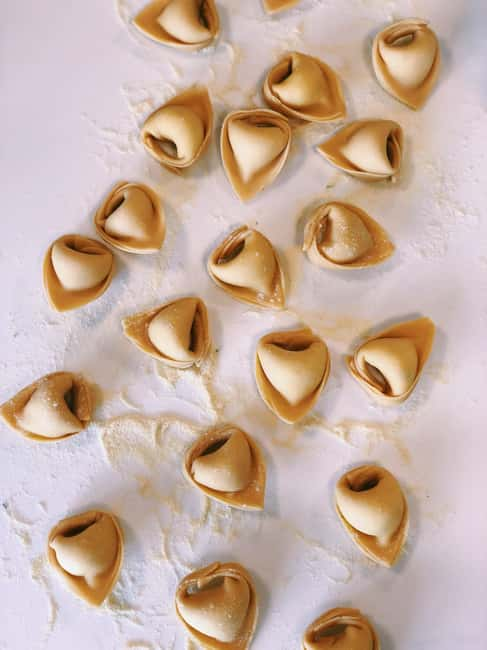
Genoa’s best pasta lesson is not just a plate of tagliatelle and a recipe card. You make more than ten kinds of fresh pasta, including ravioli and Ligurian specialties, then eat what you have made. I like the small group of eight, and I like that the chefs bring Michelin restaurant experience without turning the class into a stiff cooking exam.
I also like the practical finish: you get tips and written material to use at home. The one drawback is time. Two hours moves quickly, so this is a lively introduction rather than a slow, master-every-detail course. The $82 price is fair if you value the meal, wine, instruction, and small-group setting together.
Key points
- More than ten pasta styles: Work through tagliatelle, ravioli, and traditional Ligurian forms.
- Michelin-experienced instruction: Andrea and the Dinoidue chefs explain professional methods in a friendly, usable way.
- You eat your own work: The class ends with three pasta courses, sauces, and a glass of wine.
- Small group of eight: Expect hands-on help rather than a large demonstration from across the room.
- Four language options: Join in English, Italian, Spanish, or Portuguese.
- Useful take-home guidance: Leave with information and tips for repeating the recipes at home.
Genoa pasta class: what you are really signing up for
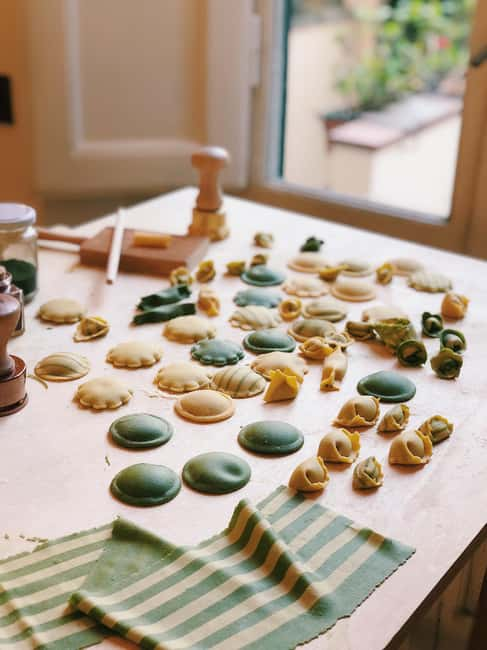
This is a cooking class first and a meal second, though the meal is an important part of the value. You spend the session working with fresh dough, shaping pasta, and learning how small changes in technique affect the final result.
The setting is a kitchen in the heart of Genoa. The class is run by the Dinoidue team, whose chefs have worked in Michelin-starred restaurants and cooked in Europe and Australia. That background matters most when it is translated into clear instructions, not fancy talk. You are here to learn something you can repeat in your own kitchen.
Andrea is singled out as an excellent teacher, and the class is designed around support and conversation. You are not expected to arrive with pasta-making skills. The format gives you a chance to ask questions as you work, which is far more useful than watching a chef do everything perfectly.
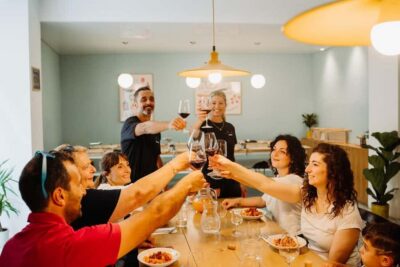
The mood is festive and social. You share a table with the other participants, compare results, and eat together. If you prefer a quiet, private lesson, this may feel too communal. If you like food classes with conversation and a proper meal at the end, the setup fits well.
More Fresh Pasta Workshops in Italy:
- Rome: Pasta Making Class with Wine, Limoncello, and Dessert
★ 4.9 · 3,177 reviews - Pastamania – Florence Pasta Making Class
★ 5.0 · 3,050 reviews - Enjoy Spritz and Pasta Making in Piazza Navona
★ 5.0 · 1,681 reviews
The welcome and the story behind Dinoidue
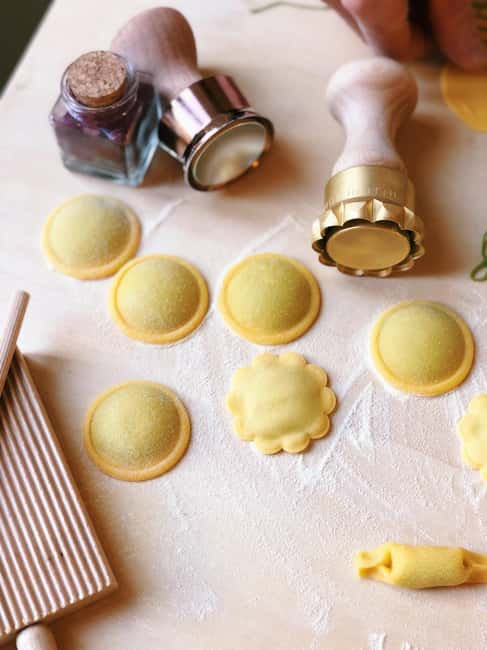
The opening is brief. You receive a welcome and an introduction to the chefs, their professional work, and the path that led to Dinoidue. This gives the class some context before the flour appears.
I appreciate that the introduction connects the workshop to real restaurant work. Michelin experience can sometimes be used as a marketing label with little practical value, but here it frames the techniques you are about to learn. The useful question is not whether the chef has cooked in an elite kitchen. It is whether you leave knowing how to make better pasta. This class appears to keep that goal in view.
The introduction also helps explain the class’s mix of traditional and professional methods. You are learning Italian pasta in Genoa, not following a generic international cooking lesson. The emphasis is on fresh dough, familiar shapes, sauces, and Ligurian cooking traditions.
Do not expect a long lecture. The chef’s story leads quickly into the hands-on work. That is a good choice for a two-hour session, since every minute needs to count.
Rolling dough and learning the basic pasta technique
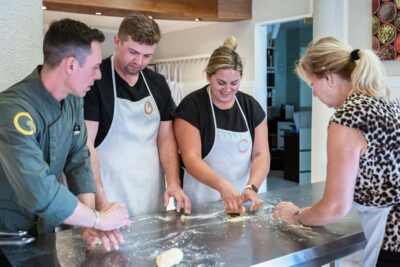
The practical section begins with the fundamentals of pasta dough. You work through the process step by step, with the chef showing you how to handle the dough and shape it correctly.
For a first-time pasta maker, this is the most valuable section. Fresh pasta looks simple, but the result depends on details such as consistency, thickness, and handling. A written recipe alone cannot show you how dough should feel. A chef standing nearby can correct your method before a small mistake affects the whole batch.
You then prepare more than ten traditional pasta types. Tagliatelle and ravioli are included, along with Ligurian specialties. The variety gives the class a broader purpose than a lesson focused on one shape.
Each pasta form teaches something different. Long ribbons require even rolling and cutting. Ravioli calls for careful filling and sealing. Regional shapes show how Italian pasta changes from one part of the country to another. You are not simply producing several versions of the same noodle.
The pace will be active. With more than ten types in two hours, you should expect a guided overview rather than a long practice session on every single shape. That is not a flaw, but it is worth knowing before you book. You will gain a useful range of techniques, but you may want to repeat them at home to make them feel natural.
Why the group size of eight matters
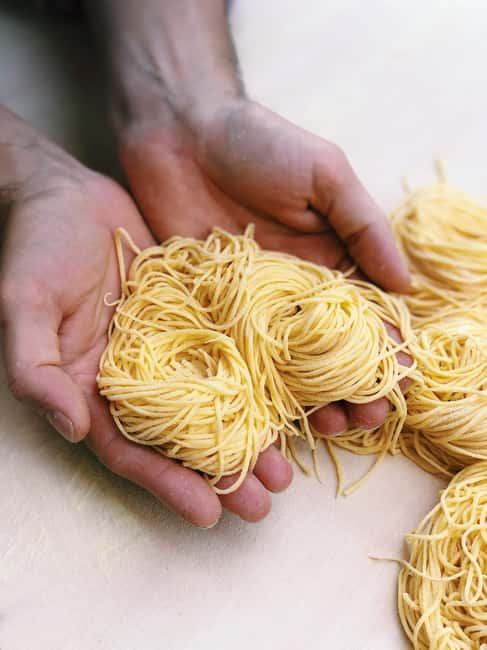
The maximum group size is eight participants. For a pasta class, that is a helpful limit because the work is tactile and small mistakes are easy to make.
In a large group, you might spend too much time waiting for the chef to reach your station. Here, the format is better suited to individual help. If your dough is too dry, your ravioli seal is loose, or your pasta needs a different thickness, you have a better chance of getting a quick correction.
A small group also shapes the social side of the class. You work beside other people, then sit down together to eat. This is a natural choice for solo visitors, couples, and small groups who want an activity that creates conversation without requiring a full day.
There is one practical point to keep in mind. Small-group classes are not private classes. You share the instructor’s attention and the kitchen with up to seven other people. The experience feels personal, but it is still a group workshop.
More Chef-Led Pasta Classes in Italy:
- Rome Cooking Class: Make Pasta, Dine & Drink Wine With Local Chef
★ 5.0 · 1,263 reviews - 2-in-1 Pasta and Tiramisu Cooking Masterclass in Rome
★ 5.0 · 832 reviews - Pasta Fettuccine, Ravioli and Tiramisu MasterClass
★ 5.0 · 391 reviews - Pasta and Pizza Master Class with Pick Up in Sorrento
★ 5.0 · 380 reviews
From pasta board to three-course meal
The reward comes after the preparation. You sit down and taste the dishes you have made, served with sauces and accompanied by a glass of wine.
The meal is described as three pasta courses, which makes the $82 price easier to assess. You are not paying only for two hours of instruction. The cost also covers the ingredients, professional tools, kitchen access, chef guidance, the prepared meal, wine, and take-home material.
This is a good arrangement for a food-focused afternoon or evening in Genoa. You get a meal that connects directly to the work you have just done. It is more satisfying than preparing pasta and then watching someone else take it away to cook.
The sauces matter, too. Fresh pasta needs the right sauce and cooking treatment, and tasting several combinations helps you understand why shape and sauce are paired in particular ways. The meal is not just a reward. It reinforces the lesson.
I would not book this expecting a large restaurant tasting menu. The focus is on the pasta you prepare, served in a friendly kitchen setting. The appeal is participation and freshness, not ceremony.
The glass of wine adds to the relaxed mood, but it also means you should plan the rest of your day sensibly. The class is centered on food and conversation, not drinking. One glass is included with the meal.
Ligurian pasta in the context of Genoa
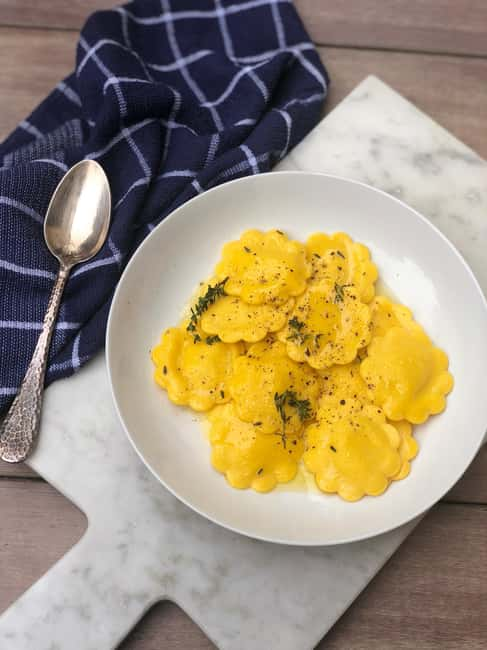
Genoa is a strong place to study pasta because Ligurian food has a clear regional identity. The class includes local specialties alongside better-known forms such as tagliatelle and ravioli.
That regional focus gives the activity more meaning than a standard Italian cooking class built around the same few dishes found everywhere. You get a taste of local tradition while learning techniques that work across Italy.
The class does not present itself as a full survey of Ligurian cuisine. The subject is fresh pasta. You should book it for the chance to work with dough and shapes, not for a broad lesson covering every local ingredient or recipe.
Still, the Ligurian element gives you something specific to take home. After the class, you can recreate pasta connected to the region rather than making only a general Italian dish. The chef’s stories about traditional methods add useful context as you work.
What the Michelin background adds
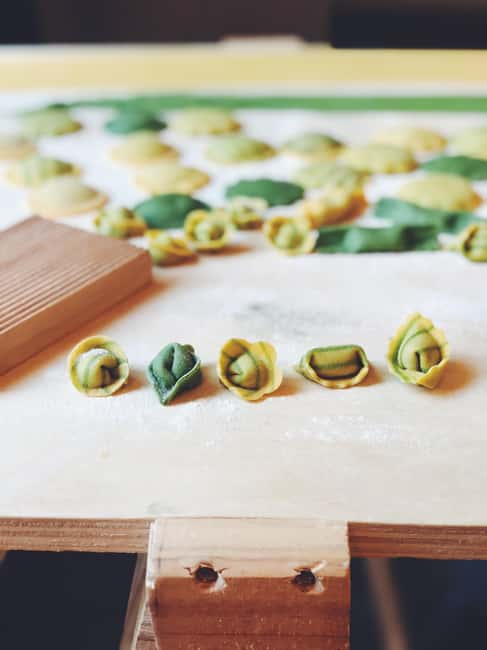
The chefs’ Michelin experience is most useful when it appears in the small details. Professional kitchens tend to be strict about technique, consistency, and timing. Those are the areas where expert instruction can save you frustration.
You may learn a more precise way to roll dough, shape pasta, or prepare it for cooking. You also get the benefit of a chef who has worked with restaurant standards and can explain why a method works.
At the same time, you should not confuse Michelin experience with a formal culinary-school course. The class lasts two hours and is built for visitors. Its aim is to give you confidence and a set of techniques, not to train you as a professional cook.
That balance is one of the class’s strengths. The instruction has a serious foundation, but the atmosphere remains approachable. You can enjoy the food without feeling that every imperfect ravioli is a personal failure.
Languages, timing, and practical planning
The class is available in Italian, English, Spanish, and Portuguese. Choose the language in which you will be most comfortable asking about dough, filling, shaping, and cooking.
Two hours is long enough to learn, prepare, and eat, but short enough to fit into a compact Genoa itinerary. I would avoid placing a major timed activity immediately afterward. Cooking classes can run at the pace of the group, and the meal is part of the experience rather than an afterthought.
Starting times vary, so check availability when you book. The activity takes place in Genoa, but the supplied information does not give a specific street address or meeting point. Confirm those details before setting out.
All ingredients and professional cooking tools are included. You do not need to shop for supplies or bring kitchen equipment. Informational materials and recipe tips are also included, which makes the class more useful after your trip.
Cancellation is flexible: you can cancel up to 24 hours before the activity for a full refund. You can also reserve now and pay later, a useful option if your Genoa plans are still changing.
Is $82 a fair price?
At $82 per person, this is not the cheapest way to eat in Genoa. You could find a simpler meal for less. But that comparison misses the main point.
The fee covers a small-group lesson, more than ten pasta preparations, ingredients, equipment, chef instruction, three pasta courses, wine, and guidance for cooking at home. If you would otherwise pay for both a meal and a food activity, the price is reasonable.
The value is strongest for people who care about technique. If you only want lunch, choose a restaurant. If you want to understand how fresh pasta is made and then eat the results, the cost is easier to justify.
The class also saves you from arranging several separate food experiences. You get instruction, a regional food connection, and a sit-down meal in one two-hour session. That is useful on a short visit when every booking needs to earn its place.
I would be more cautious if you are traveling on a very tight budget or have little interest in cooking. The price is tied to participation. You should want to roll dough, shape pasta, listen to instruction, and share the meal.
Who will enjoy this most
I would recommend this class to first-time pasta makers, food-focused visitors, couples, solo visitors, and families with an interest in Italian cooking. The small group and multilingual instruction make it approachable.
It is also a good choice for someone who has already made pasta but wants to learn more shapes and regional styles. The range of more than ten types gives experienced home cooks something new to practice.
The format suits people who enjoy a social meal. You work with others, then eat together in a festive setting. If you want a completely private lesson or a long, highly technical workshop, look for a different format.
I would also choose this for a rainy day in Genoa. The activity gives you a warm indoor plan with a clear result: you learn, cook, and eat. No sightseeing route can promise that much immediate comfort.
Should you book the Genoa fresh pasta masterclass?
Book it if you want more than a meal and less than a full-day cooking school. The combination of Michelin-experienced chefs, ten-plus pasta styles, Ligurian specialties, a small group, and three pasta courses gives the class a clear purpose.
Andrea’s teaching receives particular praise, and the atmosphere is built around support rather than pressure. The strongest parts are the hands-on guidance, the chance to taste your own work, the professional approach, and the useful advice for repeating the recipes at home.
Skip it if you dislike group activities, do not want to cook during your meal, or are looking only for the cheapest way to eat pasta in Genoa. For everyone else, $82 is a sensible splurge, especially if you leave ready to make fresh pasta again at home.
FAQ
How long does the Genoa fresh pasta class last?
The class lasts two hours, including the pasta preparation, tasting, and recap of the techniques.
How many types of pasta will I learn to prepare?
You will learn to prepare more than ten types of traditional fresh pasta, including tagliatelle, ravioli, and Ligurian specialties.
Is the class suitable for beginners?
Yes. The workshop gives step-by-step guidance on essential pasta-making techniques, and the chefs provide support while you work.
Is a meal included?
Yes. You taste the dishes you prepare, with three pasta courses and sauces served during the meal.
Is wine included?
Yes. One glass of wine is included to accompany the meal.
What languages are available?
The guided class is available in English, Italian, Spanish, and Portuguese.
How large is the group?
The class is limited to eight participants, making it a small-group activity.
Can I cancel the booking?
Yes. You can cancel up to 24 hours in advance for a full refund. You can also reserve now and pay later.
Fresh off the board around Italy
- Vicenza: Pasta & Tiramisu Cooking Class at a Local’s Home★ 5.0 · 5 reviews
- Verona: Pasta & Tiramisu Cooking Class at a Local’s Home★ 5.0 · 16 reviews
- Volterra: Fresh Pasta Cooking Class at a Tuscan Farmhouse★ 5.0 · 33 reviews
- Verona: Tortellini Cooking Class and Lunch with Mamma Ivana★ 5.0 · 20 reviews
- Verona: My Granny’s secrets making gnocchi★ 5.0 · 7 reviews
- Verona: Prosecco and Pasta Making Class at a Local’s Home★ 5.0 · 10 reviews
- Venice: Pasta Carbonara Cooking Class with Wine★ 5.0 · 3 reviews
- Venice: Share Your Pasta Love in a Local’s Home★ 4.8 · 20 reviews
Fresh Pasta Workshops, class by class.
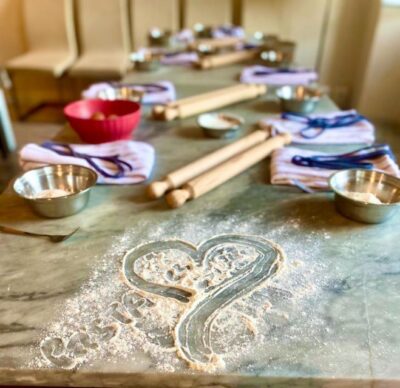
Pasta Making Class with Wine, Limoncello, and Dessert
Read our review →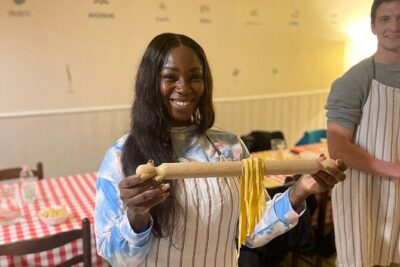
Enjoy Spritz and Pasta Making in Piazza Navona
Read our review →
Pasta Making & Wine Tasting with Dinner in Frascati from Rome
Read our review →
The Secrets to Learn Fresh Pasta and Tiramisù in a Glam Home
Read our review →
Handmade Pasta & Dessert Class with Unlimited Wine
Read our review →Lists this class appears in