Review · FLORENCE
Florence: Tuscan cooking class with handmade pasta and wine
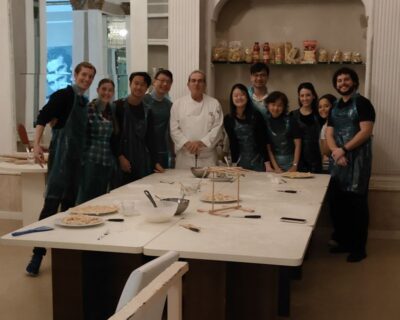
Fresh pasta is the main event here, and you do not just watch a chef twirl dough. You mix, roll, shape, cook, and finally eat your own ravioli, tortelli, and pappardelle in a restaurant setting near Piazza della Signoria and Santa Croce. I like the central location and the relaxed, funny teaching style reported from chefs including Leon, Leo, Rudi, and Dino.
I also like the price: $34 for three hours, ingredients, equipment, instruction, food, and Tuscan wine is a strong deal in Florence. The main thing to check is the exact menu for your session. The advertised format lists three pasta types, while many recent sessions made two kinds of pasta plus tiramisu.
Key points at a glance
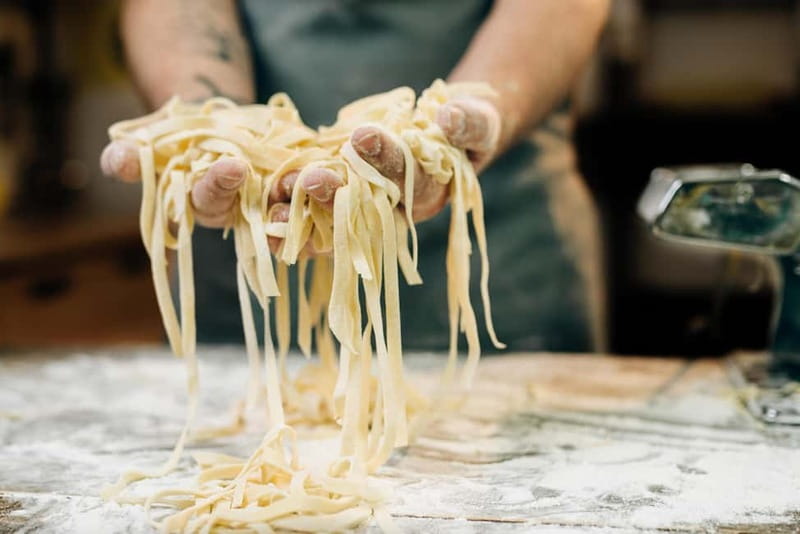
- Three pasta shapes: Learn the basics behind ravioli, tortelli, and wide pappardelle.
- Central Florence setting: The school is between Piazza della Signoria and the Basilica of Santa Croce.
- Hands-on from start to finish: You prepare the dough and shape the pasta rather than simply watching a demonstration.
- Friendly chefs: Leon, Leo, Rudi, Dino, and Mahmood are among the instructors named in recent feedback.
- Food and wine included: Eat the pasta you help make, with Tuscan wine or a non-alcoholic drink.
- Strong value: Three hours of cooking, dining, and social time costs $34 per person.
Making pasta in the heart of Florence
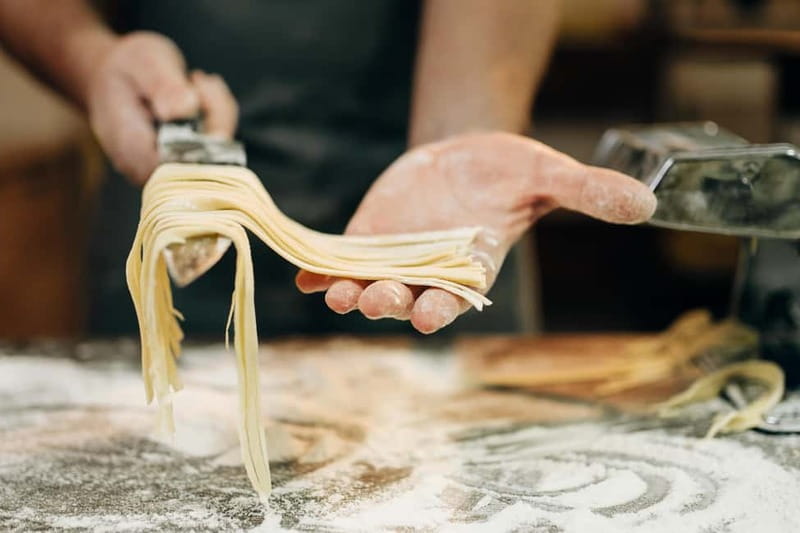
This class gives you a useful break from Florence’s museums and crowded streets. You arrive in the historic center, close to two of the city’s best-known sights, and spend three hours doing something active with your hands.
That location matters. You can pair the class with time around Piazza della Signoria, the Uffizi area, or Santa Croce without arranging transport across town. The school is in a real central neighborhood rather than a distant cooking facility, though one person found the arrival a little confusing because the restaurant name was not clear at first.
The setting is described as a fully equipped kitchen connected with the restaurant Tre Pepi. You should look carefully at the meeting instructions and confirm the venue name before setting off. That small bit of preparation can save you from wandering through central Florence looking for a generic cooking school entrance.
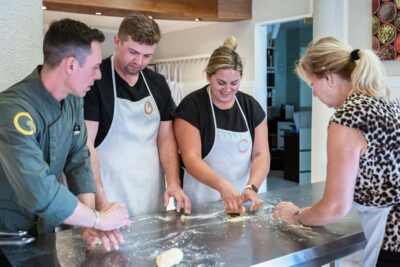
The class is taught in English and Italian. The chef leads you through each step and helps when the dough, filling, or pasta shape does not behave as planned. That hands-on help is important for beginners. Fresh pasta looks simple, but the dough needs the right texture, and filled pasta can split if you rush.
More Fresh Pasta Workshops in Florence
- Pastamania – Florence Pasta Making Class
★ 5.0 · 3,050 reviews - Florence: Handmade Pasta & Dessert Class with Unlimited Wine
★ 4.8 · 788 reviews - Hands-On Pasta Cooking Class in Florence with optional Pizza
★ 4.5 · 276 reviews
What happens during the three hours
The exact order can vary, but the class follows a practical kitchen rhythm. You begin with the ingredients and equipment, then prepare the pasta dough. The chef explains the measurements and basic technique, giving you enough information to repeat the recipe at home.
Next comes rolling and shaping. The advertised class focuses on three types of pasta:
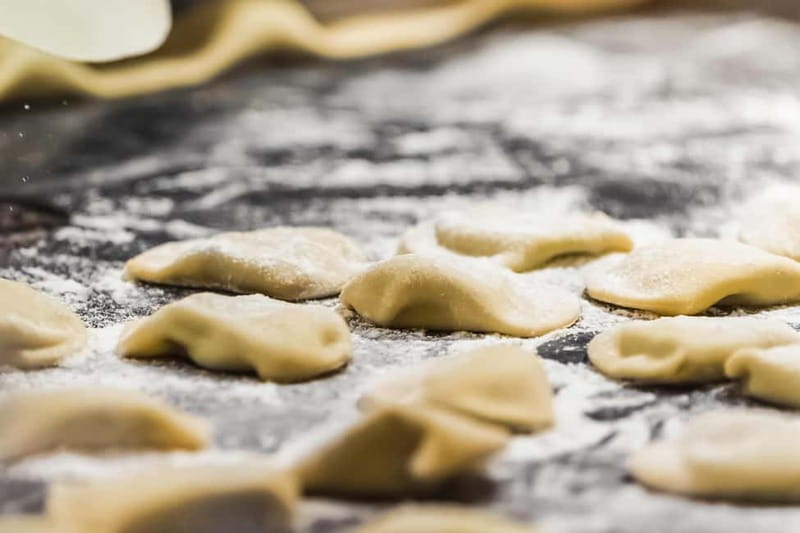
- Ravioli, made with a filling and sealed into small parcels
- Tortelli, another filled shape with a different size or form
- Pappardelle, wide ribbons that are especially good with a hearty sauce
This is more useful than learning one decorative shape and then going home unsure what to do next. You see how dough changes when rolled thin, how filled pasta must be closed, and how broad ribbons differ from delicate parcels.
Several sessions described in the supplied feedback made two pasta shapes and tiramisu instead of all three listed pasta types. Ravioli and pappardelle appear often, while some groups made tagliatelle or another pasta shape. This does not necessarily mean the class is inconsistent in a bad way. It may reflect the menu, the group, or the available time. Still, if making all three named pasta types is essential to you, ask before booking.
Once the pasta is ready, the kitchen cooks it. You then sit down to eat what you made, served with sauce and a drink. Some people describe tomato and ragu sauces, but the exact sauce is not promised in the supplied details, so do not book expecting one particular recipe.
The real value is doing, not watching
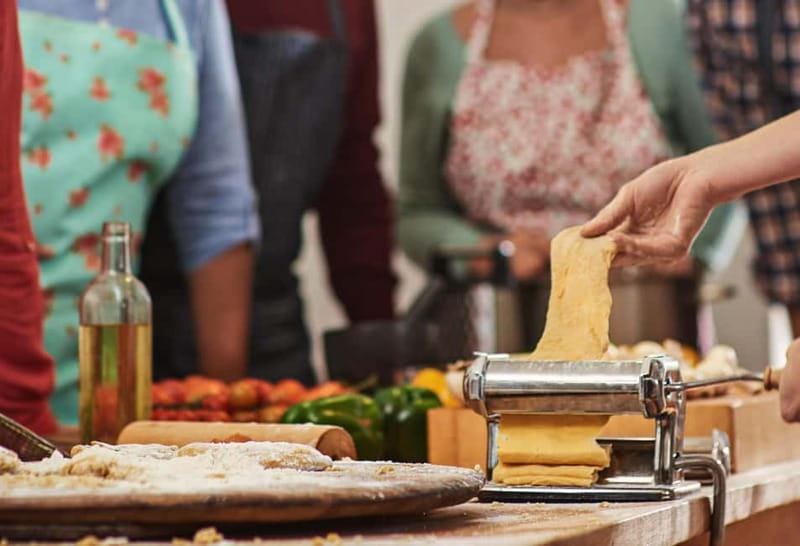
A cooking demonstration can be entertaining, but it often leaves you with little confidence in your own kitchen. This class puts you in the useful middle ground: the chef demonstrates the method, then you try it with help nearby.
That makes it suitable for first-time cooks. You do not need special equipment or previous pasta-making experience, and all ingredients and tools are supplied. The instruction is practical rather than overly formal. You learn how the dough should feel, how to shape the pasta, and how to avoid common mistakes.
The chefs also seem to adjust their approach to the group. Leon is repeatedly described as patient, funny, and attentive. Leo is praised for clear guidance and keeping the class moving. Rudi is noted for explaining the process simply, while Dino and Mahmood are named as warm hosts in smaller or larger groups.
That human touch is a big part of the appeal. One particularly moving account describes a chef helping a participant who had difficulty processing instructions. The chef’s patience allowed her to take part and finish the meal happily. You should not assume every class will receive the same instructor, but the available information points to a teaching style that is encouraging rather than intimidating.
A social meal with wine at the end
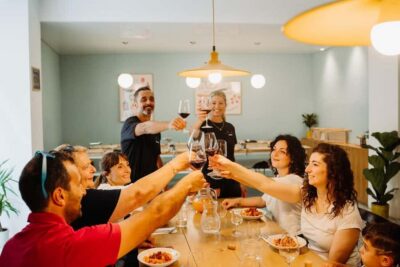
After the cooking, the class changes pace. You sit with the group and eat the pasta prepared during the lesson. That meal gives the class a clear payoff, and it also turns the activity into a shared evening rather than a technical workshop.
Tuscan wine is included. Non-alcoholic drinks are also available, which is useful if you do not drink or want to keep a clear head for the rest of your evening. The alcohol rules are strict: intoxication, alcohol and drugs brought into the venue, smoking, and smoking indoors are not allowed.
The social side works especially well for solo visitors and couples. One solo participant described feeling welcomed, and several people enjoyed meeting others from different countries. In a small group of three or four, the class can feel almost like cooking with friends. Larger groups can be livelier, with more noise and less individual attention.
You should think about what kind of evening you want. If you prefer a quiet, highly technical lesson, the jokes and social atmosphere may feel distracting. If you want food, conversation, and a little kitchen chaos, the informal style is a plus.
More Pasta Classes with Wine in Florence
- Florence: Pasta Cooking Class with Unlimited Wine
★ 4.9 · 10,285 reviews - Florence: Pasta & Tiramisu Cooking Class with Unlimited Wine
★ 4.9 · 6,708 reviews - Florence: Pasta Cooking Class with Unlimited Wine
★ 5.0 · 6,413 reviews - Florence: Cooking Class Pasta & Tiramisu Making Unlimited Wine
★ 5.0 · 2,234 reviews
Tiramisu may be part of your session
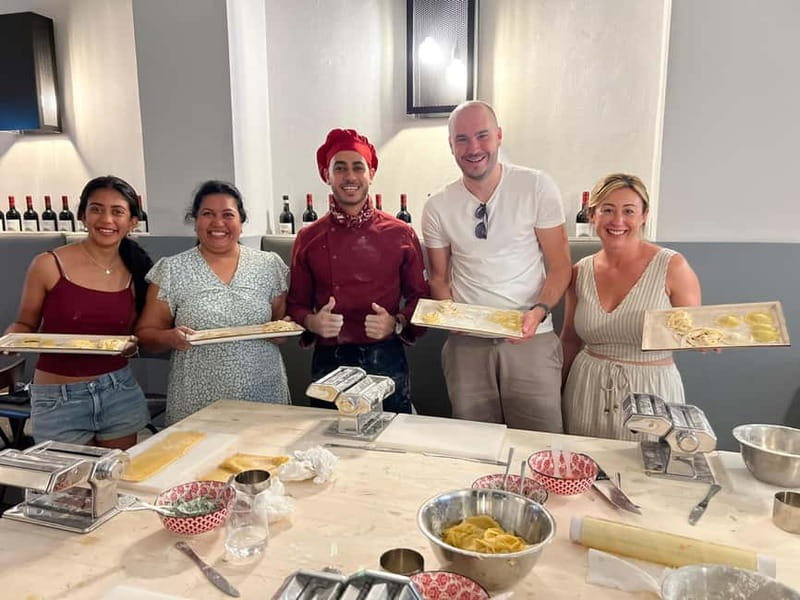
The official description centers on three pasta types, but many recent sessions included tiramisu. In those classes, the dessert was often assembled early and placed in the refrigerator while the group worked on the pasta.
This is a smart use of time. Tiramisu needs time to chill, and making it first lets you enjoy it at the end with the pasta. Several people found the dessert easy to prepare and surprisingly good, including one person who normally does not like tiramisu.
Still, tiramisu is not clearly listed among the official included highlights. Treat it as a possible addition, not a guaranteed part of every booking. The same applies to the exact pasta combination. The strongest reason to book is the pasta class itself, with dessert as a welcome extra if it appears on your session’s menu.
Is $34 a good deal in Florence?
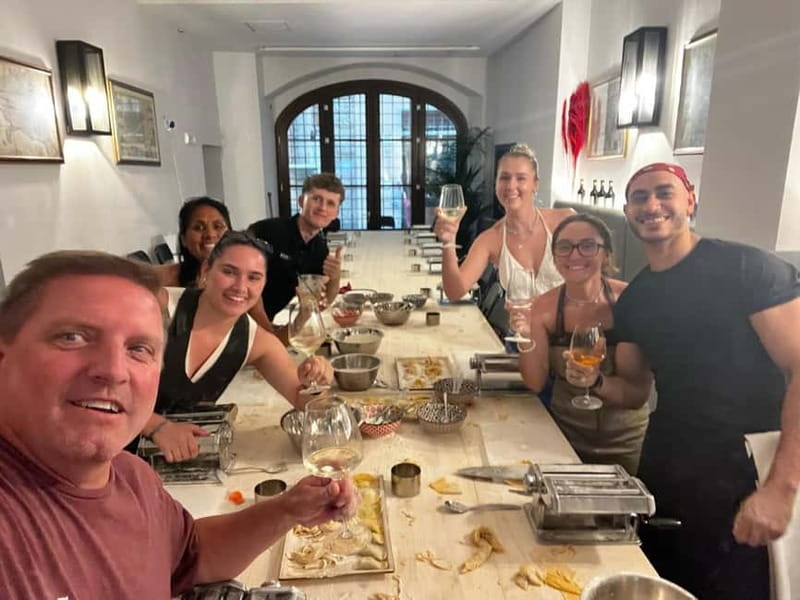
Yes, the price is one of the class’s strongest points. At $34 per person, you receive three hours of instruction, ingredients, equipment, the meal you prepare, and Tuscan wine or another drink.
Compare that with paying separately for a restaurant meal and a shorter demonstration. Here, your dinner is part of the lesson, and you gain a skill you can use at home. You also avoid spending time and money on transportation because the venue is in central Florence.
The value depends partly on the group size. A small group of three or four allows more direct help with shaping and dough. A large group can still be fun, but you may wait your turn at certain stages. The supplied information does not give a fixed maximum group size, so ask if personal instruction is especially important to you.
The class is also flexible from a booking standpoint. You can reserve and pay later, and cancellation is free up to 24 hours in advance for a full refund. Check the available start times when booking because the three-hour schedule varies.
Who should book this class?
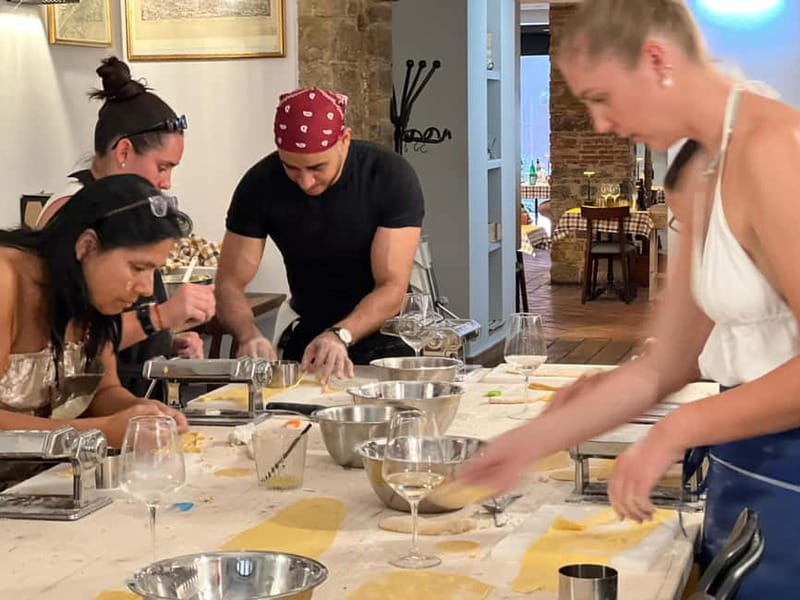
I would recommend it to adults who want an active food experience in Florence, especially first-time pasta makers. You get enough instruction to feel involved, but you do not need to arrive with culinary skills.
It suits couples looking for a relaxed evening, solo visitors who want an easy social activity, and friends who prefer cooking to another passive sightseeing stop. Families with older teenagers should note the stated age rule: the activity is not suitable for children under 18.
The class is also a good choice if you want to understand Italian food beyond eating it in restaurants. Making the dough and shaping the pasta gives you a better sense of why fresh pasta feels different from dried pasta, and why shape matters when it meets a sauce.
It is less suitable for someone seeking a formal chef-training lesson. You learn useful methods, but the mood is playful and social. Also, if you need a guaranteed recipe handout, ask in advance. One participant wished the recipes had been sent home, so you may want to write down measurements and steps during the lesson.
Practical details before you go
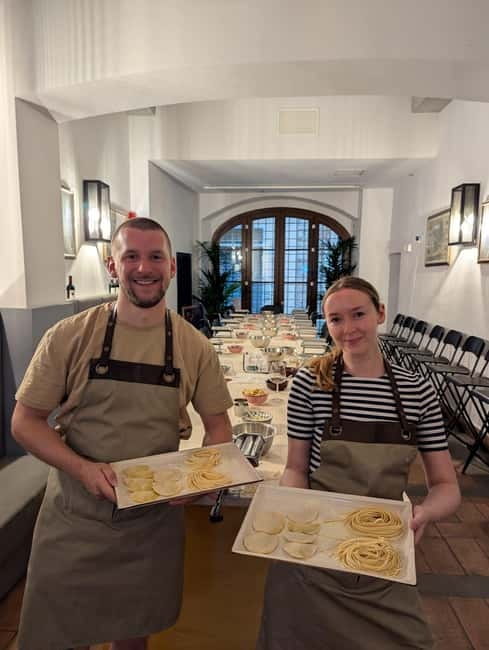
The class lasts three hours, so avoid booking it immediately before a timed museum entry or an important dinner reservation. The cooking and meal may move at a relaxed pace, especially if the group is large or enjoying conversation.
Wear clothes you can cook in comfortably. The venue supplies equipment, but the rules require covered feet, and bare feet are not allowed. Pets are not permitted, though assistance dogs are allowed. Smoking indoors and fireworks are also prohibited.
The venue is wheelchair accessible according to the activity information. If you have a specific mobility need, confirm the details before arrival, since accessibility can involve the entrance, kitchen workstations, and dining area.
The class is offered in English and Italian. English instruction has worked for groups whose first language was not English, but you should still tell the provider about any important dietary, mobility, or learning needs before the class. The supplied information confirms that one chef adapted a tiramisu recipe for a participant, but special changes should never be assumed.
Should you book it?
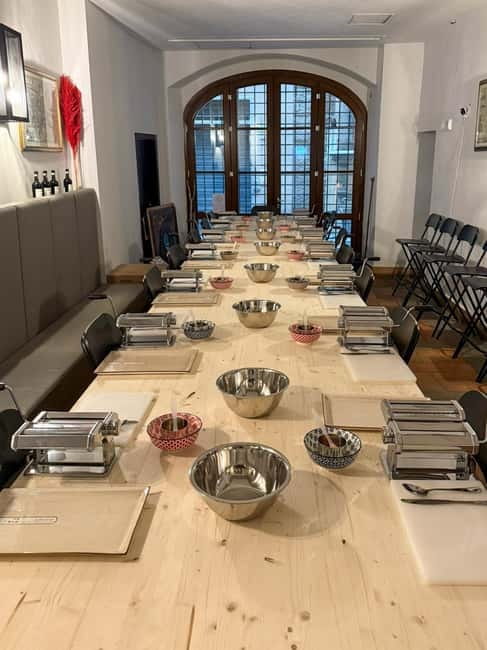
Book this class if you want a good-value Florence activity that combines food, instruction, and company. The strongest reasons are the central location, the chance to make pasta with your own hands, and the warm teaching style associated with instructors such as Leon and Leo.
Before paying, confirm two details: the meeting point or restaurant name, and the menu for your chosen session. The advertised class teaches ravioli, tortelli, and pappardelle, while many sessions have included two pasta types and tiramisu. If you are happy with that flexibility, $34 buys a satisfying three-hour introduction to fresh pasta and a dinner you helped create.
FAQ
How long does the pasta class last?
The activity lasts three hours.
Where does the class take place?
It takes place in central Florence, between Piazza della Signoria and the Basilica of Santa Croce. The experience is associated with the restaurant Tre Pepi, so check the meeting details carefully.
What types of pasta will I make?
The advertised class includes ravioli, tortelli, and pappardelle. Some sessions have instead included two pasta types, such as ravioli and pappardelle or tagliatelle, along with tiramisu.
Is wine included?
Yes. Tuscan wine is included, and non-alcoholic drinks are available.
Are ingredients and cooking equipment provided?
Yes. The activity includes all ingredients and the equipment needed for the class.
Is the class suitable for beginners?
Yes. The chef guides you step by step, and the class is designed for beginners as well as people with more cooking experience.
Can children attend?
The activity is not suitable for children under 18.
What languages are spoken?
Instruction is available in English and Italian.
Is the activity wheelchair accessible?
The activity is listed as wheelchair accessible. Contact the provider before arrival if you need details about a specific access requirement.
Fresh off the board around Florence
- Hands on Deluxe Traditional 4-course dinner with fresh pasta★ 5.0 · 15 reviews
- The Art of Pasta and Wine Tasting with Local Sommelier★ 5.0 · 16 reviews
- Vegan Cooking Class in Florence: Pasta Making & Wine!★ 5.0 · 2 reviews
- Gluten free pasta and dessert class 6 guests max★ 5.0 · 2 reviews
- Tuscan Pasta Masterclass Small-Group Cooking Experience★ 5.0 · 17 reviews
- Cooking class and home made pasta in Florence with LA VIVANDIERA!★ 5.0 · 5 reviews
- MaMa Florence: The Art of Corzetti – Hands-On Pasta Class★ 5.0 · 15 reviews
- Hands-On Pasta Making Class in Central Florence with Patrizia★ 5.0 · 5 reviews
Fresh Pasta Workshops, class by class.
Pasta Making Class with Wine, Limoncello, and Dessert
Read our review →
Enjoy Spritz and Pasta Making in Piazza Navona
Read our review →
Pasta Making & Wine Tasting with Dinner in Frascati from Rome
Read our review →
The Secrets to Learn Fresh Pasta and Tiramisù in a Glam Home
Read our review →