
Review · FLORENCE
Florence: Pasta Class with Wine, Limoncello and Dessert
Fresh pasta is the point here, but the setting and social meal give the class its real flavor. In a historic palace just steps from Ponte Vecchio, you make ravioli, tortelli, and fettuccine by hand, then sit down with the same people to eat what you prepared.
I like the clear, hands-on format, especially the fact that each person works with dough instead of simply watching a chef. I also like the finish: organic Tuscan wine, dessert, and limoncello turn a useful cooking lesson into a relaxed Florence evening. The main concern is dietary suitability, since the information supplied gives conflicting details about vegan, gluten-free, and lactose-free diets. Ask the school directly before booking.
Key points to know before booking
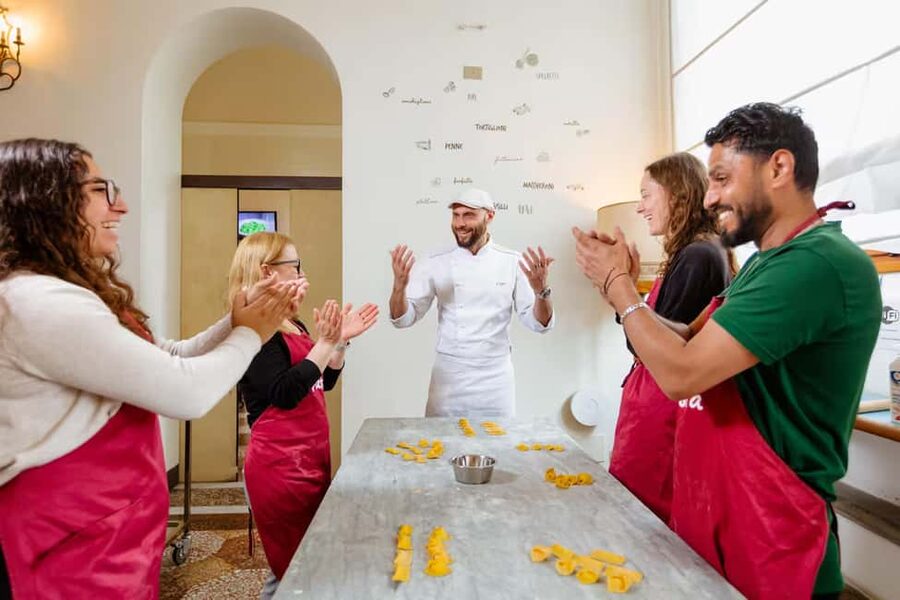
- Three pasta shapes in one class: Make ravioli, tortelli, and fettuccine from egg and flour.
- Historic central setting: The school is at Lungarno Guicciardini 17r, near Ponte Vecchio.
- You eat what you make: The pasta is cooked together, then served at a shared table.
- Friendly, lively instruction: Named teachers include Camilla, Giacomo, Francesca, Sarno, Caterina, and Lucrezia.
- More than pasta: The three-hour session includes wine tasting, dessert, and limoncello.
- Check food restrictions early: Vegan, gluten-free, lactose-free, and nut-free needs may not be supported.
Pasta class near Ponte Vecchio
Florence has no shortage of cooking schools, but location matters. This one sits on Lungarno Guicciardini, across the river from the historic center and only a short walk from Ponte Vecchio. You can pair it with a stroll through the Oltrarno, a visit to the Pitti Palace area, or an evening walk along the Arno.
The setting is part of the appeal. You are not heading out to a distant countryside kitchen for this lesson. You stay in central Florence, in a historic palace used as a cooking school and food shop. That makes the class easy to fit into a short city break.
The session lasts three hours and is taught in English. It suits couples, families, groups of friends, solo visitors, students, and company groups. The class can also work well for different ages. One family brought children aged 12 and 15, and another large family included children and older parents celebrating a 50th wedding anniversary.
You should arrive five minutes early for check-in. Wear clothing that is comfortable for cooking. Smoking is not allowed.
More Pasta Classes with Wine in Florence
- Florence: Pasta Cooking Class with Unlimited Wine
★ 4.9 · 10,285 reviews - Florence: Pasta & Tiramisu Cooking Class with Unlimited Wine
★ 4.9 · 6,708 reviews - Florence: Pasta Cooking Class with Unlimited Wine
★ 5.0 · 6,413 reviews
From flour and eggs to three pasta shapes
The class begins with an introduction to pasta and Italian food traditions. A short film sets the scene before the practical work starts. One participant felt this opening could have been shorter, since kitchen time is the main reason to book, but it does provide context before you handle the dough.
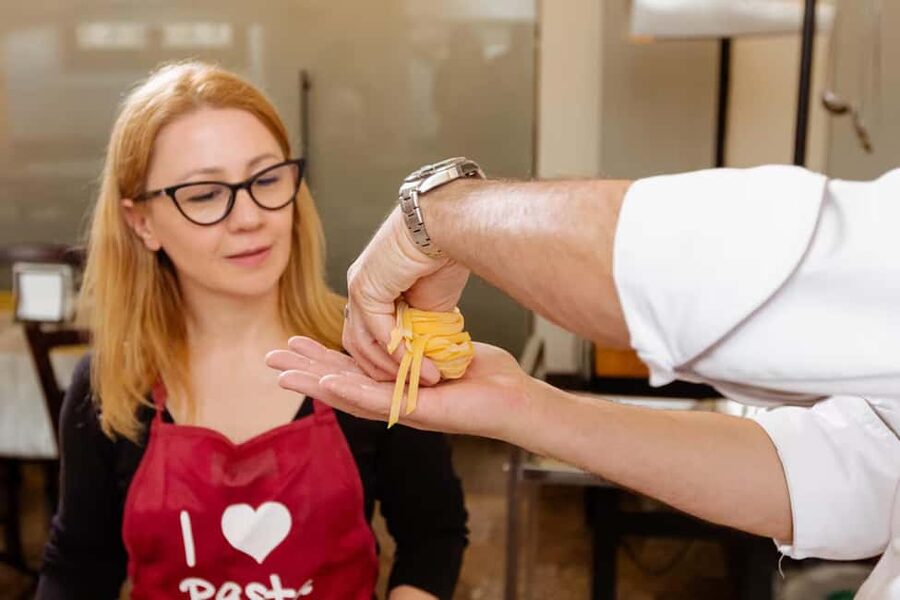
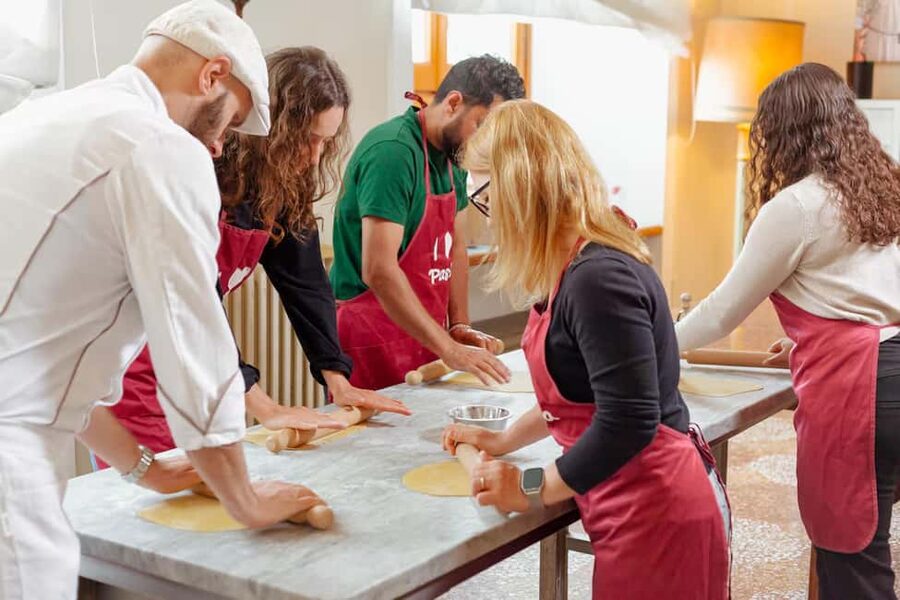
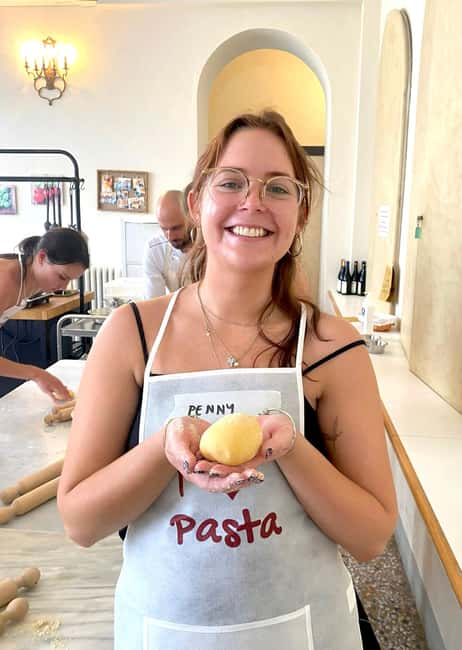
Then you put on an apron, take a rolling pin, and begin with the basic mixture of flour and eggs. The class is designed for beginners, so you do not need previous cooking experience. The instructor demonstrates the process, then moves around the room to help each person.
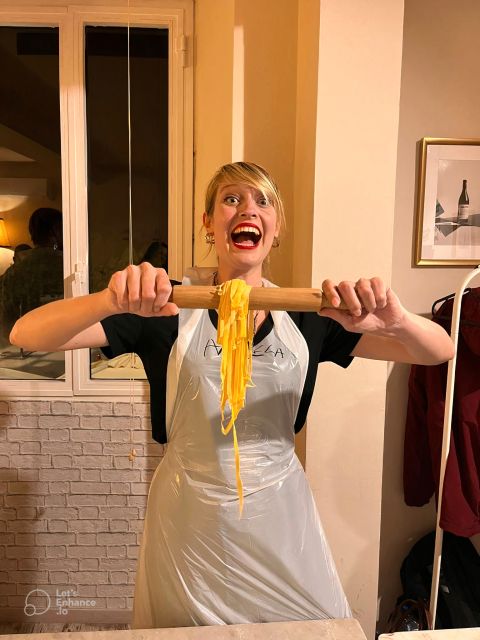
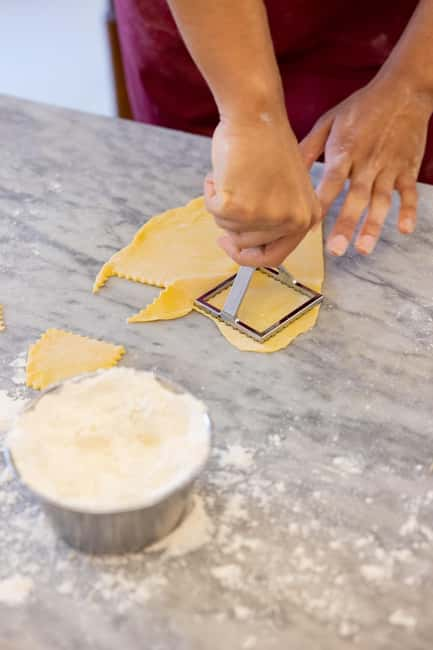
This is where the class earns its keep. You are not given a finished sheet of dough and told to cut it. You knead, roll, stretch, and shape your own pasta. The work is simple in theory but surprisingly physical. Getting the dough to the right thickness takes attention, and a good instructor can save you from turning your ravioli into thick little parcels.
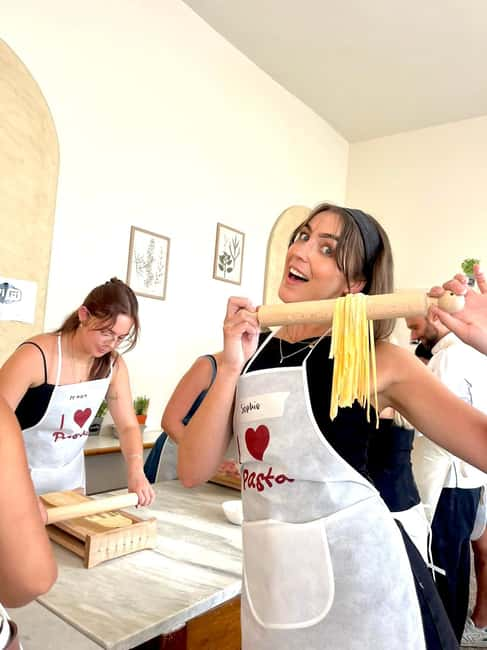
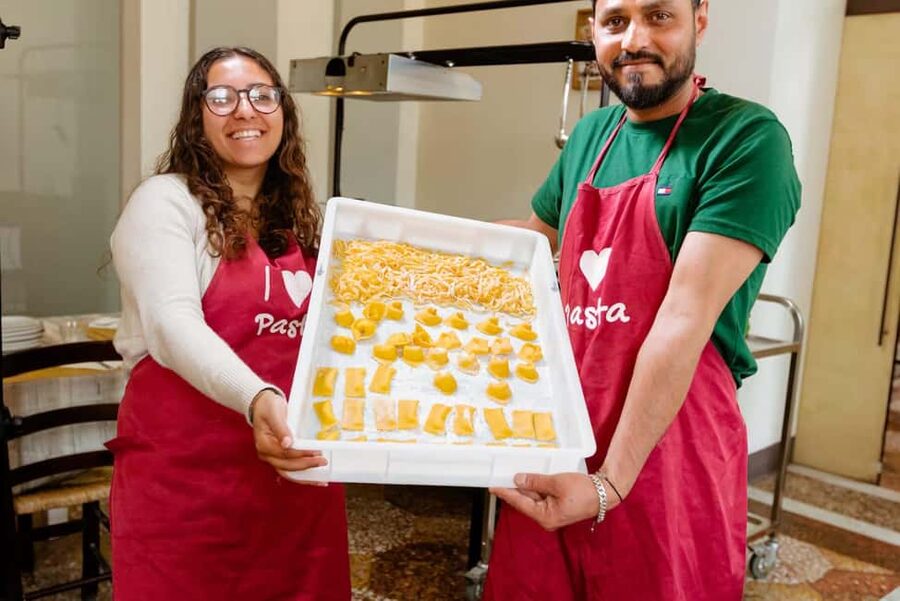
The three shapes give the lesson useful variety. Fettuccine shows you how to roll and cut long pasta. Ravioli and tortelli introduce filling, folding, and sealing. You also see how different shapes pair with different sauces.
The class has included groups of around 10 people, though the exact size may vary. That is large enough to create a sociable room but small enough for the instructor to circulate. Teachers named in the supplied information include Camilla, Giacomo, Francesca, Sarno, Caterina, Lucrezia, Nicola, Ezgi, Beatrice, and Jessica. The repeated praise for these teachers points to a shared teaching style: friendly, energetic, and attentive to beginners.
What happens to the sauces
The sauces are handled in two different ways, which is worth understanding before you arrive. The signature tomato sauce is prepared in advance and simmered for hours. That is sensible kitchen planning, since a proper tomato sauce takes time and would leave you waiting during the lesson.
The butter and sage sauce for the ravioli and tortelli is prepared in front of you. This gives you a better look at how a very simple Italian sauce works. There is no long list of ingredients to hide behind. The lesson is about balance, timing, and letting fresh pasta do most of the work.
The filling and some sauce preparation may also be done in advance for practical reasons. One participant specifically appreciated receiving the recipes for everything served, even though some components had been prepared before the class. That is a fair trade. If every filling and sauce were made from the beginning, the three-hour session would become much longer and less focused.
You should expect a lesson in pasta technique rather than a full professional kitchen apprenticeship. The value is in learning repeatable methods you can try at home, not in mastering every part of a restaurant menu.
The shared meal is part of the lesson
Once the pasta is shaped, the class cooks it together in one pot. Then everyone sits at a large communal table and eats the food made during the session.
I like this structure because the cooking has a clear reward. You do not pack up your dough and leave hungry. You see how fresh pasta behaves in boiling water, taste the sauces, and discover the difference between pasta made that day and dried supermarket pasta.
The meal also changes the tone of the class. At the worktables, people are focused on flour, filling, and pasta edges. At the dining table, the pace slows. You can talk with people from different countries, compare your pasta shapes, and ask the instructor about Florence and local food.
Portions are described as generous enough for a proper meal, though this is not presented as a full tasting menu. The meal includes the prepared pasta dishes, wine, dessert, and limoncello. Additional food and drinks are not included.
The dessert is prepared in advance rather than taught as a separate cooking project. That keeps the pasta lesson moving and gives you a sweet finish without adding another technical session. The final limoncello is served as a shot, and wine is available only to participants of legal drinking age.
Same flour, a different shape to roll:
- Florence Pizza or Pasta Class with Gelato Making at a Tuscan Farm
★ 5.0 · 6,801 reviews - Pastamania – Florence Pasta Making Class
★ 5.0 · 3,050 reviews - Florence: Cooking Class Pasta & Tiramisu Making Unlimited Wine
★ 5.0 · 2,234 reviews - Florence: Pizza or Pasta Class with Gelato at a Tuscan Farm
★ 4.9 · 1,181 reviews
Tuscan wine and the organic shop
Wine is part of the social side of the class, not just an extra drink. The school serves organic Tuscan wine from Dalle Nostre Mani, made using natural production methods. The experience includes tasting, and one person specifically advised staying for the wine portion instead of leaving as soon as the pasta is finished.
The cooking school also has an organic store. You might find olive oil and other food products there, and one participant bought olive oil to take home. The shop gives you a practical way to extend the lesson into your own kitchen, though purchases are not part of the class price.
If you do not drink alcohol, the food and instruction remain the main event, but you should know that wine and limoncello are built into the social finish. Alcohol is served, and only those of legal drinking age receive wine.
How good is the value?
No price is supplied here, so I cannot give you a meaningful cost comparison. I can explain what you are paying for. The booking covers professional instruction, ingredients, equipment, the pasta meal, organic wine tasting, dessert, and limoncello.
That package can offer good value in Florence, where a central meal, wine, and a guided activity can quickly add up. You also leave with techniques and recipes rather than only a restaurant memory. The recipe book mentioned by one participant is a useful extra if it is included with your booking.
The value is strongest if you want an activity that fills a meaningful part of the day. Three hours is long enough to learn several shapes and eat a full meal, but short enough to fit alongside sightseeing. It is less appealing if you want a serious chef-training course, a market visit, or a class focused on making every dish entirely from scratch.
The class also saves you from arranging separate transport. You make your own way to the school, and no hotel pickup or drop-off is included. Since the address is central, this is not a major drawback for most people staying in Florence.
Who should book this Florence experience?
This is a strong choice for first-time pasta makers. The class does not assume you know how to knead dough, fill ravioli, or judge pasta thickness. The instructors are expected to demonstrate each step and help around the room.
Families are another good match. The activity gives children a practical task and a meal they helped create. Younger children may need close help with rolling and shaping, but the family examples show that the format can include children and older relatives.
Couples can use it as a shared evening activity, especially if they want something more social than another restaurant meal. Solo visitors can also fit in easily, since the communal table gives the class a natural way to meet people.
It is also useful for groups celebrating a birthday, anniversary, or reunion. The instructors have been described as attentive on special occasions, and the shared meal gives the group a simple focal point.
You may want to skip it if you dislike group activities, do not want to work with flour, or prefer to observe rather than participate. The class asks you to get involved. That is its strength, but it will not suit everyone.
Dietary restrictions and mobility concerns
The food information needs careful checking. The booking details say dietary options can be discussed, yet the important information also says the school cannot accommodate vegan, gluten-sensitive, or lactose-intolerant participants. The activity is specifically listed as unsuitable for vegans, people with gluten intolerance, people with lactose intolerance, and people with nut allergies.
One participant reported that a gluten-free member of the group was accommodated, while another description says gluten sensitivity cannot be supported. These details do not line up. If you have any allergy or restriction, contact the provider before paying and get a clear answer about the exact menu and cross-contact risk.
The experience is also listed as unsuitable for people with mobility impairments. No hotel transfer is provided, so you must reach Lungarno Guicciardini 17r independently.
Booking, cancellation, and possible schedule changes
You can reserve now and pay later, which helps if your Florence plans are still moving around. Cancellation is free up to 24 hours before the activity for a full refund.
The school needs a minimum number of participants to run the class. If that number is not reached, the provider may offer another time or date, or give you a full refund. Keep that in mind if you are building a tightly timed itinerary around the lesson.
Check the available start times before booking, since the class is offered at set times rather than on a continuously open schedule. Arrive five minutes early, especially because the school is in a central area where finding the right doorway may take a moment.
Should you book the pasta class?
Book it if you want to make real pasta in central Florence, eat your own work, and share a relaxed meal with an international group. The strongest parts are the three pasta shapes, the patient English-speaking instruction, the historic palace setting, and the generous finish with Tuscan wine, dessert, and limoncello.
I would be especially inclined to book this for a family or couple who wants a break from museums and churches. It also makes sense for a rainy day, a birthday, or a final evening in Florence when you want a meal that feels like an activity.
Think twice if you need strict dietary control, have mobility limitations, or want every sauce and filling made from the beginning. Confirm dietary arrangements before booking, and remember that the class is social and hands-on, not a quiet demonstration.
With a 4.9 rating from 674 bookings, the experience has a strong record. The best reason to choose it is simpler: you learn a basic Italian skill, eat the result, and leave with recipes that can bring a little Florence back to your home kitchen.
FAQ
How long does the pasta class last?
The activity lasts three hours.
Where does the cooking class take place?
It takes place at the provider’s cooking school at Lungarno Guicciardini 17r, 50125 Florence, Italy, near Ponte Vecchio.
What types of pasta will I make?
You will make ravioli, tortelli, and fettuccine by hand using flour and eggs.
Is the class taught in English?
Yes. The listed instructor language is English.
Are wine, dessert, and limoncello included?
Yes. The experience includes organic Tuscan wine, dessert, and a limoncello shot. Wine is served only to participants of legal drinking age.
Can the class accommodate dietary restrictions?
The information is conflicting. Dietary options are said to be available, but the important notes state that vegan, gluten-sensitive, lactose-intolerant, and nut-allergic participants cannot be accommodated. Contact the provider before booking to confirm your specific needs.
Can I cancel the booking?
Yes. You can cancel up to 24 hours in advance for a full refund.
Fresh off the board around Florence
- Hands on Deluxe Traditional 4-course dinner with fresh pasta★ 5.0 · 15 reviews
- The Art of Pasta and Wine Tasting with Local Sommelier★ 5.0 · 16 reviews
- Vegan Cooking Class in Florence: Pasta Making & Wine!★ 5.0 · 2 reviews
- Gluten free pasta and dessert class 6 guests max★ 5.0 · 2 reviews
- Tuscan Pasta Masterclass Small-Group Cooking Experience★ 5.0 · 17 reviews
- Cooking class and home made pasta in Florence with LA VIVANDIERA!★ 5.0 · 5 reviews
- MaMa Florence: The Art of Corzetti – Hands-On Pasta Class★ 5.0 · 15 reviews
- Hands-On Pasta Making Class in Central Florence with Patrizia★ 5.0 · 5 reviews
Pasta Classes with Wine, class by class.
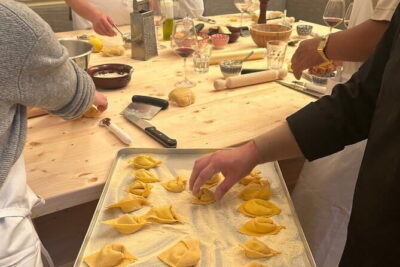

Pasta & Tiramisu Class with Fine Wine by the Vatican
Read our review →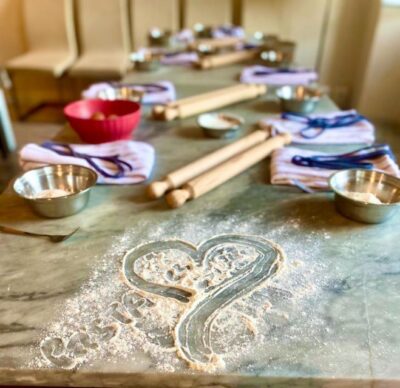
Pasta Making Class with Wine, Limoncello, and Dessert
Read our review →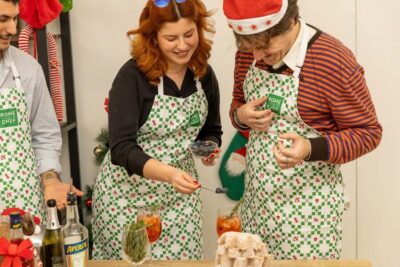
Rome Cooking Class: Make Pasta and 3 Spritz Cocktails
Read our review →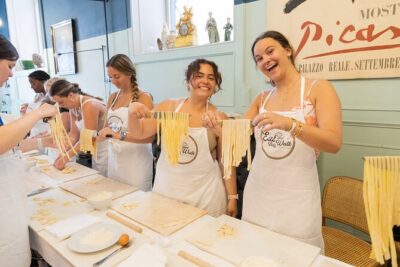
Learn to Make Pasta & Tiramisu with Wine and Limoncello Included
Read our review →
Cooking Class Pasta & Tiramisu Making Unlimited Wine
Read our review →
Fettuccine & Tiramisù: Cooking Class with Wine & Limoncello
Read our review →
Pasta Cooking Class Near the Colosseum with 3 Spritz Cocktails
Read our review →Lists this class appears in