
Review · SARDINIA
Cooking Class in a Secret Courtyard – Culurgiones (Sardinian Pasta)
The best part of this Sardinian cooking class is that you do not simply watch a chef work. You sit in a family home, put on an apron, knead dough, and learn to shape culurgiones, Sardinia’s distinctive stuffed pasta. I like the traditional house setting and the chance to share a meal with the family who runs it.
I also like the small group size, with no more than 10 people, and the four-hour evening schedule, which leaves room for cooking, conversation, and dinner. The main caution is communication: English is advertised, but some visitors found that little or no English was spoken, so this suits you best if you are patient and comfortable with a relaxed, hands-on format.
Key points to know before booking
- A real home setting: You meet at La Corte del Carrubo and tour a traditional Sardinian house before cooking.
- Culurgiones are the focus: You help knead dough and learn to form the pasta rather than simply observing.
- Family-led evening: Federica, Mickaele, and their family are involved in the cooking and meal.
- Dinner is included: Expect cold cuts and cheeses to start, followed by the freshly prepared culurgiones.
- Small, but not polished: The group is capped at 10, though drinks and service are more informal than in a restaurant.
- Check the meeting details: The start point is in Lanusei at 6:30 pm, and clear directions matter.
Why culurgiones make a good Sardinian lesson
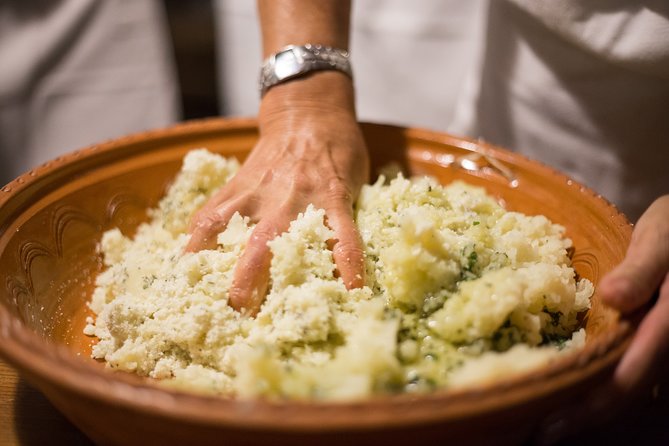
Culurgiones are not ordinary pasta parcels. Their shape and filling are tied to Sardinian food traditions, and the folding takes practice. The point of this class is not to rush through a recipe. You spend time learning how the dough behaves and how to seal each piece by hand.
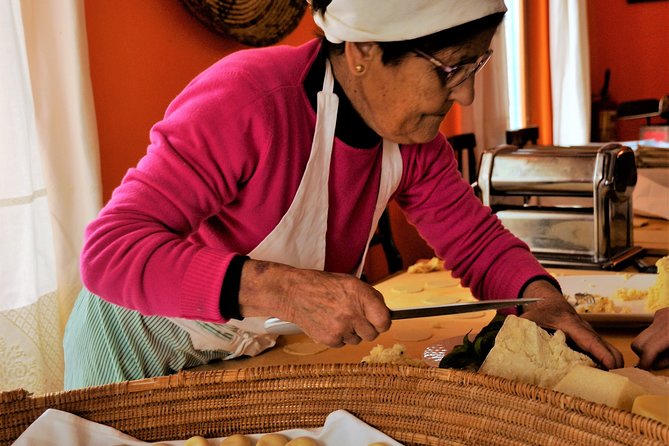
That hands-on work is the heart of the evening. You put on an apron, knead the dough, and work alongside the cook and home owner. The family approach means you may learn by watching someone demonstrate a fold, copying it, and trying again. This is less like a professional kitchen lesson and more like being shown a family skill.
I like that distinction. A polished cooking school might give you precise stations, timed demonstrations, and a neat portion of ingredients. Here, you take part in producing the meal everyone will eat. That makes the pasta lesson feel useful, though it also means the work can take time.
One important detail is that the class may involve preparing a large amount of dough. A visitor described working through about 2 kilograms of dough, with the shaping taking roughly two hours. That is a lot of pasta for an evening class, so you should not expect a quick demonstration followed by a long period of leisure.
If you enjoy repetitive handwork, this can be rewarding. If you mainly want to eat Sardinian food and spend an hour cooking, the pace may test your patience. The class is built around participation, not entertainment between courses.
More pasta classes around Italy:
- Florence: Pasta Cooking Class with Unlimited Wine
★ 4.9 · 10,285 reviews - 3 in 1 Cooking Class near Navona: Fettuccine, Ravioli & Tiramisu
★ 5.0 · 7,376 reviews - Florence Pizza or Pasta Class with Gelato Making at a Tuscan Farm
★ 5.0 · 6,801 reviews
Entering the traditional house at 6:30 pm
The meeting time is 6:30 pm at La Corte del Carrubo in Lanusei, in Sardinia’s Nuoro province. The activity begins and ends at the same meeting point, so you are not being taken between several locations during the evening.
The first stage is a welcome and a tour of the traditional Sardinian house. That matters because the setting gives the meal a sense of place. You are not entering a generic cooking studio with stainless-steel counters. You are seeing the home where the family hosts the activity.
The available information does not provide a detailed list of rooms or architectural features, so I would not arrive expecting a formal museum visit. Think of this as a short introduction to a lived-in home before the cooking begins. The house tour helps set the tone, but the pasta lesson remains the main event.
Allow extra time to find the exact address. The meeting information gives 08045 Lanusei NU, Italy, but some people had trouble with location details and ended up at the wrong private house. That is a serious practical concern. Confirm the precise meeting point before the evening, and do not rely on a vague map pin if the directions look unclear.
This is especially important because the activity begins at a fixed time. A missed location can mean missing the welcome, the house tour, and the start of the dough preparation.
From Sardinian food talk to the apron
After the welcome, the family gives a short introduction to Sardinian cuisine. It is brief rather than a full food lecture, but it provides a useful frame for the meal. You learn what you are making and why the pasta matters before beginning the practical work.
Then come the aprons and dough. The cook friend and home owner guide the group through kneading and shaping. Federica and Mickaele are also associated with the family hosting the evening, and the class has a strongly family-run feel.
This is where the small group limit helps. With a maximum of 10 people, you have a better chance of seeing the demonstration and getting help with the pasta shape. It is still possible that several people will be working at once, especially during the long shaping stage, but the group is small enough to keep the activity personal.
The lesson is suitable for children from age 6. That does not mean every child will enjoy several hours of dough work, but older children who like making food can take part. Non-alcoholic drinks are available for children, while alcoholic drinks are reserved for people 18 and over.
You should also note that the advertised language is English, but language support may vary in practice. Some people found that no one spoke English during the class. That can make instructions difficult, particularly when you are learning a precise pasta fold.
A little patience and a willingness to watch closely will help. Still, if English instruction is essential for you, contact the provider before booking and confirm who will lead the lesson in English. That is not a minor detail when the activity depends on hand movements and timing.
The aperitif gives the dough work a pause
After the pasta preparation, the evening includes an aperitif. This is a welcome break after the hands-on work and gives you time to relax before dinner.
The drink service is informal. The class is not presented as a full-service restaurant, and one person found it difficult to get water while working in warm conditions. Another account described water, soft drinks, and a jar of house red wine at dinner.
For that reason, I would keep your expectations simple. You are paying for a cooking lesson and dinner in a family home, not for a bar service with a long drinks list. If you need regular water, ask early and clearly. The information provided does not promise a broad choice of beverages.
The aperitif is valuable mainly because it marks a change in pace. You have finished the most labor-intensive part of the class, and you can begin talking with the family and other people at the table. It is part of the social character of the evening rather than a separate food tour stop.
Same flour, a different shape to roll:
- Florence: Pasta & Tiramisu Cooking Class with Unlimited Wine
★ 4.9 · 6,708 reviews - Florence: Pasta Cooking Class with Unlimited Wine
★ 5.0 · 6,413 reviews - Rome: Pasta & Tiramisu Class with Fine Wine by the Vatican
★ 4.9 · 4,852 reviews - Rome: Pasta Making Class with Wine, Limoncello, and Dessert
★ 4.9 · 3,177 reviews
Sitting down to cold cuts, cheese, and pasta
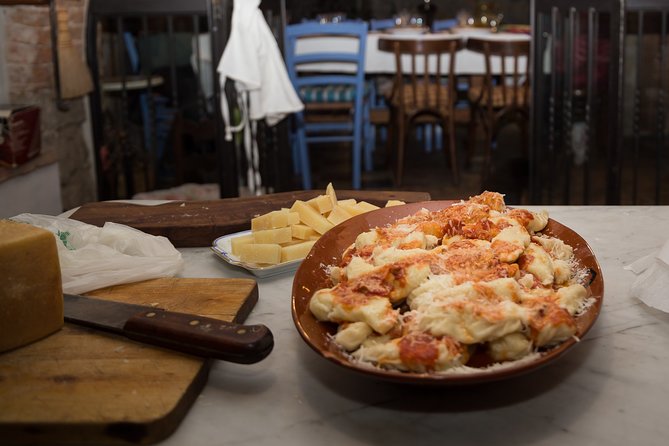
Dinner begins with a mixed platter of cold cuts and cheeses. This is a straightforward Sardinian-style opening, and it gives you a chance to taste local products before the pasta arrives.
The main course is the culurgiones you helped prepare. That connection between work and meal is the best reason to choose this class. You are not handed a plate of pasta made entirely by someone else. You have seen the dough, shaped the pieces, and waited for them to reach the table.
The menu is not elaborate. There is no long sequence of courses listed, and the dinner is not meant to compete with a high-end restaurant. One person found the food underwhelming, while others valued the family atmosphere and the chance to taste traditional cooking.
That difference comes down to expectations. If you want a refined meal with polished service, this is probably not the right choice. If you want to eat the food you helped make and sample cold cuts, cheeses, and other typical products from the area, the evening offers fair value.
A vegetarian menu is available. You should request it when booking or as early as possible, rather than waiting until dinner. The published sample menu includes cold cuts and cheeses, so the standard meal is not vegetarian by default.
What $72.41 buys you
At $72.41 per person, the price covers approximately four hours, the cooking lesson, dinner, the aperitif, and the family setting. It also buys you an activity that fills an entire evening rather than a short demonstration.
The value depends on how much you enjoy the process. You receive more than a meal, but you also do more work than you would at a restaurant. The long pasta-shaping session is central to the experience, not an unfortunate delay before dinner.
I consider the price reasonable for someone who wants a food activity with personal contact and a meal included. The value is weaker if you are looking only for dinner. In that case, the class may feel expensive, especially if communication is limited and the meal does not meet your expectations.
The small group limit helps support the price. A maximum of 10 people is more intimate than a large demonstration, and the family home adds an element that a standard cooking school may not provide. You are paying for time with the family as well as ingredients and instruction.
This activity is booked an average of 31 days ahead, so planning matters. That lead time does not guarantee that every date will fill, but it is a useful sign that you should not leave it until the last moment if the evening is important to your Sardinia plans.
The family atmosphere is the main reward
The strongest feature here is the contact with the family. The evening includes Federica, Mickaele, and other family members, including an older generation and younger relatives. The cooking is presented as a shared household tradition rather than a staged performance.
That can feel warm and personal. You may see different family members helping with the pasta and meal, and the experience can give you a better sense of how food traditions are passed between generations.
It can also feel less organized than a commercial class. One account described waiting for water and feeling more like a worker than a participant. Another praised the family, the homemade instruction, and the recipes learned for home use.
Both reactions make sense. The same informal style that creates a genuine home atmosphere can also produce uneven service. I would choose this class for connection and participation, not for perfect timing or restaurant-level attention.
Who should book this Lanusei cooking class?
This class suits you if you:
- Like making food with your hands
- Want to learn a specific Sardinian pasta shape
- Prefer a family home to a commercial cooking school
- Have about four hours available in the evening
- Are comfortable with a relaxed pace
- Enjoy shared meals and local products
- Can manage some language uncertainty if English instruction is limited
It may not suit you if you:
- Want a short, highly polished cooking demonstration
- Need guaranteed English explanations
- Expect attentive beverage service
- Dislike repetitive food preparation
- Want a large, varied restaurant meal
- Have difficulty following directions to a private home
Children age 6 and older can participate, and non-alcoholic drinks are available. For a child, the best fit will depend on patience and interest in shaping many pieces of pasta.
The class also works well for a couple or small group looking for an evening activity in Lanusei. With a maximum of 10 people, the format is better suited to people who enjoy conversation than to those seeking a fast-moving schedule.
Booking, cancellation, and practical checks
Confirmation is sent within 48 hours of booking, subject to availability. Free cancellation is available if you cancel at least 24 hours before the 6:30 pm start time. Changes or cancellations made within 24 hours are not accepted for a refund.
The activity needs a minimum number of participants. If it is canceled because that minimum is not reached, you are offered another date or experience, or a full refund.
The most useful step is to verify the meeting location after booking. The information should clearly lead you to La Corte del Carrubo, but past location confusion caused people to arrive at the wrong private home. Save the exact address and confirm it with Sardaigne en Liberté if anything looks inconsistent.
Also confirm the language arrangement if you do not speak Italian. English is offered, but the level of spoken English may not be consistent. That conversation before the day can prevent a major disappointment.
Should you book this Sardinian pasta evening?
Book it if you want to make culurgiones in a real family setting and are happy to trade polished service for warmth, work, and a slower pace. The traditional house, small group, family meal, and chance to learn a pasta shape you can repeat at home make this more personal than a standard dinner.
Skip it if you want a precise English-language lesson, quick cooking, or restaurant-style service. The two main risks are unclear meeting directions and uneven English communication, so check both before paying.
For the right person, $72.41 buys a full evening of Sardinian food and family contact. Just arrive prepared to knead, fold, wait, and eat what you helped make.
FAQ
Where does the cooking class begin?
It begins at La Corte del Carrubo in Lanusei, Sardinia. The listed location is 08045 Lanusei NU, Italy.
What time does the activity start?
The start time is 6:30 pm. The activity lasts approximately four hours and ends back at the meeting point.
What food is included?
Dinner includes a mixed platter of cold cuts and cheeses, followed by culurgiones. Other typical products from the area are also served.
Is a vegetarian menu available?
Yes. A vegetarian menu is available, but you should request it when booking or before the meal begins.
Can children participate?
The minimum age is 6 years. Non-alcoholic drinks are available for children, and alcoholic drinks are available only to people 18 and over.
How many people can join the class?
The maximum group size is 10 people. Confirmation is sent within 48 hours of booking, subject to availability.
Fresh off the board around Italy
- Vicenza: Pasta & Tiramisu Cooking Class at a Local’s Home★ 5.0 · 5 reviews
- Verona: Pasta & Tiramisu Cooking Class at a Local’s Home★ 5.0 · 16 reviews
- Volterra: Fresh Pasta Cooking Class at a Tuscan Farmhouse★ 5.0 · 33 reviews
- Verona: Tortellini Cooking Class and Lunch with Mamma Ivana★ 5.0 · 20 reviews
- Verona: My Granny’s secrets making gnocchi★ 5.0 · 7 reviews
- Verona: Prosecco and Pasta Making Class at a Local’s Home★ 5.0 · 10 reviews
- Venice: Pasta Carbonara Cooking Class with Wine★ 5.0 · 3 reviews
- Venice: Share Your Pasta Love in a Local’s Home★ 4.8 · 20 reviews
Sardinia Pasta Classes, class by class.
Alghero Home Cooking Pasta Class at a Farmhouse with Wine
Read our review →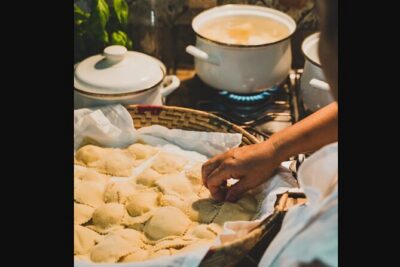
Small group Pasta and Tiramisu at Local Home in Olbia
Read our review →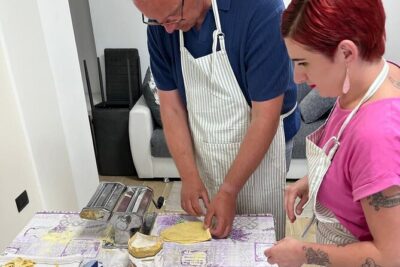
Cagliari Cooking Class: Sardinian Ravioli, Wine & Local Flavors
Read our review →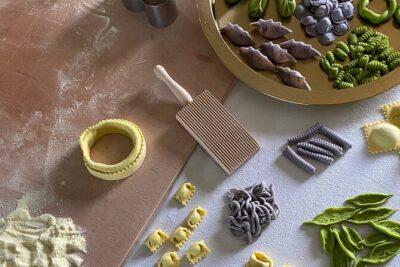
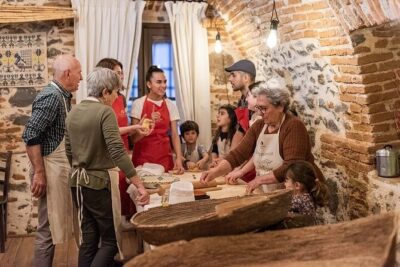
Blue Experience – Cooking Lesson ” Make Pasta , Live Longer “
Read our review →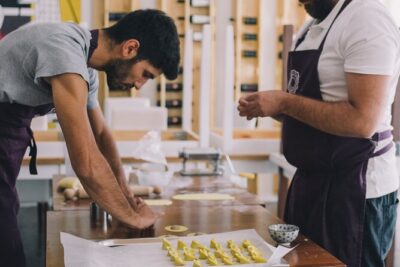
Lists this class appears in