
Review · ITALY
Three Hour Pasta Course with Final Tasting
Fresh pasta is not difficult because the ingredients are exotic. It is difficult because flour, eggs, pressure, and timing all have to work together. This class lets you learn those skills at your own station, with a wooden board and rolling pin, rather than simply watching someone else cook.
I like the hands-on format, especially the chance to make three different pasta shapes. I also like that Laura teaches each stage step by step, from kneading the dough to the final sauce. The main consideration is location: Bazzano is outside Bologna, so you need to plan your transport carefully.
Key points at a glance
- Three classic pasta shapes: Make tagliatelle, tortelloni, and garganelli in one class.
- Laura teaches each stage: Expect patient, practical instruction in English.
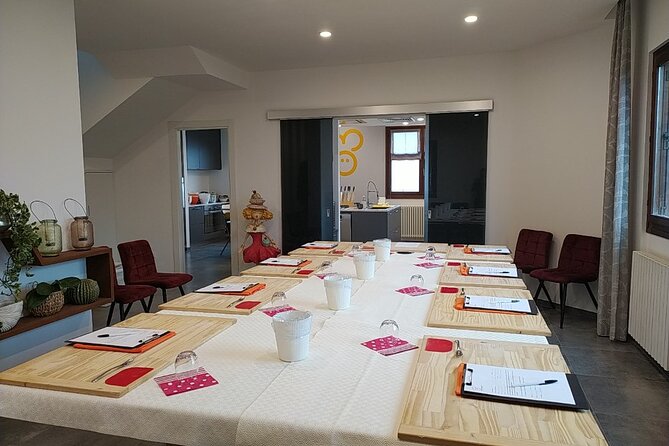
- Your own work station: Use a traditional wooden board and rolling pin rather than watching from the sidelines.
- A full tasting at the end: Try tortelloni with butter, sage, and parmesan, garganelli with rosemary and saffron, and tagliatelle with Bolognese sauce.
- Private participation: Only your group takes part in the activity.
- Train station pickup is available: A small car park at the station is used for collection if arranged in advance.
Making pasta the old-fashioned way in Bazzano
This is a pasta-making lesson with a clear goal: you leave having worked through the complete process, not just folded a few pieces of dough for a photograph. The setting is Scuola di Cucina Wellness Gourmet on Via del Bucco in Bazzano, part of the Emilia-Romagna area known for serious food traditions.
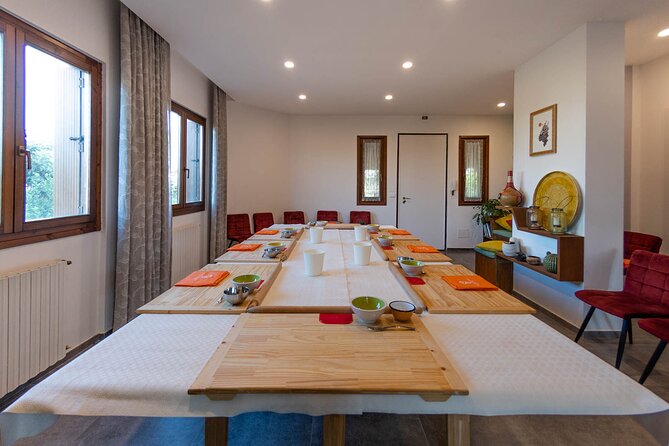
You begin at an individual station equipped with a wooden board and rolling pin. That matters. A machine can produce even pasta quickly, but hand-rolling teaches you how the dough feels as it changes. You learn how much pressure to use, how thin the sheet should become, and how to handle it without tearing.
Laura guides you through the stages in order. The pace is designed for learning, so you can ask questions and correct mistakes as you go. The class is offered in English, which makes the instructions easier to follow if you do not speak Italian. A separate account of Laura’s teaching describes her as patient and professional, with enough care to help a participant who did not speak Italian enjoy the class.
The experience is private for your group. That does not necessarily mean an entirely private cooking school, but it does mean you are not mixed into a larger public class for this activity. If you learn best when you can ask questions freely, this is a useful feature.
More Three-Hour Experiences in Italy:
- 3 Hours Private Boat Tour of Capri with Pasta and Prosecco
★ 4.0 · 34 reviews - 3 Hour Florence Pasta Making & Unlimited wine
★ 5.0 · 24 reviews - 3 Hour Sicilian Cooking Class on Fresh Pasta in Catania
★ 5.0 · 9 reviews
Kneading the dough from scratch
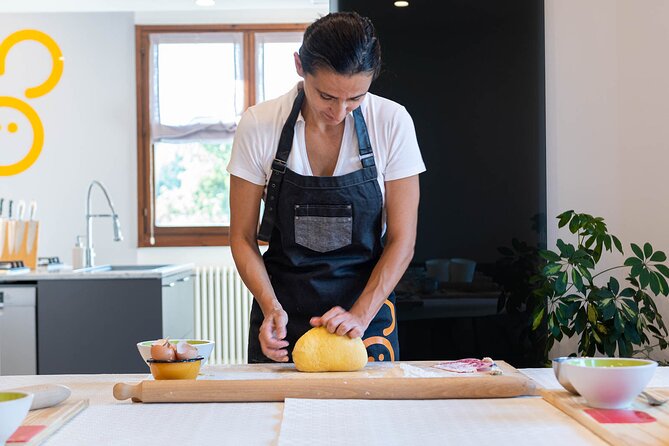
The first important task is making the pasta dough. You hand-knead it from scratch, working the mixture until it becomes smooth enough to roll. This is where the class earns its keep. You get a practical feel for fresh dough instead of treating it as a ready-made ingredient.
Laura’s step-by-step approach should help beginners avoid the usual problems. Dough can be too dry, too sticky, or unevenly worked. You will learn through your hands how the texture changes during kneading, and that lesson is more useful than a recipe alone.
I like this stage because it gives you a basis for understanding every later step. If the dough is not prepared properly, the sfoglia will be harder to roll and the shaped pasta may not hold together. A short demonstration would not give you the same control.
Do not expect a quick demonstration followed by a long period of eating. The class lasts about three hours and 30 minutes, and much of that time is devoted to making the pasta. Wear something comfortable and be ready to work at the board.
Rolling sfoglia with a wooden board and pin
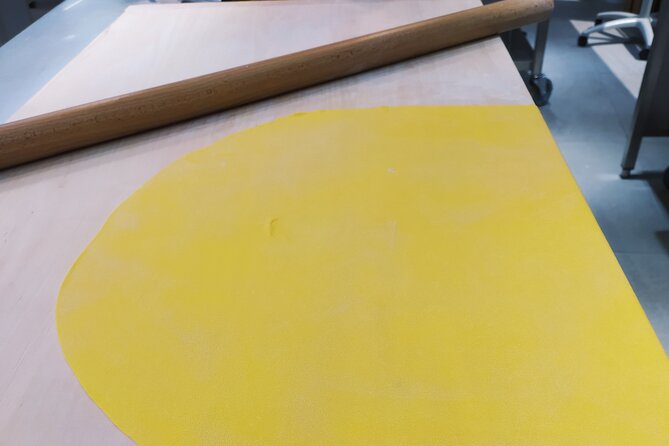
Once the dough is ready, you roll it into thin sheets of sfoglia completely by hand. This is the most traditional part of the class, and probably the part that requires the most patience.
The rolling pin gives you direct control over the thickness. You will need to turn and stretch the dough as it grows, paying attention to thin spots and thicker edges. That process explains why handmade pasta has a different feel from packaged dried pasta. It also shows why fresh pasta makers develop strong technique through repetition.
For a first class, the value is in learning what thin enough actually means. Instructions can tell you to roll the dough thin, but your hands and eyes need to recognize the result. Laura’s supervision is important here because a small adjustment can save a sheet from becoming too thick or fragile.
The wooden board is also part of the lesson. You are not simply using a modern appliance to produce a result. You are learning the traditional movement and rhythm of pasta making, which makes this useful for anyone who wants to repeat the process at home.
Three shapes, three different skills
The class covers tagliatelle, tortelloni, and garganelli. Each one tests a different technique, so the session has more variety than a lesson focused on one pasta shape.
More pasta classes around Italy:
- Florence: Pasta Cooking Class with Unlimited Wine
★ 4.9 · 10,285 reviews - 3 in 1 Cooking Class near Navona: Fettuccine, Ravioli & Tiramisu
★ 5.0 · 7,376 reviews - Florence Pizza or Pasta Class with Gelato Making at a Tuscan Farm
★ 5.0 · 6,801 reviews - Florence: Pasta & Tiramisu Cooking Class with Unlimited Wine
★ 4.9 · 6,708 reviews
Tortelloni with butter, sage, and parmesan
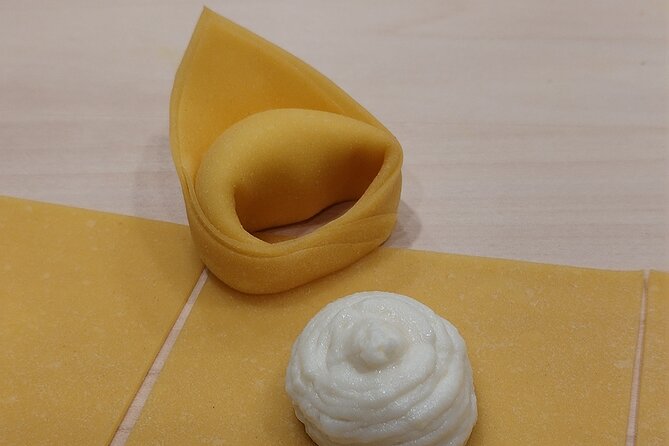
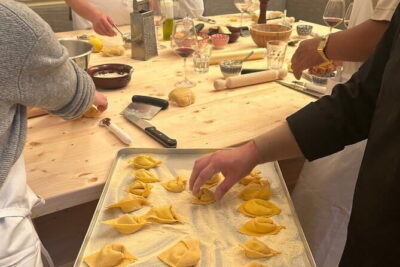
Tortelloni are filled pasta, and shaping them neatly is the most delicate job of the three. You will learn how to place and seal the filling, then form the pasta so it keeps its shape.
The lesson is not only about appearance. Sealing matters because poorly closed pasta can open during cooking. You need to avoid trapped air, press the edges firmly, and handle the dough without making holes. Laura’s guidance is especially useful here because the correct folding motion is easier to understand when someone demonstrates it beside you.
The planned tasting pairs the tortelloni with butter, sage, and parmesan cheese. It is a restrained sauce that lets you taste the pasta itself. That makes sense for a lesson: you can judge the texture, the seal, and the filling without a heavy sauce hiding mistakes.
Garganelli with rosemary and saffron
Garganelli bring a different challenge. You will shape the pasta into ridged tubes, creating the grooves that help sauce cling to the surface.
This is a good exercise in control. The pasta must be shaped firmly enough to hold its form, but not so forcefully that it sticks or tears. The ridges also give you a clear visual result, so you can see how technique affects the finished piece.
The planned sauce combines rosemary and saffron. It is a more distinctive pairing than the butter and sage served with the tortelloni, and it gives the final tasting a second flavor direction. You are not eating three versions of the same dish.
Tagliatelle with Bolognese sauce
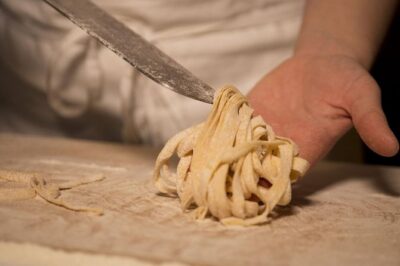
Tagliatelle are cut from the rolled sfoglia using a knife. This is not a machine-made shortcut. You will learn the traditional hand-cut technique and aim for strands that are even enough to cook together.
Knife cutting looks simple until the pasta sheet is in front of you. If the roll is too tight, the strands can stick. If the cuts vary widely, some pieces cook faster than others. A teacher can show you how to position the sheet and make clean cuts.
The tagliatelle are served with Bolognese sauce. That combination is strongly associated with Emilia-Romagna, and it gives you a familiar reference point for judging the pasta. The final tasting lets you compare the broad, sauce-catching strands with the filled tortelloni and ridged garganelli.
The final tasting is part of the lesson
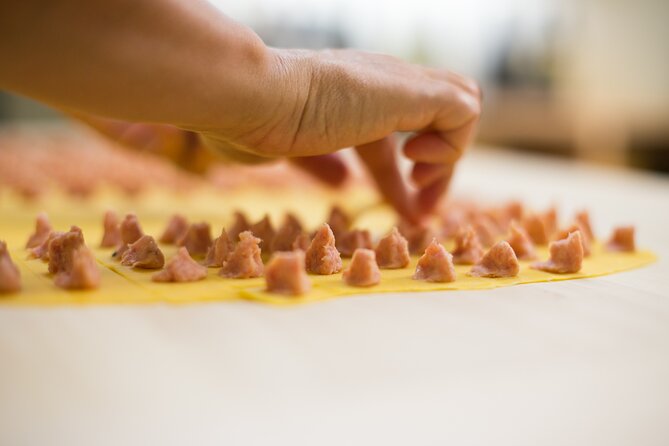
The meal at the end is not an afterthought. You taste the results of all three techniques:
- Tortelloni with butter, sage, and parmesan cheese
- Garganelli with rosemary and saffron
- Tagliatelle with Bolognese sauce
This format gives the class a satisfying finish, but it also has a practical purpose. You can compare shape, thickness, texture, and sauce. Fresh pasta is best understood when you eat it soon after making it.
One participant described the shared lunch as pleasant and said the conversation could have continued for hours. That suggests the final meal has a social side, too. Still, you should book this for the cooking as much as for the food. The price includes a substantial activity, not simply a restaurant meal.
What $108.84 buys you
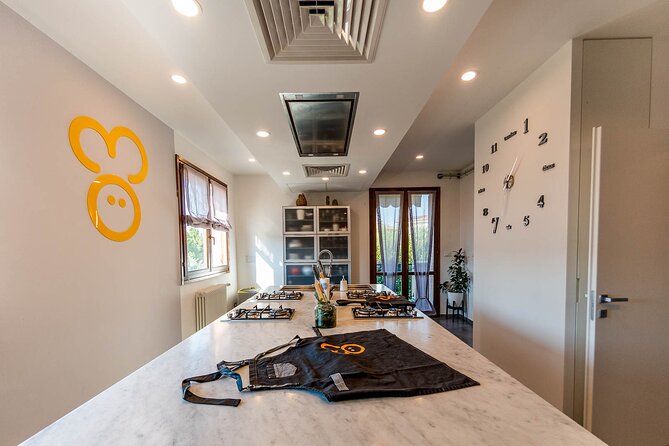
At $108.84 per person, the class is not the cheapest way to eat pasta in Italy. It can be a good value if you want instruction, equipment, several pasta styles, and a meal in one experience.
You are paying for about three and a half hours of active teaching. You also get to work with your own tools at your own station, practice three techniques, and eat the finished dishes. For someone who wants a skill to take home, that is more useful than spending the same amount on one prepared dinner.
The value is less clear if you mainly want a short food activity or a polished demonstration. This class involves kneading, rolling, shaping, and cutting. You should expect flour on your hands and a real amount of work. That is precisely why it suits people who want to understand how handmade pasta is made.
A private group also changes the calculation. The class is not shared with unrelated participants, so the teaching can remain focused on your party. If you are booking for family or friends, the private format may justify the higher cost.
Getting to Via del Bucco 33
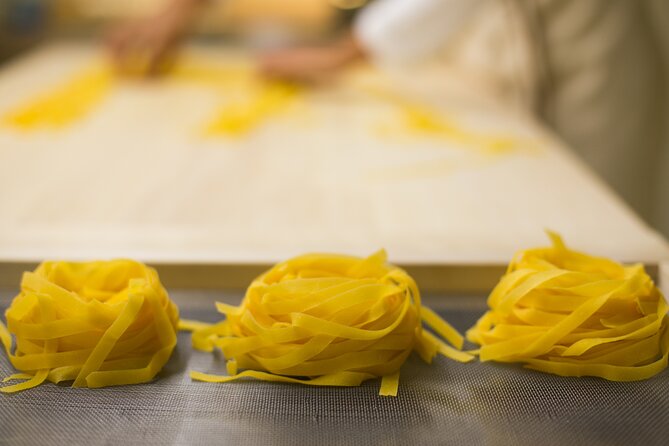
The cooking school is at Via del Bucco 33 in Bazzano, Valsamoggia, in the Bologna area. The meeting point is also the end point, so you return to the school after the tasting.
Pickup is offered from the train station. If you arrive by train, go to the small car park, where the pickup takes place. Arrange this when booking and provide your mobile number so the school can send a detailed map.
You can also arrive by car or taxi. The address is listed as Scuola di Cucina Wellness Gourmet, Via del Bucco 33, Bazzano. The instructions describe it as simple to find, but I would still save the address and keep your phone available. This is not a city-center meeting point where you can casually walk around and spot the school.
The activity is near public transportation, but the exact transport schedule is not provided. Check your connection before booking, especially if you are trying to fit the class between other plans. Pickup makes the train option easier, but timing still matters.
Timing, language, and who will enjoy it
The activity lasts approximately three hours and 30 minutes. Classes are listed Monday through Friday, from 9:30 a.m. to 7 p.m., during the published operating period of August 14, 2025 through December 9, 2026.
The English option is important because pasta instruction depends on small physical details. You need to understand how to fold, seal, roll, and cut, not just follow a general explanation. Laura’s patient approach should be helpful for mixed-language groups, though the information provided does not promise additional languages.
I would recommend this class to:
- Couples who want a shared food activity with a meal at the end
- Families and friends who prefer a private lesson
- Beginners who want to make dough and shape pasta themselves
- Food-focused visitors staying in or near Emilia-Romagna
- Anyone interested in traditional hand-rolled pasta rather than a quick cooking demonstration
It may be less suitable if you have limited time, dislike hands-on kitchen work, or only want to sample local food. The class is built around participation, and the final tasting comes after the work.
Booking and cancellation details
You receive confirmation at the time of booking. Free cancellation is available if you cancel at least 24 hours before the local start time. Cancellations or changes made less than 24 hours ahead are not accepted for a refund.
Because pickup details depend on your arrival plan, add your mobile number when reserving. This is especially useful if you plan to use the train station pickup or need the detailed map for the school.
Should you book this pasta class?
Book it if you want to learn by doing. The combination of hand-kneaded dough, hand-rolled sfoglia, three pasta shapes, and a final tasting gives you a full lesson rather than a token cooking activity.
I especially like the chance to compare tortelloni, garganelli, and tagliatelle in one sitting. Laura’s patient teaching style is another reason this should work well for beginners and for groups with different language skills.
Skip it if you want a central Bologna activity, a short demonstration, or a meal with no kitchen work. Bazzano requires planning, and the class asks you to spend several hours at the board.
For anyone who has wondered how Emilia-Romagna’s famous pasta is actually made, this is a practical and enjoyable way to find out. You leave with more than a full stomach. You understand why fresh pasta takes time, touch, and a little practice.
FAQ
Where does the pasta class take place?
The class takes place at Scuola di Cucina Wellness Gourmet, Via del Bucco 33, 40053 Valsamoggia BO, Italy. The address is also written as Via del Bucco 33, Bazzano.
How long does the activity last?
The class lasts approximately three hours and 30 minutes.
Is the class offered in English?
Yes. The activity is offered in English.
What types of pasta will I make?
You will make tagliatelle, tortelloni, and garganelli.
What food is served at the final tasting?
The tasting includes tortelloni with butter, sage, and parmesan cheese; garganelli with rosemary and saffron; and tagliatelle with Bolognese sauce.
Is pickup available?
Yes. Pickup is offered from the train station. If you arrive by train, go to the small car park, where the pickup takes place.
Can I cancel for a full refund?
Yes, if you cancel at least 24 hours before the experience start time. Cancellations or changes made less than 24 hours before the start time are not accepted for a refund.
Fresh off the board around Italy
- Vicenza: Pasta & Tiramisu Cooking Class at a Local’s Home★ 5.0 · 5 reviews
- Verona: Pasta & Tiramisu Cooking Class at a Local’s Home★ 5.0 · 16 reviews
- Volterra: Fresh Pasta Cooking Class at a Tuscan Farmhouse★ 5.0 · 33 reviews
- Verona: Tortellini Cooking Class and Lunch with Mamma Ivana★ 5.0 · 20 reviews
- Verona: My Granny’s secrets making gnocchi★ 5.0 · 7 reviews
- Verona: Prosecco and Pasta Making Class at a Local’s Home★ 5.0 · 10 reviews
- Venice: Pasta Carbonara Cooking Class with Wine★ 5.0 · 3 reviews
- Venice: Share Your Pasta Love in a Local’s Home★ 4.8 · 20 reviews
Italy Pasta Classes, class by class.
3 in 1 Cooking Class near Navona: Fettuccine, Ravioli & Tiramisu
Read our review →
Florence Pizza or Pasta Class with Gelato Making at a Tuscan Farm
Read our review →
Pasta & Tiramisu Class with Fine Wine by the Vatican
Read our review →
Pasta Making Class with Wine, Limoncello, and Dessert
Read our review →
Rome Cooking Class: Make Pasta and 3 Spritz Cocktails
Read our review →
3-in-1 Fettuccine, Ravioli, and Tiramisu Cooking Class
Read our review →Lists this class appears in