
Review · ITALY
Polignano a Mare: Pasta Making Cooking Class with Drink
The best part of this two-hour Polignano cooking class is that you learn the shapes Puglia is famous for, then eat the pasta you made. Annamaria and Daniele are patient teachers who explain not only the hand movements, but also why Apulian pasta uses simple ingredients and particular techniques.
I like the small, friendly format and the generous food-and-wine side of the evening. You’ll start with taralli, preserved vegetables, seasonal greens, and drinks, then sit down to your own orecchiette with tomato sauce. The main thing to know: this is a pasta-shaping class, not a full restaurant-style cooking course. You may not make the dough or sauce yourself.
Key points
- Shape two Apulian classics: Learn the difference between ear-shaped orecchiette and ridged cavatelli.
- Work with local teachers: Annamaria and Daniele are often praised for clear instruction, patience, humor, and regional knowledge.
- Eat what you make: Your orecchiette is served with tomato sauce after the lesson.
- Enjoy a proper aperitivo: Taralli, preserved vegetables, seasonal greens, and wine are part of the experience.
- Good for families: Children and teenagers have taken part successfully, with ages as young as five reported.
- Historic-center setting: The class takes place at a typical house on Via S. Vito in central Polignano a Mare.
Making Orecchiette in Polignano’s Historic Center
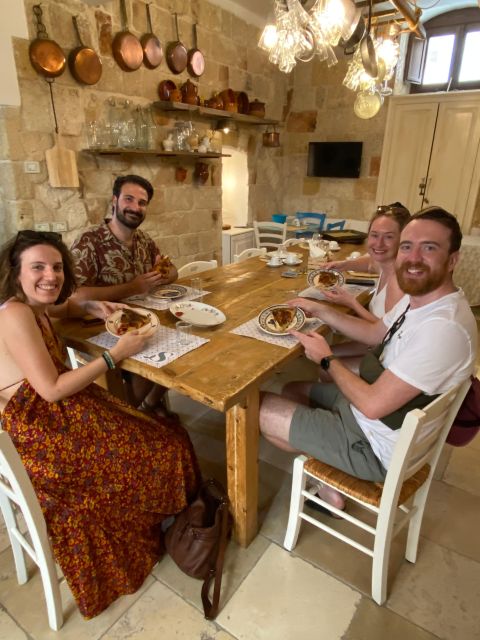
You meet Annamaria at a typical house on Via S. Vito, 20, in Polignano a Mare. The setting matters. You are not being sent to a large training kitchen on the edge of town. The class takes place in the old center, where a hands-on food lesson fits naturally into an evening of wandering Polignano’s lanes and viewpoints.
The experience lasts about two hours. That is long enough to learn the technique without turning the evening into a half-day commitment. You can fit it between sightseeing plans, though you should allow time to find the meeting point in the historic center.
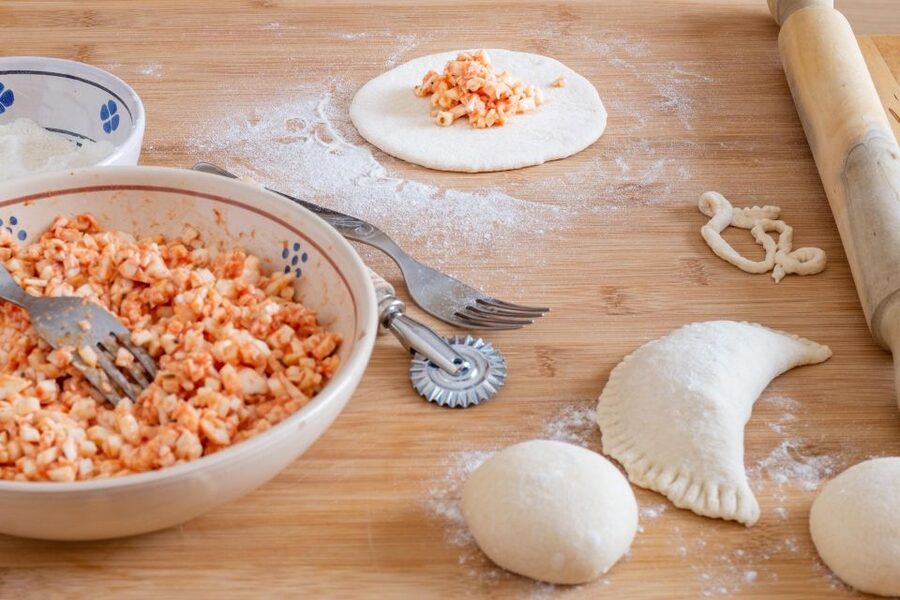
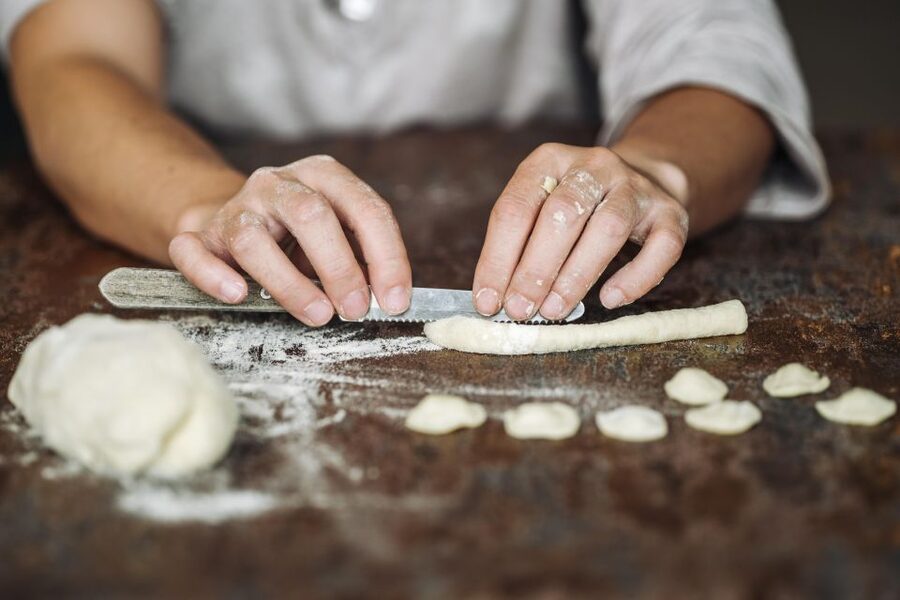
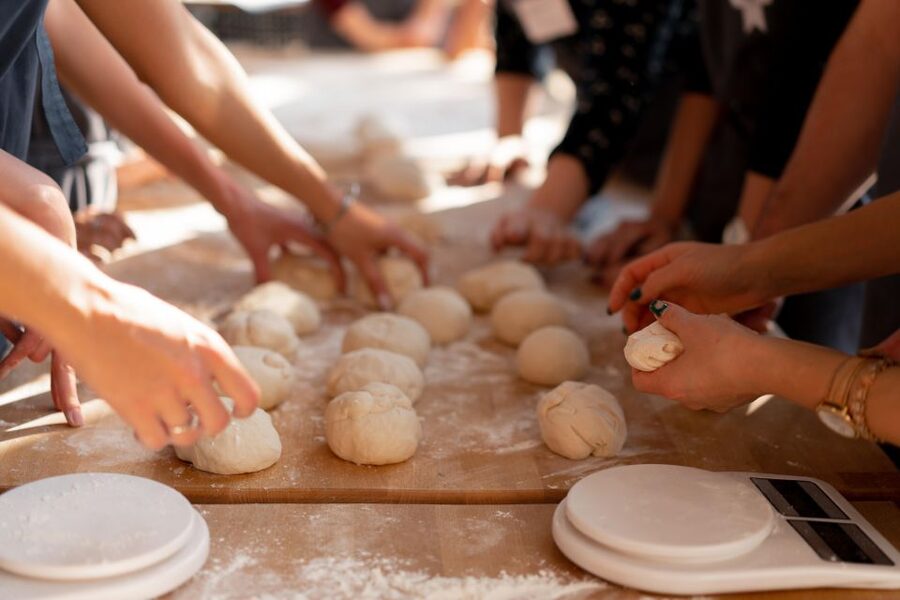
The instructor begins by explaining the pasta itself. Apulian pasta is closely tied to local home cooking, and the lesson focuses on two shapes: orecchiette and cavatelli. Orecchiette means little ears, and the shape is made by pressing and dragging a small piece of dough with a knife or similar tool. Cavatelli are shorter and more rolled, with a small hollow that catches sauce.
You will not simply watch someone produce perfect pasta at high speed. The useful part is the individual correction. Annamaria and Daniele show the movement, then check your work and help you adjust the pressure, size, and shape. That attention is especially helpful for first-time pasta makers, since the motion looks easier than it feels.
More Fresh Pasta Workshops in Italy:
- Rome: Pasta Making Class with Wine, Limoncello, and Dessert
★ 4.9 · 3,177 reviews - Pastamania – Florence Pasta Making Class
★ 5.0 · 3,050 reviews - Enjoy Spritz and Pasta Making in Piazza Navona
★ 5.0 · 1,681 reviews
The Technique: Simple Dough, Tricky Hands
The class gives you a practical skill you can use at home. Several of the instructors’ explanations focus on the reasons behind Italian pasta rules, not just the rules themselves. You learn how ingredients, dough texture, cooking, and sauce work together.
That teaching style has earned the class strong praise. Annamaria is often described as warm, precise, and generous with tips. Daniele is known for a lively approach and for explaining the science and regional differences behind pasta-making. Depending on the date, you may work with Annamaria, Daniele, Maria, or another member of the teaching team.
The language options are English and Italian. English-language instruction is a strong part of the experience, with several classes led by teachers who explain clearly and answer questions throughout. If you want to ask about pasta cooking, Italian food customs, or Apulian ingredients, this is not a silent demonstration.
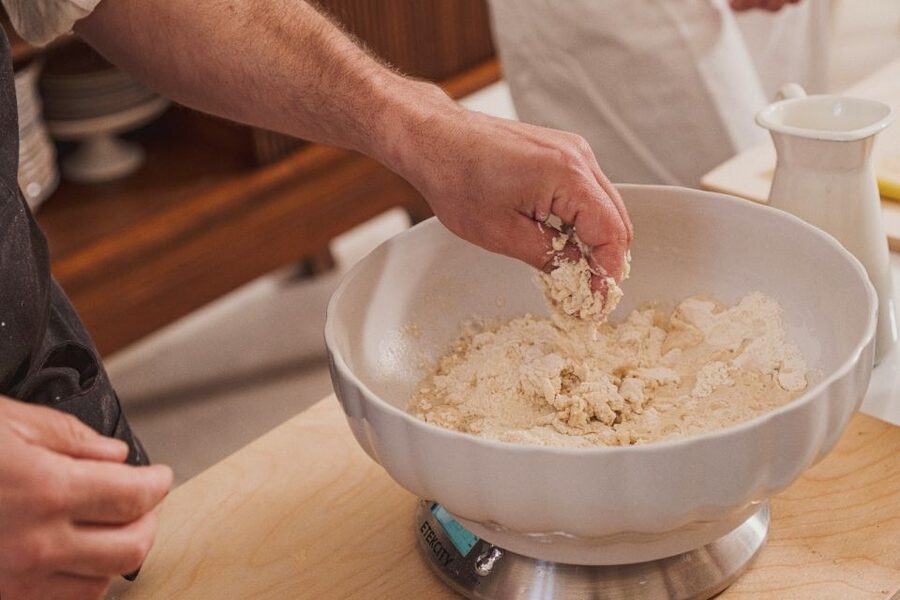
One practical detail is worth noting: you may do more shaping than cooking. Some sessions have the dough and sauce prepared or partly prepared before you begin. You should expect hands-on work with the pasta forms, but do not book this expecting to prepare every component of a complete dinner from scratch.
That is not necessarily a weakness. It lets the class concentrate on the regional technique instead of rushing through dough, sauce, cooking, and serving in one short block. Still, if your priority is making sauce, kneading dough, and cooking several dishes yourself, you may find the class narrower than expected.
Taralli, Preserved Vegetables, and Apulian Wine
The food begins before the pasta reaches the table. You are served an Apulian aperitivo with taralli, preserved vegetables, seasonal greens, and other local products. Taralli are crisp, ring-shaped snacks that are common across southern Italy, and they give you something salty and crunchy while the lesson gets underway.
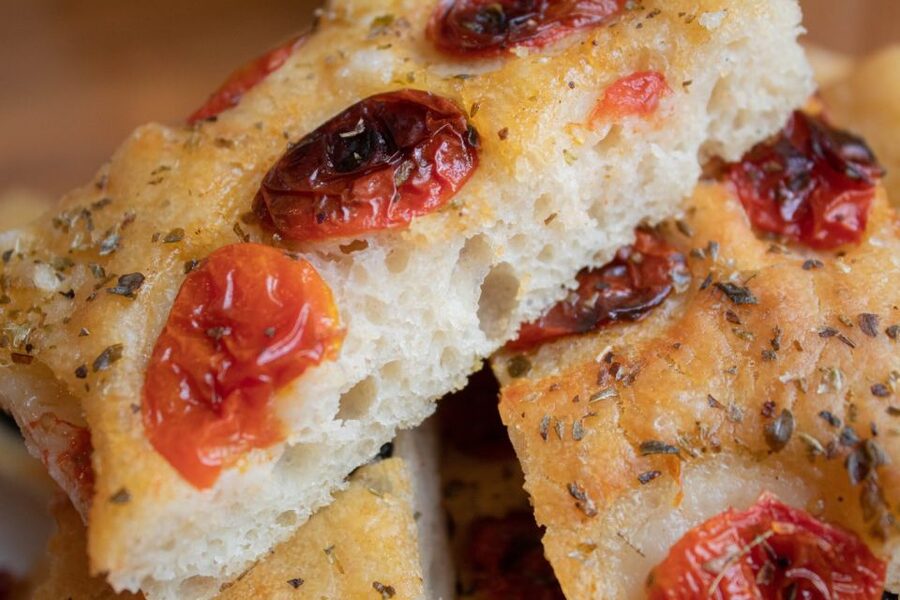
The preserved vegetables add a sharper, more savory note. Along with olives, focaccia, and other regional items mentioned during the class, they make the evening feel like more than a quick pasta tutorial. You get a taste of the everyday foods that accompany meals in Puglia.
Wine and other drinks are included. The wine is part of the social side of the class, and the relaxed table setting gives you time to talk with the people around you. Some sessions have included red wine, and one class described the option of generous wine service. The exact drink selection can vary, so it is best to think of the wine as part of the experience rather than as a formal tasting.
This pairing is one of the class’s best features. You are not making pasta in isolation, then leaving with a plate. You are learning a skill while sharing snacks, regional food, and conversation. For many people, that informal rhythm is more memorable than a tightly scheduled cooking demonstration.
Eating Your Orecchiette With Tomato Sauce
After the shaping lesson, the pasta is cooked and served. The listed dish is orecchiette with tomato sauce, though past sessions have also included pesto and other sauce references. You get to taste the results of your work rather than taking the pasta away uncooked.
That gives the lesson a satisfying finish. The pasta may not look like the instructor’s first examples, but it becomes dinner all the same. You can see how the grooves and hollows hold sauce, and you get a better sense of why shape matters.
Serving sizes have been described as generous. The meal is supported by the earlier aperitivo, so this works as a light dinner or substantial snack depending on how much you eat. If you have a large appetite, remember that the advertised experience is a tasting and cooking class, not a long multi-course meal.
The food is also suitable for vegetarians and vegans. That makes the class a useful choice for mixed groups, though you should still communicate dietary needs when booking if you have specific allergies or restrictions. The ingredients listed are typical plant-based staples, but the activity details do not provide a full allergen guide.
More pasta classes around Italy:
- Florence: Pasta Cooking Class with Unlimited Wine
★ 4.9 · 10,285 reviews - 3 in 1 Cooking Class near Navona: Fettuccine, Ravioli & Tiramisu
★ 5.0 · 7,376 reviews - Florence Pizza or Pasta Class with Gelato Making at a Tuscan Farm
★ 5.0 · 6,801 reviews - Florence: Pasta & Tiramisu Cooking Class with Unlimited Wine
★ 4.9 · 6,708 reviews
A Social Class That Works for Families
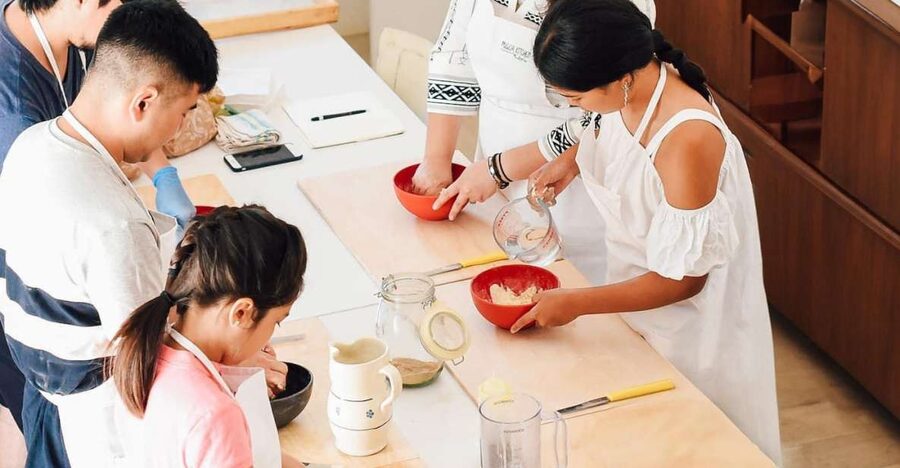
This experience suits couples, friends, and families particularly well. Children and teenagers have taken part, including a family with a 10-year-old and another group with children aged five and eight. The work is tactile and easy to understand, even when the final shape takes practice.
Younger children may need help with the knife or shaping tool and with staying focused while the instructor explains the dough. The class is only two hours, which helps. It is long enough to feel substantial but short enough for a family evening.
The group size can be small. One class had six people, and the intimate format allows the chef to watch each person’s technique. That is a real advantage over a large demonstration where you might only see the instructor’s hands from a distance.
The social side is just as important as the pasta. You sit with other people, share snacks and wine, and hear about Puglia from someone who lives and works in the area. The instructors sometimes discuss Italian history, politics, social issues, food traditions, and sustainability. If you enjoy conversation alongside cooking, you will get more from this than someone seeking a quiet, technical workshop.
A late arrival may be accommodated, but do not rely on that. Arrive on time if you can, since the early explanations help you understand the dough and the hand movements later.
What the Guides Add to the Evening
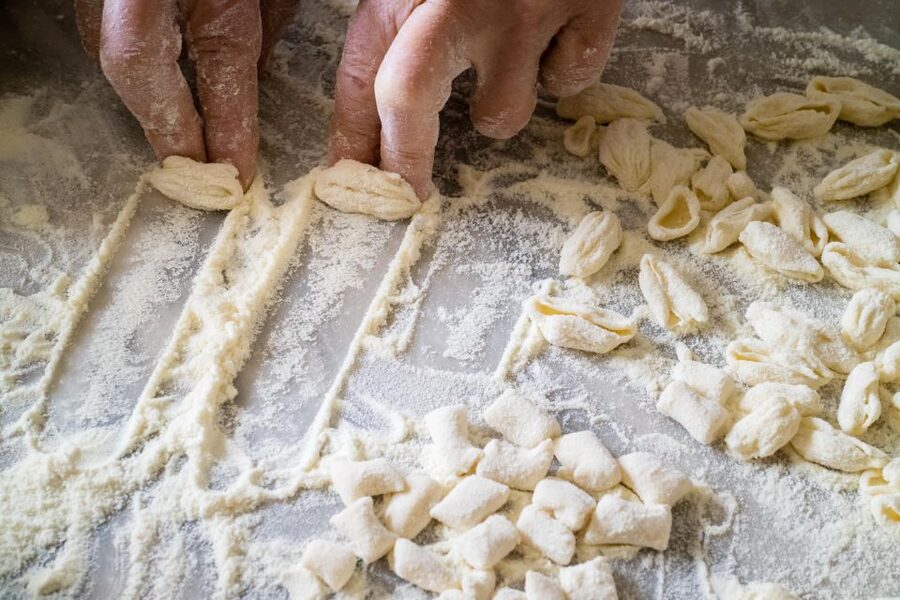
Annamaria is frequently associated with the class and is praised for her warmth, clear English, and careful demonstrations. She takes time to correct the shape of each person’s orecchiette and shares advice you can use in your own kitchen.
Daniele brings a different energy. He has been described as funny, patient, and deeply interested in the reasons behind Italian pasta traditions. His background as a professional chef gives the lesson extra technical detail, including explanations of how pasta methods vary across Italy.
The names and teaching styles can vary by date, so do not assume one particular instructor is guaranteed unless your booking confirmation says so. The consistent feature is the local, hands-on format and instruction in English or Italian.
The strongest part of the teaching is its usefulness. You are not just shown how to copy a shape for one evening. You are given tips on dough, cooking, sauces, and reducing food waste. One practical limitation is that a printed recipe sheet is not always provided. You may be allowed to record parts of the lesson, and it is sensible to ask about taking a photo of the recipe or writing down the key measurements.
Is $77 a Fair Price?
At $77 per person, this is not the cheapest way to eat pasta in Puglia. You can certainly find a plate of orecchiette for less. The value comes from the instruction, the local setting, the food before and after the lesson, and the chance to learn a technique you can repeat at home.
The price makes more sense if you want a compact cultural activity rather than dinner alone. You receive a professional chef, kitchen utensils, hands-on instruction, drinks, local products, and a serving of the pasta you make. The small group format also matters because personal help is central to learning the shapes.
The value is less convincing if you expect a complete cooking curriculum. You may not make the dough, prepare several sauces, or cook a range of dishes. One participant felt the price was high for the amount of cooking involved, and that is a fair concern for experienced home cooks.
I would consider it good value for a first pasta class, a family activity, or an evening when you want food and conversation built into the lesson. Experienced cooks who have already taken several pasta workshops may prefer a longer class with more independent preparation.
Practical Details Before You Book
The meeting point is Annamaria’s typical house at Via S. Vito, 20, 70044 Polignano a Mare BA. The activity is in the historic center, and hotel pickup is not included.
Optional pickup can be requested from Monopoli and nearby cities. It is not automatic, so arrange it in advance if you need transport. The activity is wheelchair accessible, but the information provided does not describe the exact route from the street or the interior layout, so ask the operator for practical details if you use a wheelchair.
Free cancellation is available up to 24 hours before the start time, with a full refund. You can also reserve now and pay later, which helps if your Puglia plans are still changing. Check the available start times because the class schedule can vary.
The activity is offered in English and Italian. Drinks are included, along with local tastings and the orecchiette dish. Hotel pickup and drop-off are not included.
Should You Book This Polignano Cooking Class?
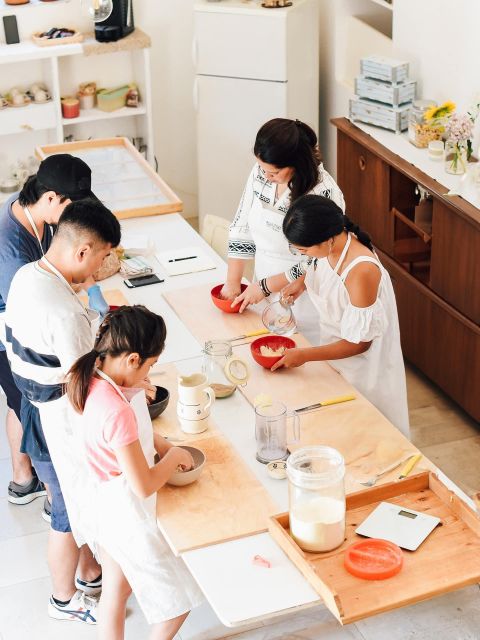
Book it if you want to make authentic Apulian pasta, eat in a friendly setting, and learn from a local chef who can explain the food beyond the basic hand movements. It is especially well suited to families, couples, vegetarians, first-time pasta makers, and anyone with a free evening in Polignano a Mare.
Think twice if you want to prepare every part of the meal yourself. The class focuses on forming orecchiette and cavatelli, with some dough and sauce work handled for you.
For most visitors, the combination of small-group attention, local snacks, wine, useful cooking tips, and a meal made with your own hands justifies the price. Bring curiosity, arrive ready to work with your fingers, and remember to write down the recipe before you leave.
FAQ
How long does the pasta-making class last?
The class lasts two hours. Check the available start times when booking because the schedule can vary.
Where does the activity take place?
The class takes place in a typical house in Polignano a Mare’s historic center at Via S. Vito, 20, 70044 Polignano a Mare BA.
Which types of pasta will I learn to make?
You will learn to form orecchiette and cavatelli, two traditional Apulian pasta shapes.
Will I eat the pasta I make?
Yes. The included meal features orecchiette with tomato sauce. Past sessions have also referred to other sauces, including pesto.
Are drinks and snacks included?
Yes. The experience includes drinks, local products, taralli, preserved vegetables, seasonal greens, and an Apulian aperitivo. Wine is also included.
Is the class suitable for vegetarians and vegans?
Yes. The activity is described as suitable for both vegetarians and vegans.
Is transportation from nearby towns available?
Optional pickup from Monopoli and nearby cities is available on request. Hotel pickup and drop-off are not included as standard.
Fresh off the board around Italy
- Vicenza: Pasta & Tiramisu Cooking Class at a Local’s Home★ 5.0 · 5 reviews
- Verona: Pasta & Tiramisu Cooking Class at a Local’s Home★ 5.0 · 16 reviews
- Volterra: Fresh Pasta Cooking Class at a Tuscan Farmhouse★ 5.0 · 33 reviews
- Verona: Tortellini Cooking Class and Lunch with Mamma Ivana★ 5.0 · 20 reviews
- Verona: Prosecco and Pasta Making Class at a Local’s Home★ 5.0 · 10 reviews
- Verona: My Granny’s secrets making gnocchi★ 5.0 · 7 reviews
- Venice: Pasta Carbonara Cooking Class with Wine★ 5.0 · 3 reviews
- Venice: Share Your Pasta Love in a Local’s Home★ 4.8 · 20 reviews
Fresh Pasta Workshops, class by class.
Pasta Making Class with Wine, Limoncello, and Dessert
Read our review →

Enjoy Spritz and Pasta Making in Piazza Navona
Read our review →
Pasta Making & Wine Tasting with Dinner in Frascati from Rome
Read our review →
The Secrets to Learn Fresh Pasta and Tiramisù in a Glam Home
Read our review →
Handmade Pasta & Dessert Class with Unlimited Wine
Read our review →Lists this class appears in