
Review · FLORENCE
Florence: Lasagna and Spaghetti-Making Class
Fresh pasta is the heart of this three-hour Florence class. You knead dough, roll sheets for lasagna, shape spaghetti, and sit down to eat what you made in a palazzo near the Arno. The hands-on work makes this more than a meal with a recipe attached. You learn why pasta behaves as it does, then taste the result while the lesson is still fresh.
I like the small groups, limited to 10, and the relaxed teaching style reported across many sessions. I also like the useful finish: a recipe booklet in English, chocolate dessert, limoncello, and organic Tuscan wine. The main caution is dietary: this class cannot accommodate vegans, people with gluten sensitivity, or lactose intolerance, and the lasagna’s ragù is prepared for the group rather than necessarily made by each participant.
Key points at a glance
- Two pasta classics in one class: Prepare lasagna sheets and fresh spaghetti, with sauces to match.
- A central Florence setting: Meet at Lungarno Guicciardini 17 R, close to the historic center and the Arno.
- Patient English-speaking instruction: Guides including Milena, Aly, Erica, Robin, and Alessandra have been praised for humor, clarity, and encouragement.
- A proper sit-down meal: Set the table together, then eat the pasta with organic local red wine.
- A sweet Italian finish: Chocolate dessert and limoncello follow the main meal.
- Good value at $48: Ingredients, equipment, instruction, wine, dessert, and the recipe booklet are included.
Starting at Lungarno Guicciardini 17 R
The meeting point is easy to misunderstand, so pay attention. Search for Lungarno Guicciardini 17 R on Maps. The R means the red building number, not the blue number. At the entrance, ring the bell marked PASTAMANIA EXPERIENCE.
The address places you in Florence’s historic center, on the Arno side of the city. Hotel pickup is not included, so plan to reach the palazzo under your own steam. The class itself takes place indoors, which makes it a useful choice when the weather turns wet or you want a break from museums and churches.
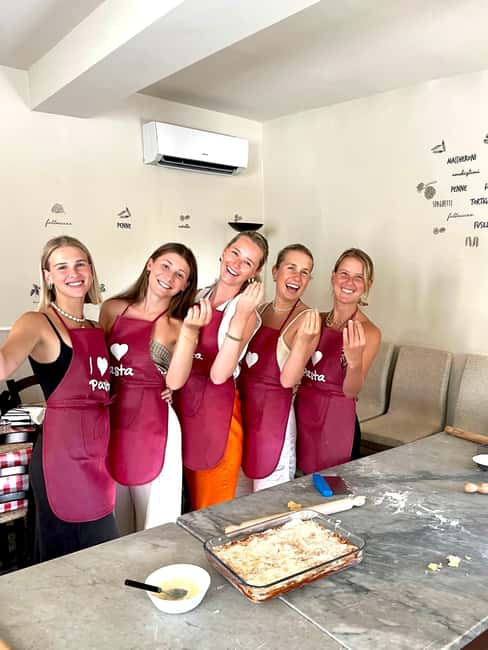
The room is set up for cooking and shared dining rather than formal restaurant service. That matters. You are not simply watching a chef work at a distance. You handle the ingredients, work beside the other members of the group, and help set the table before eating.
The group limit is 10 people, though several sessions have been smaller. Groups of four, five, and seven have made it easier for the instructor to check each person’s dough and pasta shape. A larger group can still work well, but expect a more social class and less one-to-one attention.
More Ravioli and Gnocchi Classes in Florence
- Francy’s Pasta & Gnocchi on Top of Florence Hills
★ 5.0 · 457 reviews - 3- Cooking Making Spaghetti & Lasagna
★ 5.0 · 39 reviews - Learn How to Make Traditional Tuscan Tagliatelle in Florence
★ 4.5 · 33 reviews
Kneading dough and learning the feel of pasta
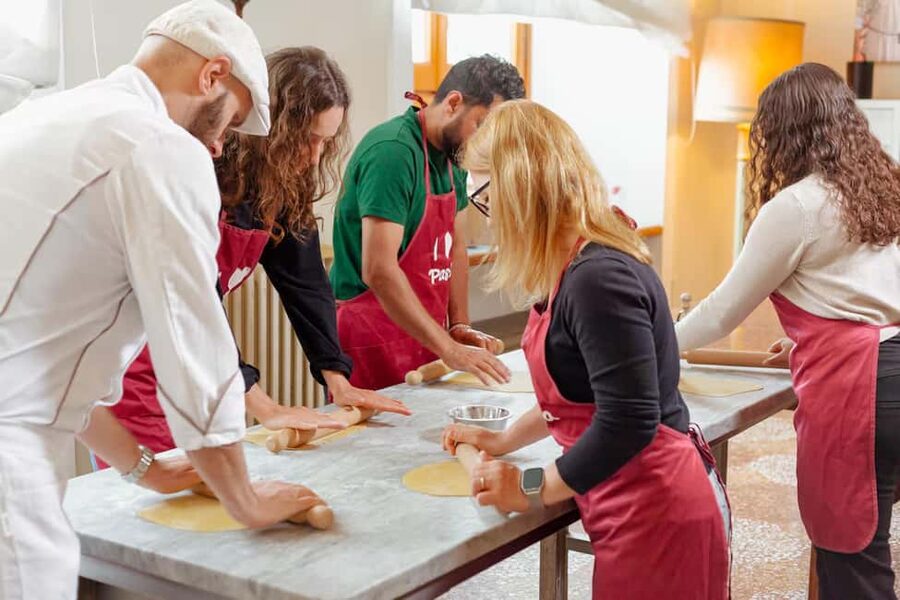
The class begins with the basics of handmade pasta. You work the dough, knead it, and learn the visual and physical clues that tell you when it is ready. That hands-on practice is the real value of the class. A recipe can give you quantities, but it cannot easily explain how dough should feel under your hands.
The instructors keep the process accessible for beginners. Milena has been praised for patient explanations and practical tips, while Aly is known for making sure every person takes part. Robin has also been singled out for keeping the group involved while sharing small pasta-making tricks.
Do not expect a silent, technical workshop. The tone is social, with humor and conversation built into the lesson. Several instructors also share food and Florence tips as they work. That makes the class a good fit for families, couples, and solo visitors who enjoy meeting people over a shared task.
You should wear comfortable clothing suitable for cooking. Flour, sauce, and wet hands are part of the business, so this is not the place for your finest evening outfit. Comfortable shoes also make sense, since you will be standing and working for part of the class.
Building lasagna with béchamel and ragù
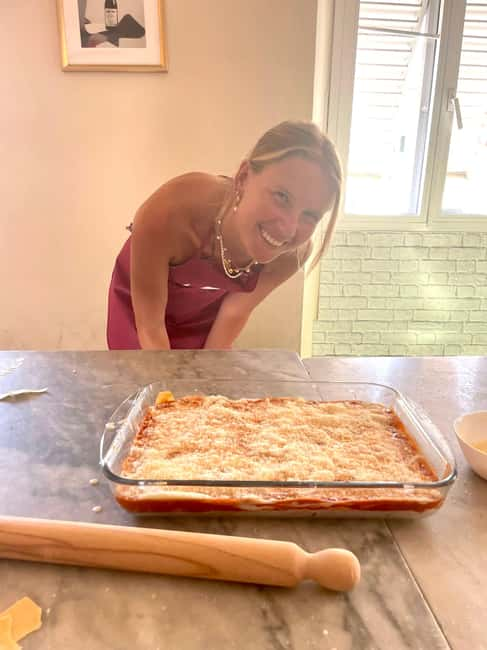
The lasagna section gives you several classic Italian techniques in one dish. You prepare béchamel from milk, butter, flour, salt, and nutmeg. The goal is a smooth white sauce that can spread between the pasta and ragù without becoming heavy or lumpy.
You then work with your own rolled pasta sheets as the lasagna takes shape. The combination of fresh pasta, béchamel, and bolognese ragù gives the dish its familiar layered character. The class description presents the ragù as part of the lasagna, but you should not assume that you will prepare every component from scratch yourself. One participant specifically wished for more time to make the Bolognese sauce.
That point is worth keeping in mind if you are comparing this class with a longer market-to-table cooking course. Here, the focus is on fresh pasta and the sauces you actively learn to prepare, especially béchamel and tomato pummarola. The lasagna is still a satisfying project, but the lesson is not designed as a full Bolognese masterclass.
The instructors help with the parts that often trouble first-timers: rolling evenly, handling the sheets, and assembling the layers. You will likely gain more from watching the chef correct a small mistake than from simply following printed instructions. These are the useful moments that help you repeat the dish at home.
Making spaghetti and pummarola
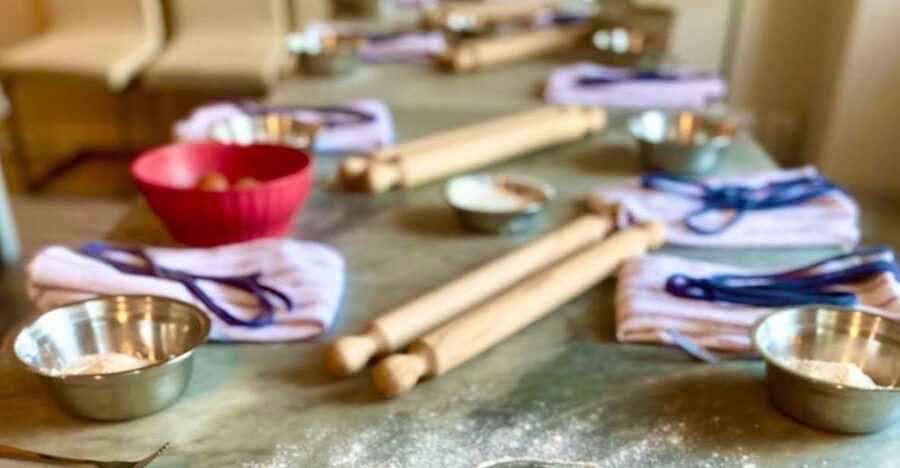
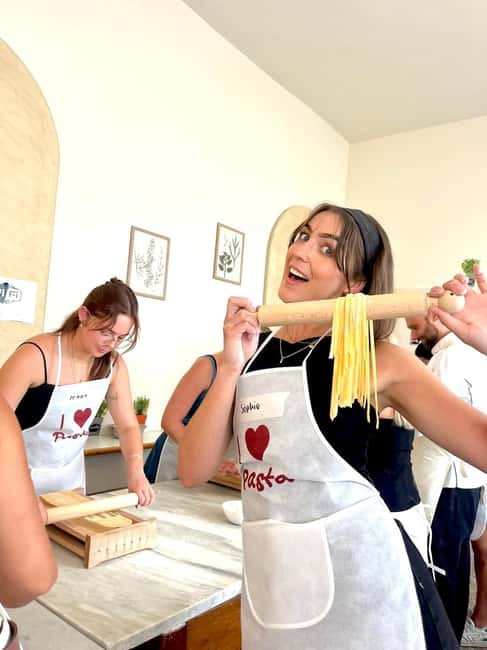
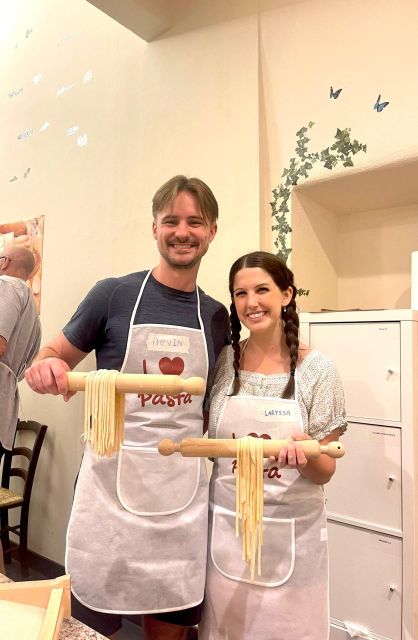
The second pasta project shifts from broad lasagna sheets to thin spaghetti. You form the dough and learn the technique needed to create long, delicate strands. It is a nice contrast: lasagna tests your rolling and layering, while spaghetti requires more control and care with the finished shape.
The spaghetti is paired with pummarola, a slow-simmered tomato sauce. The sauce is simple in concept, but it lets the pasta do the work. Fresh noodles and a well-made tomato sauce are a good lesson in Italian cooking, where a short ingredient list leaves little room to hide mistakes.
The class material describes both lasagna and spaghetti, but the exact pasta shape can vary in practice. Some sessions have produced linguine, tagliatelle, fettuccine, or ravioli-style pasta instead. If a particular shape matters to you, ask when booking or at the start of class. The core lesson remains fresh pasta, sauce, and shared cooking rather than one rigid format.
One useful feature is that you learn what to do with extra pasta. Tips on storing or using leftover dough can turn the class into something you actually repeat at home, rather than a one-night holiday memory. The English recipe booklet helps, but the physical practice is what makes the instructions easier to remember.
Same flour, a different shape to roll:
- Florence: Pasta Cooking Class with Unlimited Wine
★ 4.9 · 10,285 reviews - Florence Pizza or Pasta Class with Gelato Making at a Tuscan Farm
★ 5.0 · 6,801 reviews - Florence: Pasta & Tiramisu Cooking Class with Unlimited Wine
★ 4.9 · 6,708 reviews - Florence: Pasta Cooking Class with Unlimited Wine
★ 5.0 · 6,413 reviews
Sitting down to eat your own work
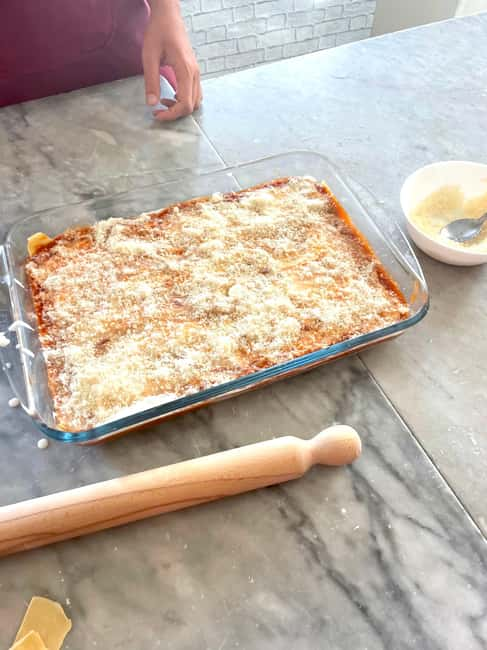
After cooking, the group sets the table together and sits down for the meal. This is not a quick taste at the counter. You get time to enjoy the lasagna and spaghetti as part of a proper shared dinner.
Organic local red wine is included. It is served to participants of legal drinking age, and the wine pairing adds to the evening atmosphere without requiring you to arrange drinks separately. The amount can vary by session, so think of it as part of the meal rather than a wine tasting.
The sit-down portion is one of the strongest reasons to choose this class. You get to compare techniques, talk with the instructor, and enjoy the social side of cooking. The meal also gives families a shared accomplishment, while couples may find it a more relaxed evening than another restaurant reservation.
There is one practical limitation: you do not necessarily eat only the individual portion you personally shaped. The food is prepared and shared by the group, and one participant would have preferred trying their own pasta separately. If you want a private, highly controlled cooking lesson, this setup may feel too communal.
Chocolate, limoncello, and the recipe booklet
The class ends with chocolate dessert and a shot of limoncello. It is a small touch, but it gives the meal a clear finish and keeps the experience connected to familiar Italian dining customs.
You also receive a recipe booklet in English. That is more useful than it may sound. Fresh pasta is easy to enjoy in Florence and harder to reproduce at home unless you remember the proportions, sauce steps, and handling advice. The booklet gives you a starting point for making the dishes again for friends or family.
Some people also find pasta tools for sale after the lesson, including cutters and rolling equipment. The information supplied does not make a purchase part of the class, so treat any equipment as optional rather than an included extra.
The instructors make or break the evening
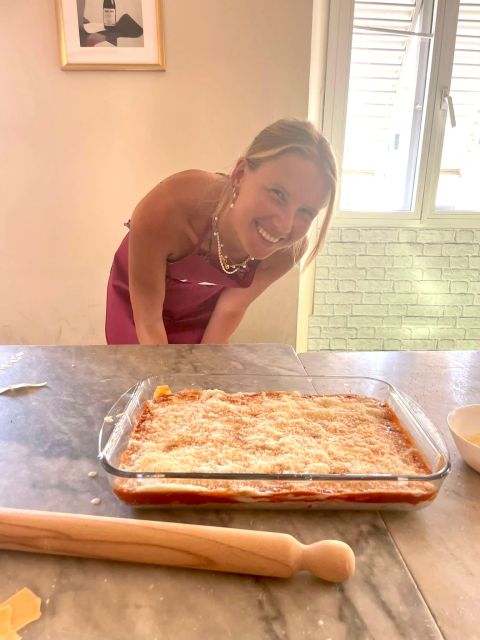
The guides are a major part of the experience. Names associated with recent sessions include Milena, Aly, Erica, Robin, Alessandra, Yasmin, Lucrezia, Sarno, Marta, Jasmine, and Lena. The teaching style can differ from one chef to another, but the recurring strengths are patience, clear English, humor, and a willingness to help beginners.
Milena is particularly suited to visitors who want lots of encouragement and practical feedback. Aly has been praised for including children and making sure each person gets a role. Erica combines pasta instruction with food and city tips, while Robin brings high energy and keeps the work moving.
The class can be a good family activity, but children must be at least 8 years old. The hands-on tasks require attention and some patience, so very young children would not fit the stated age requirement. Older children who enjoy cooking can take part rather than simply watch.
The English instruction is important for the quality of the lesson. You can ask questions as you work, and the cooking terms are explained in a way that suits beginners. If your group includes different levels of kitchen experience, the small-group format helps the instructor give extra help where needed.
Is $48 a fair price?
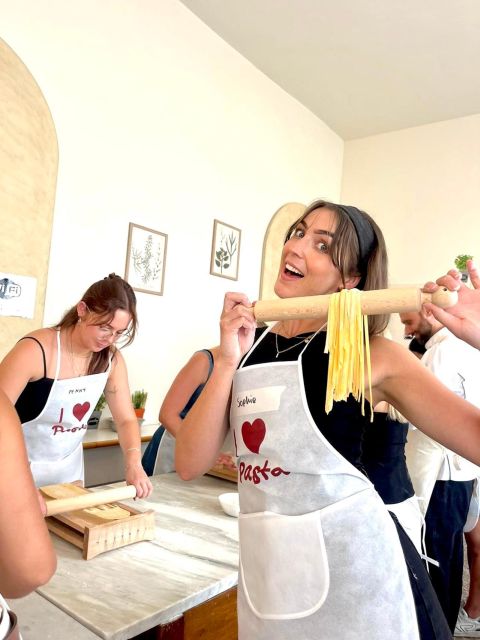
At $48 per person, the class is well priced for a three-hour Florence activity. The fee includes ingredients, cooking equipment, an instructor, wine, dessert, limoncello, and the recipe booklet. You are paying for both the lesson and a full meal, not just a short demonstration.
The value is strongest if you want an activity that fills an afternoon or evening while also covering dinner. A restaurant meal alone could cost a similar amount, but it would not give you the pasta skills or recipe booklet. The class also saves you from planning a separate meal after three hours of cooking.
It is less attractive if you already cook fresh pasta regularly or want a serious professional-level course. You will learn useful techniques, but the format is friendly and social rather than highly technical. The group also shares some parts of the meal, and the exact pasta shape may vary.
Free cancellation is available up to 24 hours before the start time, and you can reserve now and pay later. A minimum number of participants is required. If that number is not reached, the provider may offer another time or date, or issue a full refund.
Who should book this Florence class?
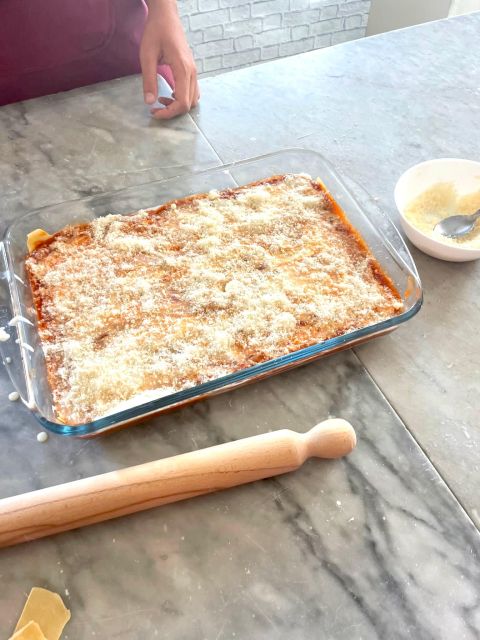
I would choose this for a first-time pasta maker, a couple looking for an evening activity, or a family with children aged 8 and older. It also suits anyone who has already visited the main sights and wants a more active way to spend time in the city center.
The class is especially useful for people who want to take a piece of the trip home. You leave with practical pasta skills, sauce methods, and written recipes rather than only photographs. The shared meal and wine make it feel like an evening out, while the cooking keeps you involved.
I would skip it if you are vegan, gluten intolerant, or lactose intolerant, since the class cannot accommodate those needs. It is also not suitable for people with mobility impairments. Anyone who dislikes group cooking or wants to prepare a completely individual dish should choose a more private format.
Should you book the lasagna and spaghetti class?
Book it if you want a friendly, good-value Florence experience that combines cooking, dinner, wine, and conversation. The strongest features are the patient English-speaking chefs, small groups, practical pasta work, and the chance to eat the finished dishes in the same palazzo where you made them.
Before paying, check the menu against your dietary needs and confirm the meeting address carefully, especially the red 17 R number. If you want to make the Bolognese sauce yourself or keep every portion separate, ask about the class format in advance.
For most beginners, I think the $48 price is fair. You get a useful skill, a filling meal, a few Italian finishing touches, and an activity that feels more personal than simply booking another table.
FAQ
How long does the cooking class last?
The stated duration is three hours, though one session finished in about two and a half hours.
Where does the class meet?
Meet at Lungarno Guicciardini 17 R in Florence. Search for the red building number, marked 17 R, not a blue number. Ring the bell labeled PASTAMANIA EXPERIENCE.
What pasta will I make?
The class focuses on lasagna and spaghetti. Depending on the session, the fresh pasta may also be presented as linguine, tagliatelle, fettuccine, or another related shape.
Is the class taught in English?
Yes. The instructor teaches in English.
Is wine included?
Yes. Organic local red wine is included. Only participants of legal drinking age are served alcohol.
Are ingredients and cooking equipment included?
Yes. Ingredients, cooking equipment, and instruction are included in the price.
Can people with dietary restrictions join?
The class cannot accommodate vegans, gluten sensitivity, or lactose intolerance. You should report food allergies or dietary restrictions in advance.
What is the minimum age?
Participants must be at least 8 years old.
Is hotel pickup available?
No. Hotel pickup and drop-off are not included.
Fresh off the board around Florence
- Hands on Deluxe Traditional 4-course dinner with fresh pasta★ 5.0 · 15 reviews
- Vegan Cooking Class in Florence: Pasta Making & Wine!★ 5.0 · 2 reviews
- The Art of Pasta and Wine Tasting with Local Sommelier★ 5.0 · 16 reviews
- Gluten free pasta and dessert class 6 guests max★ 5.0 · 2 reviews
- Tuscan Pasta Masterclass Small-Group Cooking Experience★ 5.0 · 17 reviews
- Cooking class and home made pasta in Florence with LA VIVANDIERA!★ 5.0 · 5 reviews
- MaMa Florence: The Art of Corzetti – Hands-On Pasta Class★ 5.0 · 15 reviews
- Hands-On Pasta Making Class in Central Florence with Patrizia★ 5.0 · 5 reviews
Ravioli and Gnocchi Classes, class by class.
3 in 1 Cooking Class near Navona: Fettuccine, Ravioli & Tiramisu
Read our review →
3-in-1 Fettuccine, Ravioli, and Tiramisu Cooking Class
Read our review →
Fettuccine Pasta Cooking Class in Rome’s City Center
Read our review →
Become a Masterchef in Rome: Pasta, Ravioli and Tiramisù Class
Read our review →
Fettuccine & Tiramisù: Cooking Class with Wine & Limoncello
Read our review →
Rome Pasta and Tiramisu Class: Ravioli, Fettuccine & Fine Wine 5*
Read our review →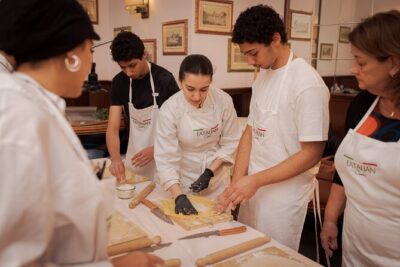
Pasta Cooking Class in Rome – Fettuccine Class in Piazza Navona
Read our review →
Lists this class appears in