
Review · FLORENCE
Florence: Vegetarian Pasta & Dessert Workshop
Florence is full of pasta classes, but this one keeps the focus firmly on vegetarian Tuscan cooking. You’ll make egg dough from scratch, turn it into pappardelle and ravioli, then finish with tiramisu. I like the practical mix of pasta-making and dessert, and I like that the class includes unlimited red and white Tuscan wine with the meal. The main consideration is simple: this is vegetarian, not vegan, with eggs, dairy, and cheese built into the recipes.
The class meets at La Carbonata on Borgo Pinti, just a few minutes from the Duomo. It runs for 2.5 hours in English and costs $50 per person, a fair price when you count the food, instruction, equipment, apron, meal, wine, and recipe booklet. One verified January 2026 review from Maria of Italy gave it five stars and called it an outstanding experience after taking cooking classes in many destinations.
Key points at a glance
- Make two pasta shapes from scratch: Learn to roll, shape, and fill handmade pappardelle and ravioli.
- Tiramisu is part of the main lesson: Prepare mascarpone, espresso-soaked biscuits, and cocoa rather than treating dessert as an afterthought.
- Vegetarian means eggs and dairy are included: Fresh eggs, cheese, and mascarpone are central to the class, so this is not a vegan workshop.
- Unlimited Tuscan wine comes with the meal: Red and white wine are included when you sit down to eat your handmade dishes.
- The central Florence location saves time: La Carbonata is on Borgo Pinti, close to the Duomo and easy to fit into a day of sightseeing.
- You leave with recipes: A printed or digital recipe booklet helps you repeat the dishes at home.
Why this Florence class is different
Many Italian cooking classes offer a broad menu and move quickly across several dishes. This workshop takes a narrower, more useful approach. You spend your time on three recipes you are likely to make again: fresh pasta, filled pasta, and tiramisu.
That focus matters. Pasta dough has a feel that is hard to learn from a recipe alone. You need to see how the dough comes together, how thin to roll it, and how much filling ravioli can hold before the edges refuse to seal. A local chef can show you those small decisions as you work.
The class also gives vegetarian cooking proper attention. You are not simply removing meat from a standard Tuscan menu. You are working with seasonal produce, fresh eggs, regional ingredients, and quality cheeses. The result is a lesson in how Tuscan food gets its character from pasta, vegetables, dairy, and careful preparation.
The experience is run by Sironi Alessandro and taught in English by local chefs. The available information does not name the individual chef, so do not book expecting a particular instructor by name. You can expect English instruction and guidance through each recipe.
More Vegetarian Cooking Classes in Florence:
- Small group PURO Vegan pasta and bruschette Class in Florence
★ 5.0 · 24 reviews - Florence Cooking Class: Vegetarian Pasta and Dessert Making
★ 5.0 · 7 reviews - Semi private Pasta Class Vegetarian Organic
★ 4.5 · 3 reviews
Meeting near the Duomo at La Carbonata
Your meeting point is La Carbonata, Borgo Pinti 95R, 50121 Florence. The location is only a few minutes from the iconic Duomo, which makes the class easy to pair with sightseeing in central Florence.
That central address is useful for a half-day plan. You do not need to spend time getting out to a distant cooking school, and you can arrange the class before or after a visit to the cathedral area. Still, allow time to locate the restaurant and arrive ready to begin. The class lasts 2.5 hours, so a late arrival could cut into your hands-on work.
The workshop is wheelchair accessible. Hotel pickup and drop-off are not included, so you make your own way to Borgo Pinti. Transportation is not needed as part of the activity itself, but this is worth noting if you are staying outside central Florence.
Starting with fresh pasta dough
The first major lesson is the dough. You work with farm-fresh eggs and flour, learning how to mix and handle the ingredients until the dough becomes workable.
This is the part where hands-on instruction earns its keep. Pasta dough can feel too dry, too sticky, or too firm depending on the ingredients and the weather. A printed recipe cannot easily show you what the correct texture feels like. The chef can offer direct guidance as you knead and roll.
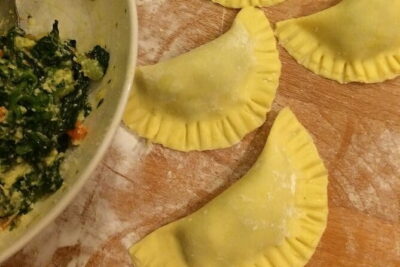
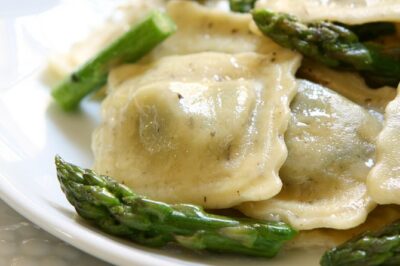
You will then learn how to roll the dough and prepare two different shapes. Pappardelle are broad ribbons, a classic format that gives a hearty bite and holds sauce well. Ravioli require more care because you must place the filling, cover it, press out air, and cut clean edges without wasting the dough.
The recipes use vegetarian ingredients, with regional produce, cheese, and eggs. The exact seasonal fillings are not specified, so the ingredients may vary. That is a good sign for anyone interested in local cooking, but it also means you should not book expecting one fixed ravioli filling.
Making pappardelle and ravioli
Pappardelle are usually the more forgiving of the two pasta shapes. Once the dough is rolled to the right thickness, you cut it into wide strips. The work is straightforward, but you still learn an important Tuscan habit: fresh pasta should have enough body to hold sauce without becoming heavy.
Ravioli are the more technical exercise. You prepare a vegetarian filling and learn how to portion it across the pasta. Too much filling can split the ravioli. Too little leaves a disappointing pocket of dough. Sealing the edges well is just as important as the filling itself.
I like this pairing because the two shapes teach different skills. Pappardelle show you how to work with long, open pasta. Ravioli teach accuracy, patience, and the balance between pasta and filling. You get a better understanding of fresh pasta than you would from making only one shape.
The class is designed for food lovers and beginners, not only experienced cooks. You use the provided tools and equipment, and an apron is available during the class. You do not need to bring cooking gear.
More pasta classes around Florence:
- Florence: Pasta Cooking Class with Unlimited Wine
★ 4.9 · 10,285 reviews - Florence Pizza or Pasta Class with Gelato Making at a Tuscan Farm
★ 5.0 · 6,801 reviews - Florence: Pasta & Tiramisu Cooking Class with Unlimited Wine
★ 4.9 · 6,708 reviews - Florence: Pasta Cooking Class with Unlimited Wine
★ 5.0 · 6,413 reviews
A Tuscan tiramisu with no meat, but plenty of dairy
After the pasta, the class moves to tiramisu. You layer mascarpone, espresso-soaked biscuits, and cocoa into the familiar Italian dessert.
This is a classical-style tiramisu with a vegetarian approach. The vegetarian label mainly matters for the overall menu, since traditional tiramisu already contains no meat or fish. The important point for dietary planning is that this recipe includes eggs and dairy. It is not vegan, and it is not dairy-free.
The chef also explains how to repeat the dishes at home and offers vegetarian-friendly substitutions. That advice is helpful if you cannot find the same local produce or want to adjust the recipe later. Vegan substitutions may be available, but you need to request them in advance. Do not assume they can be arranged on the day.
Including dessert makes the class feel like a complete meal rather than a single pasta lesson. It also gives you a change of pace. Pasta involves dough, shaping, and handwork. Tiramisu is about layering and balance, with coffee, mascarpone, biscuits, and cocoa working together.
Sitting down to eat with Tuscan wine
Once the cooking is finished, you sit down to eat the dishes you made. That shared meal is a key part of the value. You are not watching a chef prepare food and then leaving hungry. Your work becomes lunch or dinner.
Unlimited red and white Tuscan wine is included with the meal. This gives the experience a relaxed, social finish and adds value to the $50 price. Additional drinks are available for purchase, though the included wine covers the listed red and white options.
The wine is also part of the regional setting. Tuscan cooking is not only about recipes. It is about sitting down with food, wine, and other people. The class gives you that table experience after showing you how the meal came together.
Keep your expectations practical. This is a cooking workshop with a meal, not a formal wine tasting. The information provided does not promise a guided lesson on grape varieties, vineyards, or pairings. If wine education is your main goal, you may want a separate tasting.
Is $50 a good value?
At $50 per person, the class offers a strong bundle. You receive 2.5 hours of instruction, fresh ingredients, use of cooking tools, an apron, preparation of three dishes, a shared meal, unlimited red and white Tuscan wine, and a printed or digital recipe booklet.
The most valuable part is the instruction. You can find pasta recipes online, but learning how dough should feel and how ravioli should be sealed is harder to pick up from a screen. The recipe booklet then gives you a reference for trying the dishes again at home.
The wine and meal also matter. A cheaper demonstration-only class may not include enough food to replace a meal or may charge extra for drinks. Here, the listed package includes both the meal and wine.
The price is especially fair for vegetarians who want a menu built around their preferences from the start. You are not paying for a meat-based menu and asking the chef to remove half of it. Every listed dish is vegetarian.
Who will enjoy this most?
I would recommend this class to:
- Vegetarians who want traditional Tuscan flavors without meat or fish
- First-time pasta makers who want direct help with dough and ravioli
- Couples and friends looking for an easy social activity in central Florence
- Families with older children who enjoy hands-on food preparation
- Home cooks who want recipes they can repeat after the trip
- Food lovers who appreciate wine with a relaxed shared meal
It may be less suitable if you need a fully vegan menu, since eggs, cheese, and dairy are part of the standard recipes. Vegan substitutions may be possible with advance notice, but they are not included automatically.
It may also be a poor fit if you dislike group cooking or prefer a quiet restaurant meal. The class is built around handling food, following instructions, and sharing the finished dishes.
Practical details that affect your choice
The class is 2.5 hours long, which is enough time for a proper lesson without taking an entire day from Florence sightseeing. Check the available start times when booking, since the exact schedule is not fixed in the provided details.
Instruction is in English. That keeps the class accessible to English-speaking visitors, though the setting remains distinctly local through the recipes, ingredients, and Tuscan wine.
You can cancel up to 24 hours in advance for a full refund. Reserve-now, pay-later booking is also available, which helps if your Florence schedule is still changing.
The class does not include hotel pickup or drop-off. Meet directly at La Carbonata. You should also tell the provider in advance if you need vegan substitutions, rather than relying on a last-minute change.
The rating is currently five stars from two reviews, including a verified January 13, 2026 booking by Maria from Italy. She had taken cooking classes in several places and still described this one as an outstanding experience. That is a small review base, so I would treat it as an encouraging signal, not a guarantee of every class.
My verdict: book it if pasta is your Florence souvenir
I would book this workshop if you want to do more than eat Italian food. You make the pasta yourself, learn a second filled shape, prepare tiramisu, and then enjoy the meal with Tuscan wine. The central location and $50 price make it easy to add to a Florence itinerary.
The choice is less clear if you are vegan or want a serious wine seminar. Eggs and dairy are part of the standard menu, and the wine is included as part of the meal rather than presented as a formal tasting.
For vegetarians, couples, first-time pasta makers, and anyone who wants recipes to take home, this is a practical and well-priced Florence activity. Bring an appetite, arrive at La Carbonata on time, and request any vegan changes before your visit.
FAQ
Where does the cooking class meet?
Meet at La Carbonata restaurant, Borgo Pinti 95R, 50121 Florence.
How long does the experience last?
The class lasts 2.5 hours.
How much does the class cost?
The price is $50 per person.
Is the class taught in English?
Yes. The instructor language is English.
What pasta will I make?
You will make handmade pappardelle and filled ravioli from scratch.
Is tiramisu included?
Yes. You will prepare a classical Tuscan tiramisu with mascarpone, espresso-soaked biscuits, cocoa, eggs, and dairy.
Is the menu vegetarian?
Yes. The class uses vegetarian ingredients and does not offer meat or fish.
Is the class suitable for vegans?
The standard class is not vegan because it uses eggs, cheese, mascarpone, and other dairy ingredients. Vegan substitutions may be available if requested in advance.
Is wine included?
Yes. Unlimited red and white Tuscan wine is included with the shared meal. Additional drinks can be purchased.
Is the activity wheelchair accessible?
Yes. The activity is wheelchair accessible. Hotel pickup and drop-off are not included.
Can I cancel my booking?
You can cancel up to 24 hours in advance for a full refund. Reserve-now, pay-later booking is also available.
Fresh off the board around Florence
- Hands on Deluxe Traditional 4-course dinner with fresh pasta★ 5.0 · 15 reviews
- The Art of Pasta and Wine Tasting with Local Sommelier★ 5.0 · 16 reviews
- Vegan Cooking Class in Florence: Pasta Making & Wine!★ 5.0 · 2 reviews
- Gluten free pasta and dessert class 6 guests max★ 5.0 · 2 reviews
- Tuscan Pasta Masterclass Small-Group Cooking Experience★ 5.0 · 17 reviews
- Cooking class and home made pasta in Florence with LA VIVANDIERA!★ 5.0 · 5 reviews
- MaMa Florence: The Art of Corzetti – Hands-On Pasta Class★ 5.0 · 15 reviews
- Hands-On Pasta Making Class in Central Florence with Patrizia★ 5.0 · 5 reviews
Vegan and Vegetarian Cooking Classes, class by class.
Small group PURO Vegan pasta and bruschette Class in Florence
Read our review →Florence Cooking Class: Vegetarian Pasta and Dessert Making
Read our review →
Vegan Cooking Class in Florence: Pasta Making & Wine!
Read our review →
Lists this class appears in