
Review · ITALY
Handmade pasta workshop by Cilento Experience
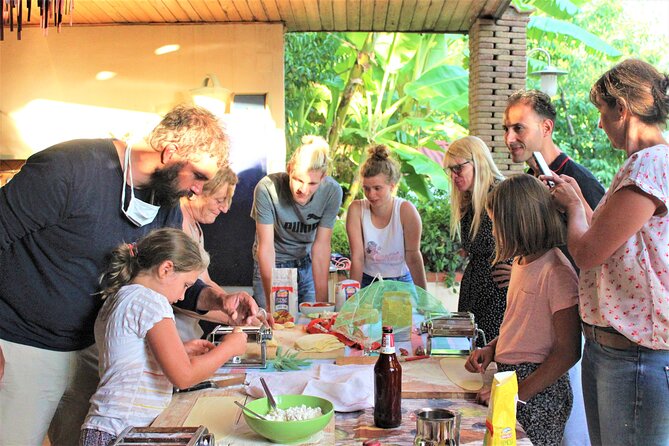
The best part of this experience is that pasta making begins with the people and ingredients behind the meal. You visit Michele’s countryside vegetable plot, then work with Rosalba in her garden kitchen, making tagliatelle and ricotta ravioli with buffalo ricotta, homemade tomato sauce, garden sage, and olive oil from her grandmother’s trees.
I like the private format, which lets your group ask questions and work at its own pace. I also like the direct link to Cilento food culture: the ricotta is freshly made nearby, the sage comes from the garden, and Rosalba’s cooking grew from feeding her younger brother while her parents worked in the fields.
The main consideration is timing. The advertised session lasts about 2 hours and 5 minutes, but one family’s visit stretched beyond four hours. That can be a pleasant surprise if you have time, but it matters if you are planning a tight connection or evening booking.
Key points to know before booking
- A countryside start: Visit Michele’s vegetable-growing area before cooking.
- Two classic pastas: Learn to prepare tagliatelle and ricotta-filled ravioli.
- Ingredients with a local story: Use buffalo ricotta, buffalo butter, garden sage, homemade tomato sauce, and mountain olive oil.
- A private family setting: Only your group participates, with Rosalba leading the kitchen session and Daniel helping with the experience.
- A hands-on meal: You do not just watch. You make the pasta, then eat it on the flower-filled garden terrace.
- A useful timing tip: The scheduled 2-hour-5-minute visit may run much longer, so keep your afternoon flexible.
From Salerno to a Cilento family kitchen
Although this experience is marketed for visitors staying in Salerno, the meeting point is in Capaccio Paestum, at Via della Gueglia 53. That distinction matters. You need to arrange your own way to the starting point unless you separately coordinate help with the host.
The start time is 3 p.m., and the activity ends back at the same meeting point. Since the workshop includes a short countryside visit, a cooking lesson, and a shared meal, I would not treat it as a quick stop between other plans.
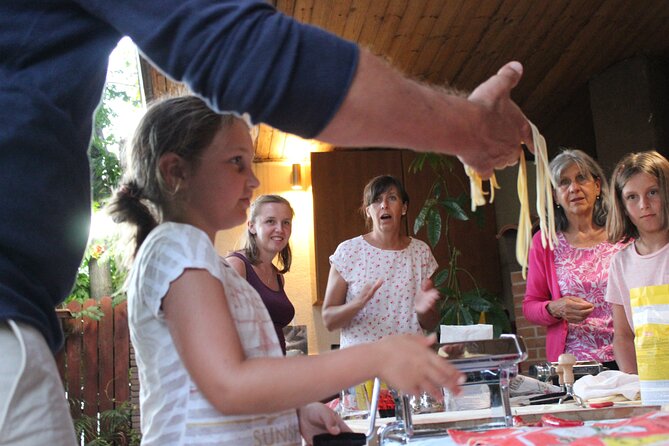
The experience is private, so your group has the kitchen to itself. That makes a difference in a pasta class. You can ask Rosalba to repeat a technique, take your time shaping ravioli, or ask about how the ingredients fit into daily life in Cilento.
Daniel Aleman Lücker is the experience provider, and Rosalba is the cook who guides the pasta work. The activity is offered in English. One especially useful detail is that Daniel has helped visitors with train arrangements and, in at least one case, picked them up from the station. Do not assume that is included as a standard transfer, but it is worth asking about before you go.
More Fresh Pasta Workshops in Italy:
- Rome: Pasta Making Class with Wine, Limoncello, and Dessert
★ 4.9 · 3,177 reviews - Pastamania – Florence Pasta Making Class
★ 5.0 · 3,050 reviews - Enjoy Spritz and Pasta Making in Piazza Navona
★ 5.0 · 1,681 reviews
A short visit to Michele’s vegetable plot
The food story begins outside the kitchen. You first make a short excursion to the countryside, where Michele grows vegetables.
This opening gives the workshop a useful sense of place. Instead of starting with a bowl of flour on a table, you see the connection between the garden, the kitchen, and the meal. The vegetable plot also helps explain why the cooking feels tied to everyday Cilento life rather than designed only for visitors.
The supplied details do not specify how long you spend at the plot or which vegetables are in season. I would think of it as a brief introduction, not a full farm tour. The focus soon turns to Rosalba and the pasta lesson.
That short visit may be most valuable for anyone who wants more than a standard cooking demonstration. It gives children a simple way to understand where food begins, and it gives adults a better sense of the family’s daily routine.
Rosalba’s kitchen lessons and family cooking
The cooking takes place on a flower-filled garden terrace, surrounded by greenery. This is not a formal cooking school with rows of workstations. It is a family setting, and the terrace is also where the meal is served.
Rosalba’s background adds weight to the lesson. She learned to cook for her younger brother from an early age while her parents worked in the fields. Her skill comes from years of cooking for family, not from a performance created for a class.
That background also shapes the tone. Rosalba wants you to ask questions, and the experience is built around conversation as much as technique. You can ask about the pasta, the ingredients, or the way southern Italian food is prepared at home.
I would encourage you to speak up rather than simply copy each step. A private class is most useful when you ask why the dough is handled in a certain way, how the filling is balanced, or how the sauce is used. The information provided does not list every technique covered, so the exact level of instruction may vary with your group.
Daniel brings another layer to the setting. He has lived in Cilento for 13 years with his Italian family and describes southern Italian food culture as part of his everyday life. That gives him a useful role between cultures, especially if you want to understand the customs around the food, not just the recipe.
Making tagliatelle and ricotta ravioli
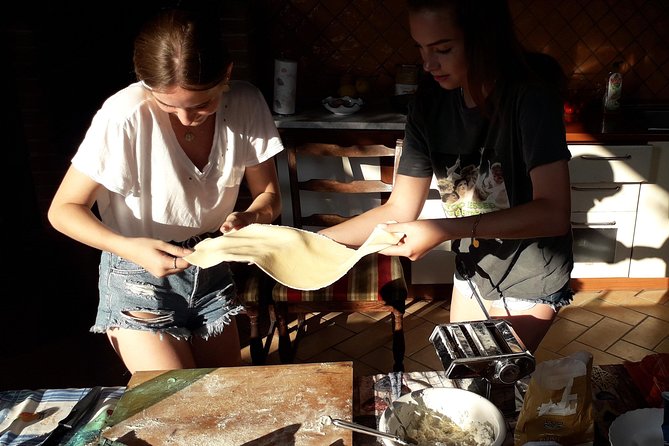
The main hands-on work centers on two familiar but distinct pastas: tagliatelle and ravioli di ricotta.
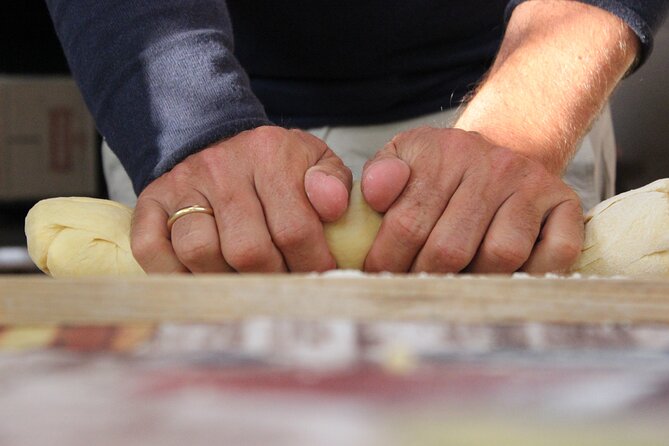
Tagliatelle is the simpler of the two to understand. You prepare the pasta, work it into thin sheets, and cut it into ribbons. The finished pasta is served with homemade tomato sauce, so the dish lets the pasta itself play a clear role.
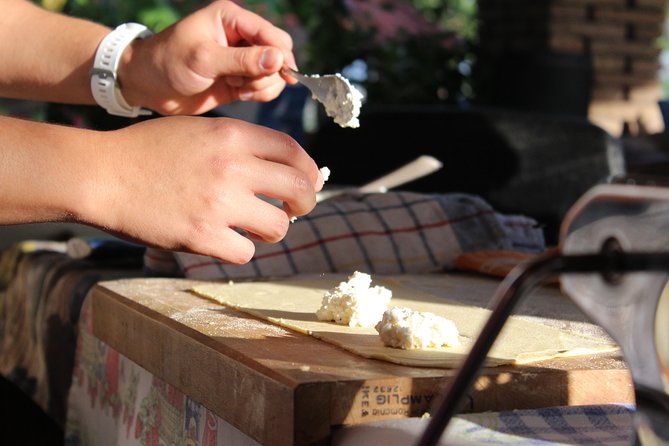
Ravioli requires more care. You must handle the pasta sheet, add the filling, close the parcels, and avoid trapping too much air or letting the edges split. The filling here uses freshly made buffalo ricotta. The meal also includes buffalo butter and sage from the garden, giving the ravioli a gentle, savory finish.
The class is well suited to families because the work can be shared. One person can help with the dough, another can shape the ravioli, and children can take part in suitable steps. A seven-year-old had enough to do to enjoy the session, with Daniel helping keep the experience welcoming for younger participants.
You should still expect a real cooking activity, not a staged photo stop. Flour, shaping, filling, and timing all require attention. If you want a relaxed lesson, the private format helps. If you are hoping to finish quickly, this may feel slow.
More pasta classes around Italy:
- Florence: Pasta Cooking Class with Unlimited Wine
★ 4.9 · 10,285 reviews - 3 in 1 Cooking Class near Navona: Fettuccine, Ravioli & Tiramisu
★ 5.0 · 7,376 reviews - Florence Pizza or Pasta Class with Gelato Making at a Tuscan Farm
★ 5.0 · 6,801 reviews - Florence: Pasta & Tiramisu Cooking Class with Unlimited Wine
★ 4.9 · 6,708 reviews
Why the ingredients matter
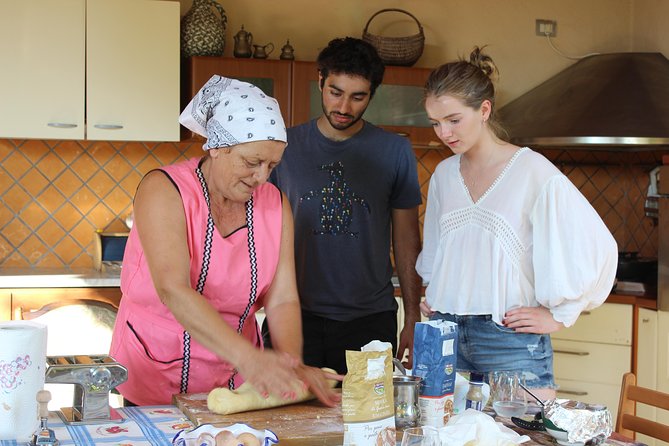
The ingredients are not just decoration around the pasta lesson. They explain the cooking style you are learning.
The ricotta is made nearby and used fresh. The butter is made from buffalo milk, and the olive oil comes from Rosalba’s grandmother’s trees in the mountains. Sage is picked from the garden, while the tomatoes for the sauce are homemade.
That short supply line is one of the strongest reasons to choose this experience. You are not simply learning a recipe that could be made anywhere. You are tasting a version shaped by what the family grows, buys nearby, and has access to through relatives and neighbors.
The menu is also focused. You receive ravioli in butter and sage sauce and tagliatelle in tomato sauce. There is no long list of courses, and the cooking itself is the main event.
This simplicity has an advantage. You can pay attention to the pasta and the ingredients rather than rushing through several dishes. The limitation is that anyone expecting a large meal or many recipe options may find the menu narrow.
Eating on the garden terrace
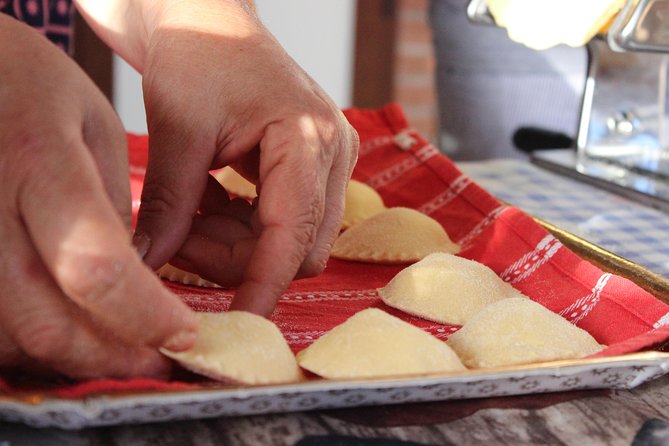
After the work is finished, you eat what you made on the terrace. The setting matters here. You stay in the same green, flower-filled place where the cooking happened, which keeps the meal connected to the family’s home and routine.
The ravioli is served with buffalo butter and garden sage. The tagliatelle comes with homemade tomato sauce. These are straightforward combinations, but they give you two different ways to taste the pasta: one rich and herbal, the other bright and tomato-based.
The meal also gives you time to keep talking with Rosalba and Daniel. Since the experience is private, you can ask questions that might be difficult in a large class. That conversation is a central part of the value, especially for anyone interested in food customs and family life.
The exact quantity of food is not specified, so I would not book this as a substitute for a full restaurant dinner without asking first. It is a cooked meal tied to the workshop, not a formal multi-course dining event.
How much time should you allow?
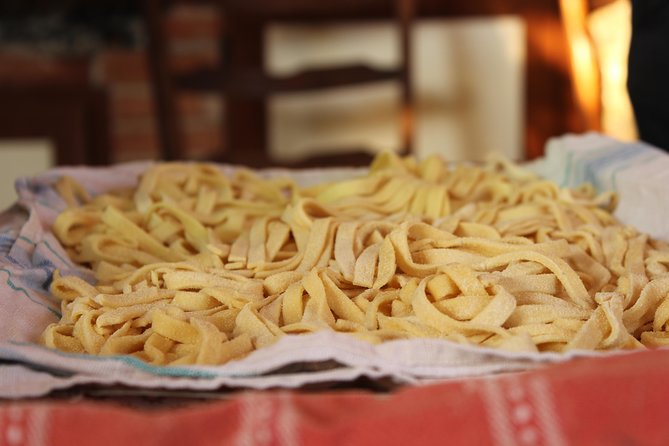
The official duration is about 2 hours and 5 minutes. In practice, you should leave extra room. One family found that the visit lasted more than four hours, helped by the farm visit, pasta making, meal, and time with the family.
That longer pace is part of the charm for some people. The experience can feel generous rather than rushed, and children have time to stay involved. It also means you should avoid booking a train, dinner reservation, or evening show immediately afterward.
The 3 p.m. start places the class in the late afternoon and early evening. Check your own transport plans carefully because the meeting point is in Capaccio Paestum, not central Salerno. The activity returns to the starting point, but no regular transportation from Salerno is listed as part of the price.
Bad weather can cancel the activity. If that happens, you are offered another date or a full refund. The experience also requires a minimum number of participants, and if that condition is not met, you are offered another date or experience, or a full refund.
Is $96.12 a fair price?
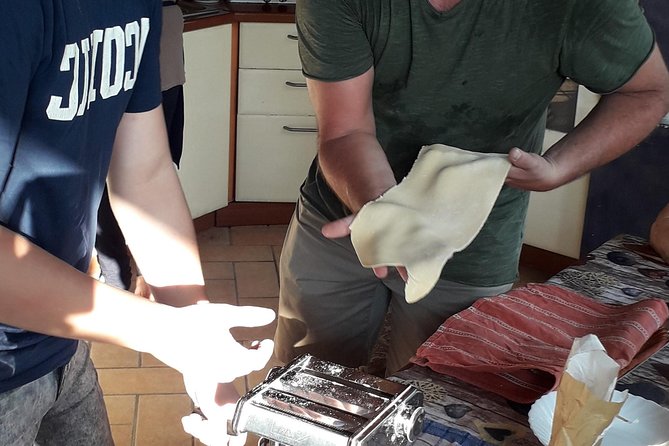
At $96.12 per person, this costs more than a simple pasta lesson in a commercial kitchen. The price makes more sense when you count what is included in the character of the experience: a private group, a countryside visit, personal instruction, a family terrace, and a meal made with ingredients tied to the area.
You are paying for access to a home-style setting and for time with Rosalba and Daniel, not only for the food. The use of fresh buffalo ricotta, buffalo butter, garden sage, homemade tomato sauce, and family olive oil gives the meal a stronger local connection than a generic class using supermarket ingredients.
Value depends heavily on your priorities. If you want a fast lesson with several recipes and a polished school setup, this may not be the best fit. If you want personal attention, a slower pace, and a chance to understand Cilento cooking through one family’s routine, the price is easier to justify.
The private format is especially useful for a family or small group. A seven-year-old enjoyed the activity, and the relaxed setting gives children more room to participate than a crowded class might.
Who should book this experience?
I would choose this for families, couples, and small groups who care about food and conversation as much as the finished dish.
It is a good match if you want:
- A private activity rather than a large group class
- A hands-on lesson with two pasta types
- A local meal made with ingredients from nearby farms, gardens, and family sources
- Time to ask questions about Cilento food culture
- An experience that includes children without making them sit quietly through a demonstration
- A slower afternoon outside central Salerno
I would hesitate if you have limited time, need a guaranteed two-hour finish, or want a broad menu. The meeting point also requires attention because it is in Capaccio Paestum. Confirm your transport before booking.
Free cancellation is available if you cancel at least 24 hours before the 3 p.m. start time. Changes or cancellations inside that window are not refunded or accepted. That policy is worth noting when you are coordinating trains and other activities.
Should you book the Cilento pasta workshop?
Book it if you want the pasta lesson to feel personal and rooted in a real household. The strongest features are the private setting, Rosalba’s family cooking background, the visit to Michele’s vegetable plot, and the use of fresh local ingredients.
I especially recommend it for families who want children to take part, and for anyone staying near Salerno who is willing to make the trip to Capaccio Paestum. Keep your schedule open beyond the official 2 hours and 5 minutes, and ask Daniel about transport help if you need it.
Skip it if your priority is speed, a large tasting menu, or a central Salerno meeting point. For the right kind of afternoon, though, this offers something more lasting than a plate of pasta: you learn how the dish fits into the life of a Cilento family.
FAQ
Where does the pasta workshop meet?
The meeting point is Via della Gueglia, 53, 84047 Capaccio Paestum SA, Italy. The activity ends back at the same meeting point.
What time does the experience start?
The workshop starts at 3 p.m. local time.
How long does the activity last?
The scheduled duration is approximately 2 hours and 5 minutes. It may run longer, so allow extra time in your plans.
What pasta will I make?
You will learn to make homemade tagliatelle and ricotta ravioli.
What food is served?
The meal includes ricotta ravioli with buffalo butter and garden sage, plus tagliatelle with homemade tomato sauce.
Is the workshop private?
Yes. Only your group participates in the activity.
Fresh off the board around Italy
- Vicenza: Pasta & Tiramisu Cooking Class at a Local’s Home★ 5.0 · 5 reviews
- Verona: Pasta & Tiramisu Cooking Class at a Local’s Home★ 5.0 · 16 reviews
- Volterra: Fresh Pasta Cooking Class at a Tuscan Farmhouse★ 5.0 · 33 reviews
- Verona: Tortellini Cooking Class and Lunch with Mamma Ivana★ 5.0 · 20 reviews
- Verona: My Granny’s secrets making gnocchi★ 5.0 · 7 reviews
- Verona: Prosecco and Pasta Making Class at a Local’s Home★ 5.0 · 10 reviews
- Venice: Pasta Carbonara Cooking Class with Wine★ 5.0 · 3 reviews
- Venice: Share Your Pasta Love in a Local’s Home★ 4.8 · 20 reviews
Fresh Pasta Workshops, class by class.
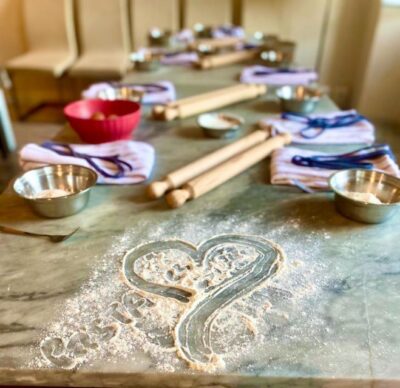
Pasta Making Class with Wine, Limoncello, and Dessert
Read our review →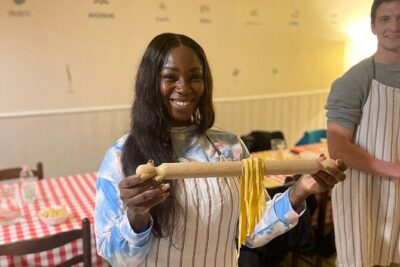

Enjoy Spritz and Pasta Making in Piazza Navona
Read our review →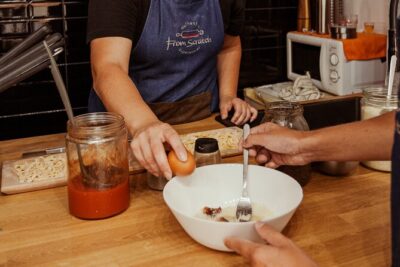
Pasta Making & Wine Tasting with Dinner in Frascati from Rome
Read our review →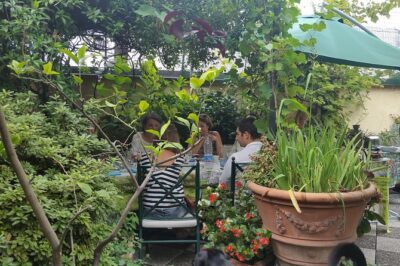
The Secrets to Learn Fresh Pasta and Tiramisù in a Glam Home
Read our review →
Handmade Pasta & Dessert Class with Unlimited Wine
Read our review →Lists this class appears in