
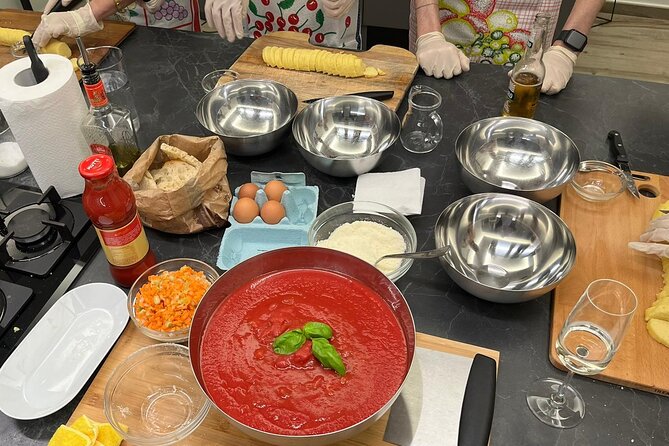
Review · ROME
Gnocchi and meatballs | Cooking class and dinner at my house in Rome
The most appealing part of this Rome experience is its setting: you cook in Ginevra’s home, not in a polished restaurant kitchen. Over about four hours, you make semolina gnocchi and Roman-style meatballs with stuffed courgettes, then eat the meal together at the same table.
I like the small private format, since only your group takes part. I also like the warm progression from prosecco, pizza, cured meats, and cheese to hands-on cooking and a full dinner. The main thing to consider is that this is a home-based meal, so you should choose it for personal contact and Roman food traditions, not for a formal restaurant service or a broad menu.
Key points to know before booking
- Ginevra hosts you in her Rome home, giving the evening a personal feel that a restaurant meal cannot match.
- You prepare two Roman dishes from start to finish, semolina gnocchi and meatballs in sauce with stuffed courgettes.
- The four-hour schedule includes dinner, Italian wine, typical desserts, and a local liqueur.
- The experience is private, so only your own group participates.
- The meeting point is Via Ruggero Fauro, near public transportation, with the activity ending back there.
- The price is $110.55 per person, a reasonable amount if you value a cooking lesson and a full meal rather than dinner alone.
A Roman cooking evening at Ginevra’s home

This experience gives you a seat at a local table and a role in preparing the food. That matters in Rome, where a meal can be as much about how people eat together as what appears on the plate.
Ginevra leads the evening in English, and her replies to past participants show a host who cares about making people feel at home. That personal touch is central here. You are not simply watching a chef work from across a counter. You are taking part in the preparation, then eating the results with the person who guided you.
The setting also keeps the event focused. Since it is a private activity, your group does not need to adjust to a large class or strangers with different interests. That can be especially useful for couples, families with older teenagers, or a small group of friends who want time to talk while cooking.
The tradeoff is just as clear. A home experience has fewer formal amenities than a restaurant or cooking school. The supplied details do not promise a professional kitchen, a large range of dishes, or a choice of menu. You get a specific Roman meal and a personal host, which is the point.
More Ravioli and Gnocchi Classes in Rome
- 3 in 1 Cooking Class near Navona: Fettuccine, Ravioli & Tiramisu
★ 5.0 · 7,376 reviews - Rome: 3-in-1 Fettuccine, Ravioli, and Tiramisu Cooking Class
★ 4.9 · 2,704 reviews - Rome: Fettuccine Pasta Cooking Class in Rome’s City Center
★ 4.8 · 2,414 reviews
Starting with prosecco, pizza, and Roman snacks
The evening opens with a typical Roman aperitif. You begin with prosecco, pizza or bread, cured meats such as mortadella and salami, and local cheese.
This first course is more than a waiting snack. It gives you time to get acquainted with Ginevra and settle into the evening before the cooking begins. If you have just arrived in Rome, it is a relaxed way to shift from sightseeing mode to dinner mode.
I like the balance here. The starter is familiar enough to be easy, but the use of local cured meats and cheese gives it a distinctly Italian shape. You can also expect this part to be social rather than instructional. The main cooking work comes later, so you have room to talk, ask questions, and get comfortable.
Do not expect the aperitif to be a full tasting menu. It is a simple opening built around prosecco, pizza or bread, meat, and cheese. That is appropriate for an evening whose main focus is the food you prepare yourself.
Making semolina gnocchi alla Romana
The first main dish is gnocchi alla Romana, made with semolina. This is different from the potato gnocchi many people know. The dish uses semolina and is served with typical sauces, including a Roman sauce and cheese and pepper.
The value of this section is the process. You get to work through the dish step by step instead of receiving a finished plate with no sense of how it came together. For anyone who enjoys food, that practical knowledge is something you can carry home.
The sauces also give the dish a Roman identity. Cheese and pepper is a particularly useful pairing to understand because it shows how a small number of ingredients can shape a plate. The experience does not promise a large choice of sauces, but it does give you a focused look at the flavors chosen for this meal.
You should keep your expectations realistic. This is a shared class and dinner, not a professional certification course. The information does not specify how much time each person spends cooking or how technical the instruction becomes. If you want a friendly introduction to a Roman dish, it fits well. If you want advanced culinary training, it may feel too casual.
Preparing meatballs and stuffed courgettes
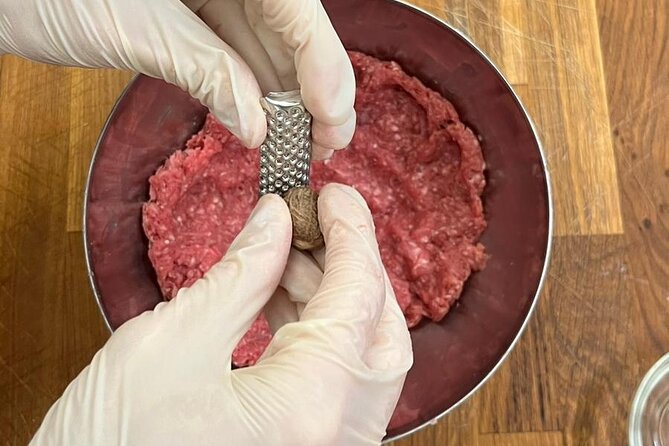
The second main course is Roman-style meatballs in sauce, served with courgettes stuffed with meat. The sauce is prepared together and is used with the meal.
This part has a clear home-cooking character. The recipe is described as the kind of meatballs Ginevra’s grandmother made, which gives the dish a family connection rather than a restaurant presentation. You are learning a food tradition tied to everyday cooking and shared meals.
The stuffed courgettes add another task and another texture to the plate. Instead of making one dish and stopping, you help prepare a complete main course with a vegetable side built around meat. That makes the cooking feel substantial enough to lead into dinner.
For you, the important question is how much hands-on time you want. The supplied details confirm that you prepare the dishes together, but they do not set out a precise division of tasks. You might find that the evening is part lesson, part social gathering, with the host guiding the work as the group goes along.
That format can be a strength. You are free to concentrate on the food while enjoying conversation. It can also mean the pace is less structured than a commercial class. Choose it for the chance to cook and connect, not for a tightly timed kitchen workshop.
Same flour, a different shape to roll:
- Rome: Pasta & Tiramisu Class with Fine Wine by the Vatican
★ 4.9 · 4,852 reviews - Rome: Pasta Making Class with Wine, Limoncello, and Dessert
★ 4.9 · 3,177 reviews - Rome Cooking Class: Make Pasta and 3 Spritz Cocktails
★ 5.0 · 2,937 reviews - Learn to Make Pasta & Tiramisu with Wine and Limoncello Included
★ 5.0 · 2,345 reviews
Sitting down to eat what you made
Once the cooking is finished, you sit at the table and eat the food prepared together. The dinner includes Italian wine, followed by typical Roman desserts and a local liqueur, depending on availability.
This shared meal is the natural payoff. You do not prepare food and then leave before tasting it. You get to see the full meal come together, compare the finished dishes with the work that went into them, and continue the evening around the table.
The wine is included as part of dinner, which adds value to the $110.55 price. So do the dessert and liqueur, since the experience continues beyond the main course instead of ending after the cooking portion.
The exact wine, dessert, and liqueur are not fixed in the information provided. The liqueur depends on availability, and the sweets are described as typical Roman desserts rather than by name. If you have strict dietary needs or dislike strong liqueurs, you should ask about available choices before booking.
What the $110.55 price includes in practical terms
At $110.55 per person, this costs more than ordering a casual Roman dinner. That comparison alone is not quite fair, since you are paying for a four-hour evening that combines food, instruction, drinks, dessert, and a private setting.
I see the value in four parts:
- A hands-on cooking session
- A complete meal with wine
- A prosecco aperitif and starter
- A private host and private group setting
If you would normally pay for a cooking class and then buy dinner afterward, the combined cost could be similar or higher. Here, the two activities are joined together, and the meal is based on dishes you helped make.
The price may feel less attractive if your main goal is simply to eat Roman food. You can find less expensive dinners in Rome, and this experience does not promise a large menu or a restaurant setting. Its value depends on how much you want the personal contact and the practical cooking element.
The strong five-star score across seven published ratings supports the idea that the experience delivers well for people seeking a local, friendly evening. That is a small sample, so I would not treat it as a guarantee for every group. Still, the repeated themes are useful: people enjoyed meeting locals, cooking together, feeling at home, and learning about Roman traditions.
Who will enjoy this private Rome activity
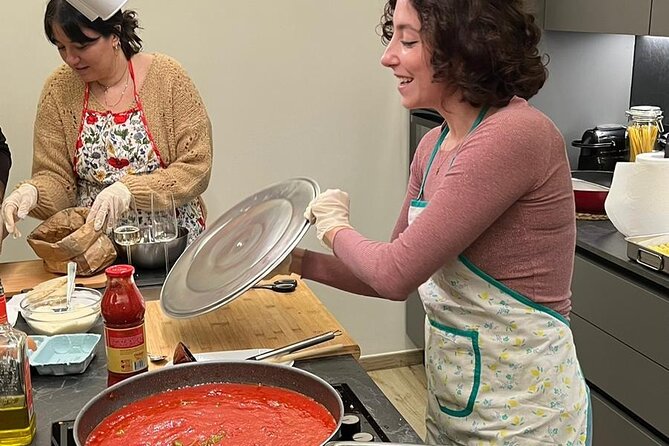
I would recommend this experience most to people who want to slow down for one evening. It suits you if you enjoy food, conversation, and the pleasure of making a meal with other people.
It is a good match for:
- Couples who want a dinner with more personal contact
- Families with children aged 16 and over
- Small groups of friends
- Food lovers who want Roman recipes rather than a standard restaurant menu
- First-time visitors who want an evening away from the usual sightseeing circuit
- Repeat visitors looking for a different way to spend a night in Rome
The minimum age is 16, so families with younger children cannot join. The private format also makes the experience a sensible choice if you want to keep your group together rather than join a larger class.
It may not suit you if you need a fully specified menu, a formal culinary school setting, or a fast dinner. The evening is built around connection and participation. You should be comfortable with a set meal and a home environment.
Location, timing, and simple planning advice
The meeting point is Via Ruggero Fauro, 00197 Rome, and the location is near public transportation. The activity both starts and ends at the meeting point, which keeps the evening simple from a planning standpoint.
Allow the full four hours. Do not schedule a major attraction, concert, or train departure too close to the end. Cooking and dinner can move at a relaxed pace, and the meal includes several stages beyond the main dishes.
The experience is offered in English, which is helpful if you want to follow the cooking instructions and ask questions. Confirmation comes at booking, and the activity is available as a mobile ticket.
You can cancel for a full refund up to 24 hours before the start time. Changes made inside that 24-hour window are not accepted, and cancellations within that period are not refunded. The activity also requires a minimum number of participants, so if that minimum is not met, you are offered another date or activity, or a full refund.
Because the experience is often booked far ahead, with an average booking lead time of about 152 days, I would not leave it until the last part of a Rome trip. That long lead time may reflect the limited capacity of a private home-based activity.
How this compares with a standard Roman dinner
A restaurant gives you more control over the menu, the seating, and the pace. You can order what you want, arrive at a convenient time, and leave when dinner ends.
Ginevra’s evening gives you something different. You have a host, a set cooking plan, and a chance to understand how the dishes are made. The food is not just presented to you. You take part in its preparation, then share it in the same place.
I would choose this over a normal dinner if you have already seen Rome’s major sights and want an evening centered on local contact. I would choose a restaurant instead if you are short on time, want a broad menu, or prefer to keep your evening independent.
The best part is that the food does not feel separated from the people. Prosecco starts the conversation, cooking gives everyone something to do, and dinner gives the evening a clear finish. That simple rhythm is why this can feel more personal than a meal at a table surrounded by other diners.
Should you book Ginevra’s cooking class and dinner?
Book it if you want to cook two Roman dishes, meet Ginevra in her home, and share a four-hour meal with wine, dessert, and liqueur. The private format, English-language hosting, and strong emphasis on traditional food make it a solid choice for a small group seeking a personal evening.
Think twice if you want a flexible menu, a restaurant-style setting, or an advanced cooking course. The experience is specific and social. For the right guest, that is exactly its appeal: you leave with a full meal, a few Roman cooking ideas, and the memory of having been welcomed into a local home.
FAQ
Where does the cooking class and dinner take place?
The experience takes place at Ginevra’s home in Rome. The meeting point is Via Ruggero Fauro, 00197 Roma RM, Italy.
How long does the experience last?
It lasts approximately four hours.
What language is the experience offered in?
The experience is offered in English.
Is this a private activity?
Yes. Only your group participates in the activity.
What food is served at the beginning?
The opening aperitif includes prosecco, pizza or bread, typical cured meats such as mortadella and salami, and local cheese.
Which dishes do participants prepare?
You prepare semolina gnocchi alla Romana and meatballs in sauce with stuffed courgettes.
Is wine included?
Yes. Italian wine accompanies the dinner.
What is served for dessert?
The meal ends with typical Roman desserts and a local liqueur, depending on availability.
What is the minimum age?
The activity is available to children aged 16 and over.
Can I cancel for a full refund?
Yes. You can cancel at least 24 hours before the experience start time for a full refund. Cancellations made less than 24 hours before the start time are not refunded.
More Pasta Classes with Dinner in Rome
- Pasta Making & Wine Tasting with Dinner in Frascati from Rome
★ 5.0 · 1,326 reviews - Rome: Pasta Making with Wine Tasting and Dinner in Frascati
★ 4.9 · 979 reviews - Pasta&Tiramisu Workshop: Craft Your Dinner with Free Flowing Wine
★ 5.0 · 121 reviews - Rome: Pasta Cooking Class, Dinner & Wine in Authentic Restaurant
★ 5.0 · 38 reviews
Fresh off the board around Rome
- Spritz and Pasta! Spritz, Fettuccine & Tiramisù★ 5.0 · 2 reviews
- Trastevere Food Tour with Pasta-Making Class★ 5.0 · 5 reviews
- Rome: Pasta and tiramisu class with wine pairing at Come Na Vorta★ 5.0 · 30 reviews
- Top Class in Fettuccine, Ravioli, and Tiramisu★ 5.0 · 7 reviews
- Traditional Pasta Cooking Class with Tiramisu Small Group★ 5.0 · 7 reviews
- The Pasta Factory Class★ 4.5 · 21 reviews
- The Original Fettuccine Alfredo Experiences in Roma★ 4.5 · 38 reviews
- Italian Pasta & Dessert Class in Historic Center (3-Course Meal)★ 5.0 · 2 reviews
Ravioli and Gnocchi Classes, class by class.
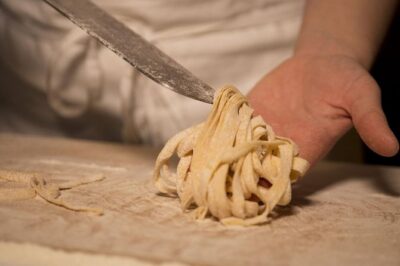
3 in 1 Cooking Class near Navona: Fettuccine, Ravioli & Tiramisu
Read our review →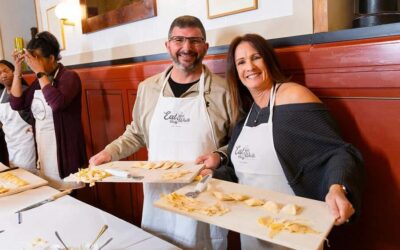
3-in-1 Fettuccine, Ravioli, and Tiramisu Cooking Class
Read our review →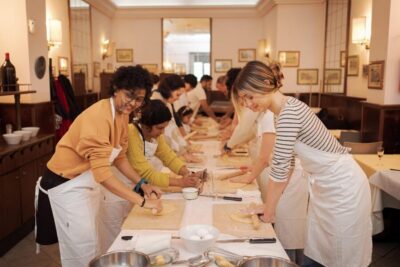
Fettuccine Pasta Cooking Class in Rome’s City Center
Read our review →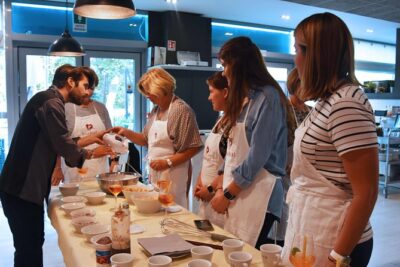
Become a Masterchef in Rome: Pasta, Ravioli and Tiramisù Class
Read our review →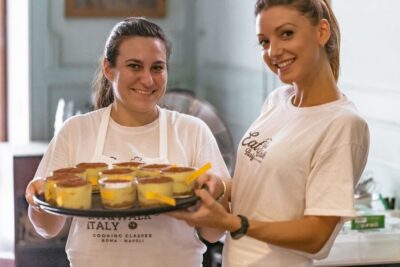
Fettuccine & Tiramisù: Cooking Class with Wine & Limoncello
Read our review →
Rome Pasta and Tiramisu Class: Ravioli, Fettuccine & Fine Wine 5*
Read our review →
Pasta Cooking Class in Rome – Fettuccine Class in Piazza Navona
Read our review →
Lists this class appears in