
Review · ITALY
Cooking class fresh pasta
Fresh pasta is the point here, but the real treat is learning how Sicilian cooking works from dough to dinner. Chef Simona and her mamma guide you through three pasta styles, including tagliatelle, stuffed pasta, and maltagliati, then turn your work into a full meal with ragù, Norma, and Sicilian pesto.
I like the genuinely hands-on format, and I like that you eat what you make rather than watching a demonstration and leaving hungry. The main consideration is time: three hours is a fair block in your Sicily schedule, and this is a cooking lesson first, not a quick pasta-and-wine stop.
Key points at a glance
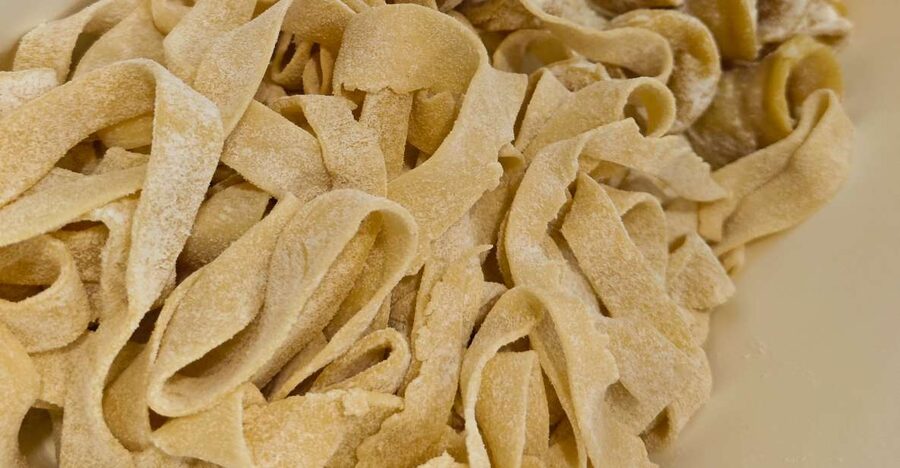
- Three kinds of pasta: Work with egg dough and Sicilian durum wheat dough to make tagliatelle, stuffed pasta, and maltagliati.
- Three classic sauces: Learn the basics of beef ragù, pasta alla Norma, and Sicilian pesto.
- Personal teaching: Chef Simona leads the class, with help from her mamma, in English or Italian.
- A proper sit-down meal: The chef cooks the pasta, then you taste the finished dishes with Sicilian wine.
- Useful take-home skills: You receive recipes and can repeat the dishes at home.
- Flexible booking: The class lasts about three hours and allows free cancellation up to 24 hours before the start.
From flour and eggs to a Sicilian meal
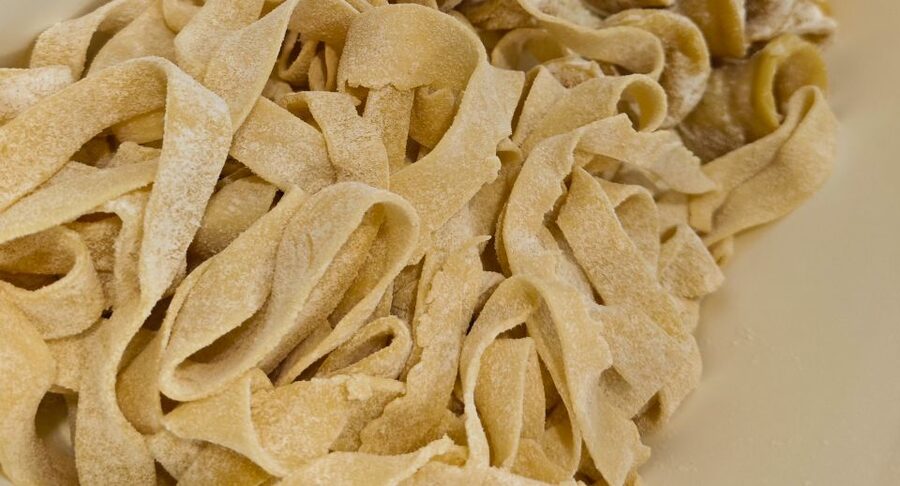
The class begins with the raw materials. You are not simply handed a ball of dough and told to shape it. The lesson covers how to make the dough, how the two dough styles differ, and how each one suits a particular pasta form.
The first dough is classic egg pasta. This is the familiar northern Italian style, suited to shapes such as tagliatelle and stuffed pasta. The second is a Sicilian durum wheat dough, a more local choice that connects the class to the island’s cooking traditions.
That contrast makes the lesson more useful than a single recipe class. You get to see how ingredients change the texture and handling of pasta, and why one dough may work better for a broad ribbon while another is better for a rustic shape.
You should expect to work with your hands. The class is built around making pasta, not just watching a chef perform. That makes it a good choice if you want practical skills you can use after your holiday. Several people have found the techniques useful even after years of making Italian food at home.
More Fresh Pasta Workshops in Italy:
- Rome: Pasta Making Class with Wine, Limoncello, and Dessert
★ 4.9 · 3,177 reviews - Pastamania – Florence Pasta Making Class
★ 5.0 · 3,050 reviews - Enjoy Spritz and Pasta Making in Piazza Navona
★ 5.0 · 1,681 reviews
Three shapes, three different pasta lessons
The pasta section covers tagliatelle, stuffed pasta, and maltagliati. Each teaches something different.
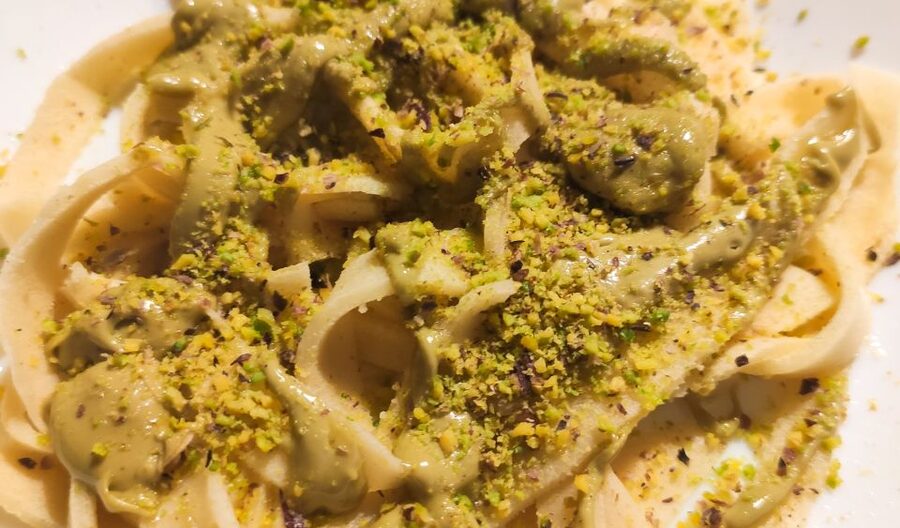
Tagliatelle is the most straightforward of the three. You learn how to roll and cut the dough into ribbons, then prepare it for cooking. It is the sort of pasta you can make again at home without special equipment, though getting an even thickness takes practice.
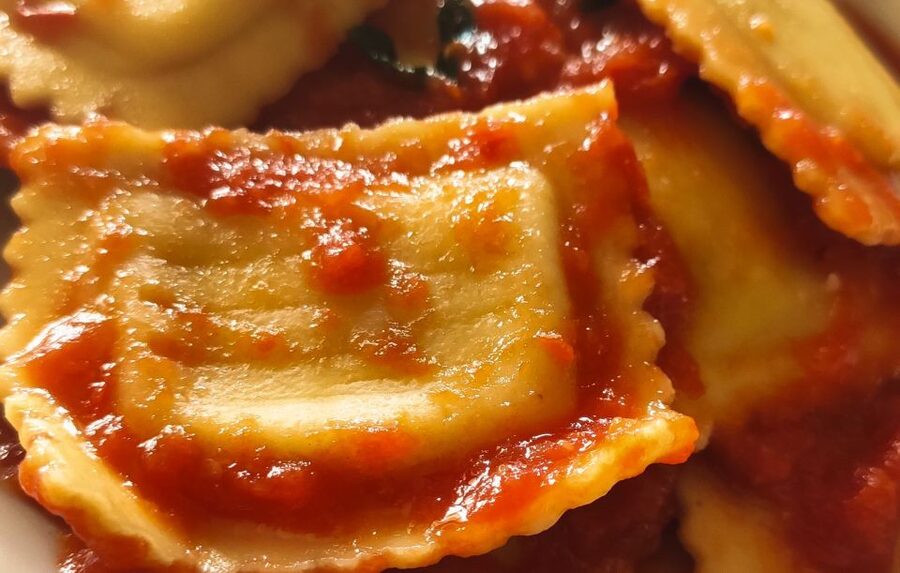
Stuffed pasta brings a different challenge. You learn how to prepare the filling and seal the pasta so it holds together in the pot. The supplied details refer to a ravioli filling, so this part of the lesson is especially useful if you want to make filled pasta rather than only fresh ribbons.
Maltagliati means roughly badly cut pasta, though the name makes the shape sound less appealing than it is. These irregular pieces are practical, rustic, and forgiving. They are a good reminder that Italian cooking is not always about perfect uniformity. The finished bowl can be just as satisfying when the pasta looks homemade.
The class is described as producing three different types of pasta, and the exact order may vary with the chef and the group. Still, the lesson gives you a useful range: a cut pasta, a filled pasta, and an irregular shape.
Ragù, Norma, and Sicilian pesto
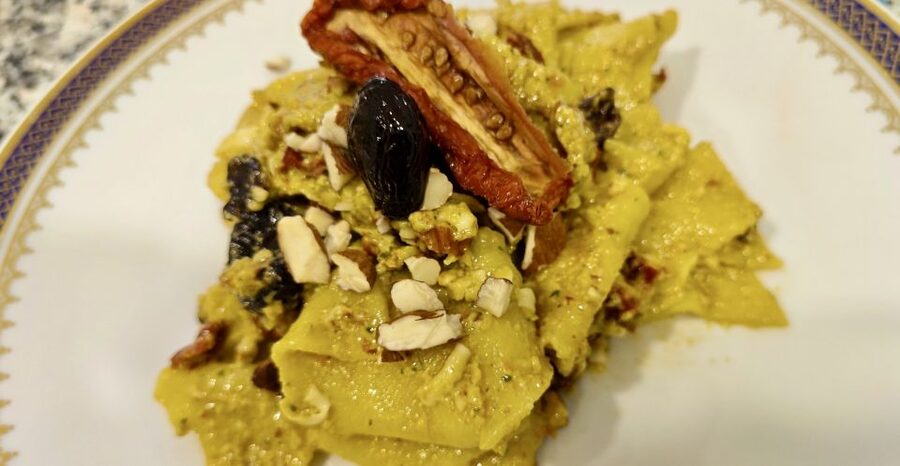
Once the dough is made, the class turns to sauces. This is where the experience becomes more than a pasta-shaping workshop.
Beef ragù is one of the main preparations. You learn how to build the sauce and pair it with fresh pasta. The ragù has been singled out as a favorite, so do not treat it as a token extra. It is one of the dishes that makes the final meal feel substantial.
Pasta alla Norma gives you a clear taste of Sicilian cooking. The dish is associated with eggplant, tomato, and salty cheese, although the supplied information does not specify the exact recipe used in class. You will learn the preparation of Norma sauce as part of the cooking session.
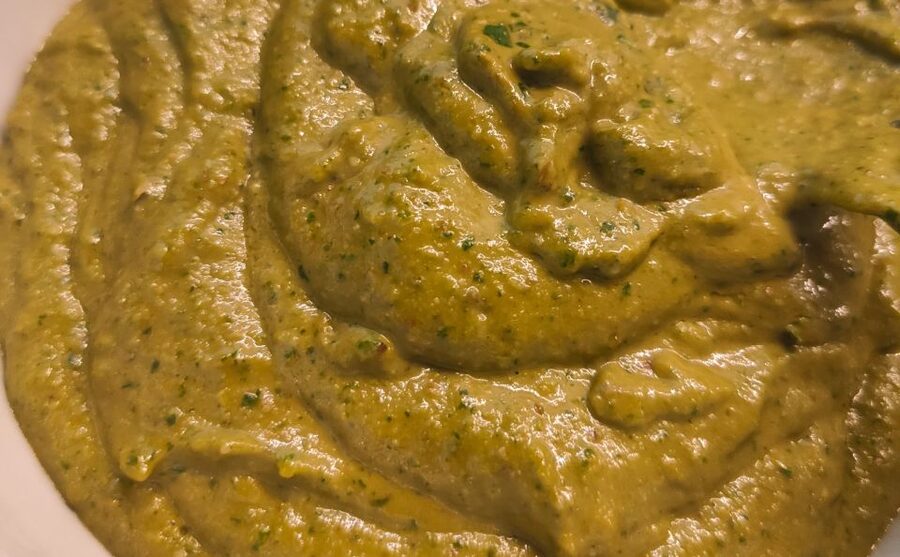
Sicilian pesto provides a different flavor from the ragù and Norma. The class teaches you how to prepare it, giving you three sauce ideas that cover meat, vegetables, and a fresh pesto-style dressing.
This range is a strong part of the class. You are not learning one dish in isolation. You are seeing how the same fresh pasta can change character with different sauces, and you leave with recipes that can be adapted to ordinary home cooking.
A professional kitchen with personal instruction
The lesson takes place in a professional cooking laboratory. That matters because the space is set up for food preparation rather than a casual demonstration. One class participant described the facility as clean and functional, which is reassuring if you care about a well-organized work area.
Chef Simona leads the instruction, and her mamma helps host the class. The family element gives the experience a more personal feel than a large cooking school with several separate stations and a rotating instructor. You should expect direct guidance, patient explanations, and plenty of opportunities to ask questions.
English and Italian are available. That makes the class practical for international visitors, though the cooking itself also gives you something to follow visually. Pasta is a hands-on subject, and you can often understand the technique from the chef’s movements even when a particular Italian term is unfamiliar.
The class is praised for being interactive and friendly. That does not mean it is a private lesson, and the supplied information does not give a group size. If you prefer a quiet, highly technical workshop, the social nature of a shared cooking class may take some getting used to. If you like cooking alongside other people, it should be a comfortable fit.
More pasta classes around Italy:
- Florence: Pasta Cooking Class with Unlimited Wine
★ 4.9 · 10,285 reviews - 3 in 1 Cooking Class near Navona: Fettuccine, Ravioli & Tiramisu
★ 5.0 · 7,376 reviews - Florence Pizza or Pasta Class with Gelato Making at a Tuscan Farm
★ 5.0 · 6,801 reviews - Florence: Pasta & Tiramisu Cooking Class with Unlimited Wine
★ 4.9 · 6,708 reviews
The best part happens at the table
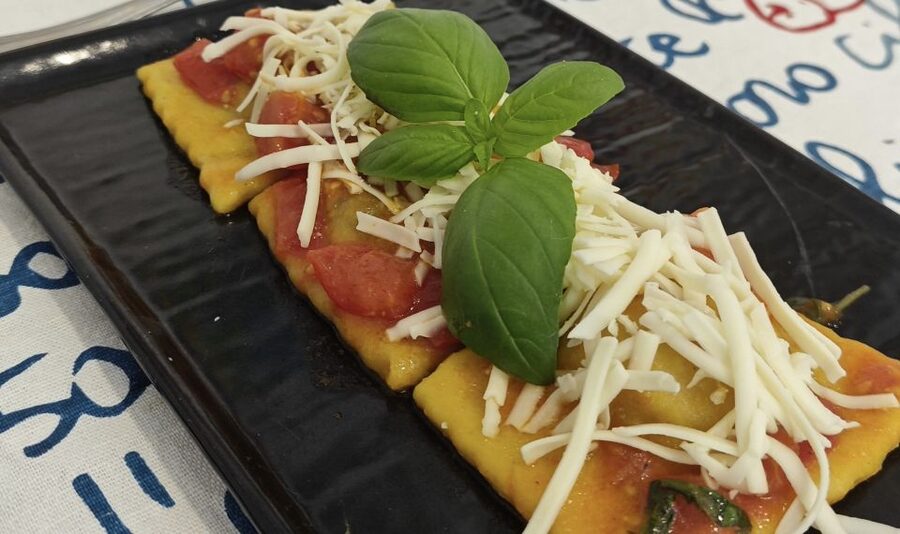
After you make the pasta and sauces, the chef cooks the food for you. This is a sensible arrangement. Fresh pasta cooks quickly, and the chef can manage timing while you sit down and enjoy the results.
The meal includes the pasta you prepared and Sicilian wine. The portions are described as generous, so you should expect more than a small tasting plate. The final meal is the payoff for the work at the counter, and it lets you judge the texture and sauces immediately.
The wine pairing adds to the sense of a complete Sicilian meal. One experience included rosé, and a bottle was given to take home. That bottle is not stated as a standard inclusion for every booking, so I would treat it as a possible extra rather than something to count on.
A review also mentions cannoli. Cannoli is not listed among the core class dishes, so it may depend on the particular session or menu. The reliable expectation is pasta, the three sauces, tasting, and Sicilian wine.
What the $112.15 price gets you
At $112.15 per person, this is not the cheapest way to eat pasta in Sicily. It is also not simply a meal. You are paying for about three hours of instruction, hands-on preparation, three pasta forms, several sauces, a professional kitchen, and a sit-down tasting.
The value improves if you want skills you can repeat at home. Recipes are provided, and the lesson covers enough techniques to give you a working foundation rather than a single souvenir dish. If you make fresh pasta after returning home, the cost becomes easier to justify.
It is also good value for people who enjoy food as part of a trip rather than as a break between sights. You get a meal, a local cooking lesson, and time with an Italian chef and her family. That combination is more useful than a standard restaurant dinner if you want an activity with something to take away.
The price is less attractive if you are only looking for lunch. You might spend less at a trattoria, and you will not need to give up three hours of sightseeing. The right question is not just how much the meal costs, but whether you want the cooking lesson that comes before it.
Who will enjoy this class most
This experience suits first-time pasta makers, but it also works for people who already cook. Participants with years of experience making Italian food still found useful tips in the class, especially around dough, shaping, and sauces.
It is a good choice for couples, families, and small groups who want to do something together. The work is shared, the food is communal, and the meal creates a natural finish. It also gives you a break from museums, churches, and long walks through Sicilian towns.
Food-focused visitors will get the most from the class. You should book it if you are curious about how pasta changes between egg dough and durum wheat dough, or if you want to learn sauces that go beyond the usual tourist menu.
It may be less suitable if you dislike group activities, have very limited time, or want a highly specialized masterclass. The class is designed to be friendly and practical, not an advanced professional course.
Planning the three hours
The activity lasts about three hours, with starting times available when you check the date. Set aside the full period rather than trying to fit it into a tight gap between other plans.
The lesson has two broad phases. First comes the dough and pasta shaping. Second comes the sauces, cooking, and meal. Since the class ends with tasting, allow enough time to sit and enjoy the food instead of rushing away as soon as the cooking is finished.
Wear something that is comfortable for working around food. The provided information does not list a formal dress code or equipment requirements, so you should not assume that special clothing or tools are needed. Any dietary restrictions are also not described, so ask before booking if that affects what you can eat.
The class is available in English and Italian. The starting time is not fixed in the information provided, so check the calendar for a session that fits your plans.
What the strongest feedback gets right
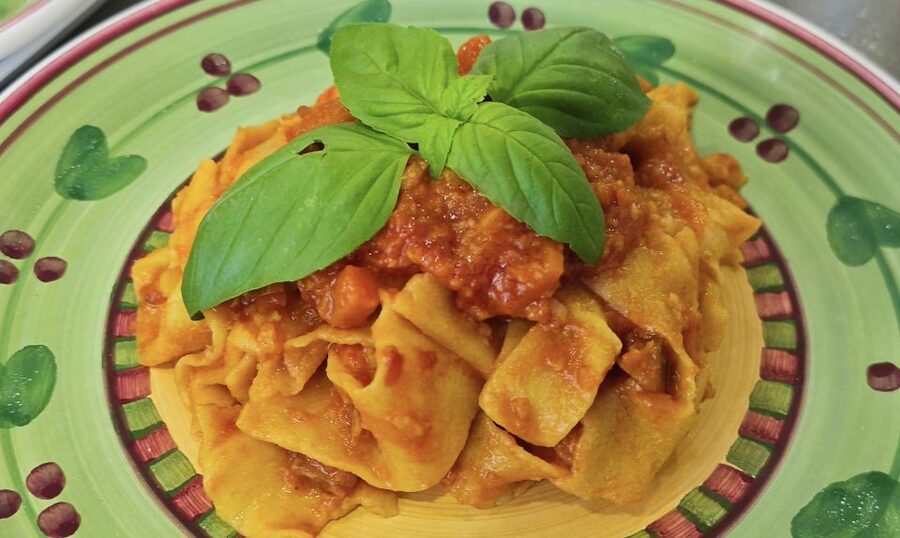
The praise is remarkably consistent around four things: the food, the hands-on teaching, the generosity of the meal, and the warmth of Simona and her mamma.
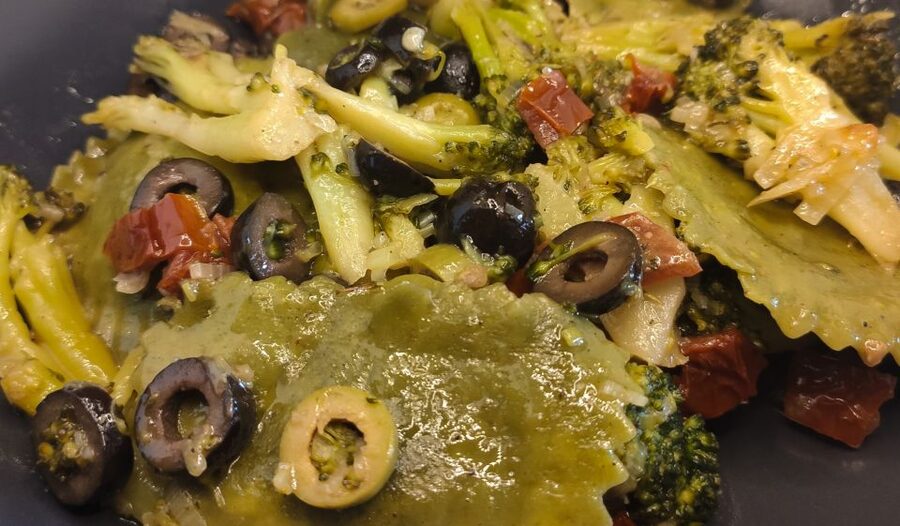
The ragù receives particular attention, but the pesto, Norma, ravioli filling, and pasta shapes also form a strong part of the meal. The class does not stop at making dough. It gives you several ways to use it.
The instruction also gets credit for patience. That matters when working with fresh pasta because small changes in pressure, moisture, and thickness can affect the result. A patient teacher is more valuable here than a fast demonstration.
The practical benefit is clear. You learn three pasta types, receive recipes, and leave with methods you can try at home. That makes the class more than a pleasant afternoon activity. It gives you a set of dishes linked to your time in Sicily.
Cancellation and booking flexibility
You can cancel up to 24 hours before the activity for a full refund. You can also reserve now and pay later, which helps if your Sicily route is not yet fixed.
Since the duration is three hours and the starting time must be checked for availability, choose a session that leaves room around it. I would avoid booking it immediately before a train, flight, or timed attraction.
Should you book this Sicilian pasta class?
Book it if you want to learn by doing, eat a generous meal, and leave with recipes you can use at home. The combination of egg pasta, durum wheat dough, three pasta shapes, ragù, Norma, Sicilian pesto, wine, and personal instruction gives the $112.15 price a reasonable purpose.
Skip it if your schedule is packed or you only want a quick food stop. This is a full cooking experience, not a short tasting. For most food-minded visitors with three hours to spare, the class offers a warm, useful, and distinctly Sicilian way to spend part of the day.
FAQ
How long does the cooking class last?
The class lasts about three hours.
Where does the cooking class take place?
It takes place in Sicily, Italy, in a professional cooking laboratory.
What types of pasta will I learn to make?
The class covers tagliatelle, stuffed pasta, and maltagliati.
Will I make more than one type of dough?
Yes. You will work with classic egg pasta dough and typical Sicilian durum wheat dough.
Which sauces are included in the lesson?
The class includes beef ragù, pasta alla Norma, and Sicilian pesto.
Will I eat the pasta I make?
Yes. The chef completes the cooking, and you sit down to taste the pasta and other foods prepared during the class.
Is wine included?
The experience includes tasting Sicilian wine with the meal.
What languages does the instructor speak?
Instruction is available in English and Italian.
Can I cancel the booking for a refund?
Yes. You can cancel up to 24 hours in advance for a full refund.
Fresh off the board around Italy
- Vicenza: Pasta & Tiramisu Cooking Class at a Local’s Home★ 5.0 · 5 reviews
- Verona: Pasta & Tiramisu Cooking Class at a Local’s Home★ 5.0 · 16 reviews
- Volterra: Fresh Pasta Cooking Class at a Tuscan Farmhouse★ 5.0 · 33 reviews
- Verona: Tortellini Cooking Class and Lunch with Mamma Ivana★ 5.0 · 20 reviews
- Verona: My Granny’s secrets making gnocchi★ 5.0 · 7 reviews
- Verona: Prosecco and Pasta Making Class at a Local’s Home★ 5.0 · 10 reviews
- Venice: Pasta Carbonara Cooking Class with Wine★ 5.0 · 3 reviews
- Venice: Share Your Pasta Love in a Local’s Home★ 4.8 · 20 reviews
Fresh Pasta Workshops, class by class.
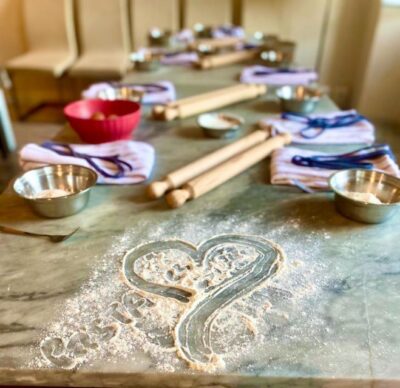
Pasta Making Class with Wine, Limoncello, and Dessert
Read our review →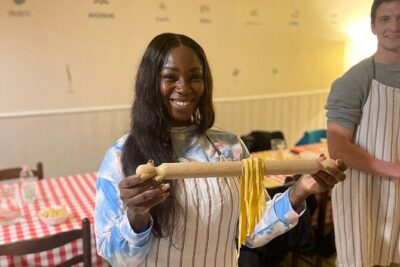

Enjoy Spritz and Pasta Making in Piazza Navona
Read our review →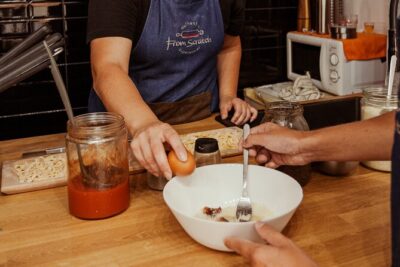
Pasta Making & Wine Tasting with Dinner in Frascati from Rome
Read our review →
The Secrets to Learn Fresh Pasta and Tiramisù in a Glam Home
Read our review →
Handmade Pasta & Dessert Class with Unlimited Wine
Read our review →Lists this class appears in