
Review · PALERMO
Share Your Pasta Love in Local’s Home in Palermo
Palermo’s best food lesson may happen far from a restaurant kitchen. In this small-group home cooking class, you enter a local home, make pasta by hand, and sit down to eat what you prepared. Hosts such as Pina, Rosa Maria, Velia, and Antonio have welcomed participants with the easy warmth of family.
I like two things right away: you learn by handling the dough, not just watching a demonstration, and the meal comes with personal stories, local ingredients, and wine. The main consideration is time. Ninety minutes passes quickly, so this is a focused introduction rather than a long culinary course.
Key points
- Three pasta dishes: Prepare fresh pasta and classic sauces, with possible dishes including busiate, ravioli, tagliatelle, gnocchi, or anellini.
- A real home setting: Meet your host in a Palermo residence rather than a commercial cooking school.
- Hands-on instruction: Mix, knead, shape, and cook the pasta yourself.
- Personal hosts: Pina, Rosa Maria, Velia, and Antonio are among the local cooks associated with especially warm sessions.
- Shared Sicilian meal: Eat the finished dishes with an aperitif, small appetizer, and wine.
- Easy planning: The class lasts about 1 hour 30 minutes, accepts mobile tickets, and has a maximum of 10 participants.
A Palermo Kitchen Instead of a Restaurant Table
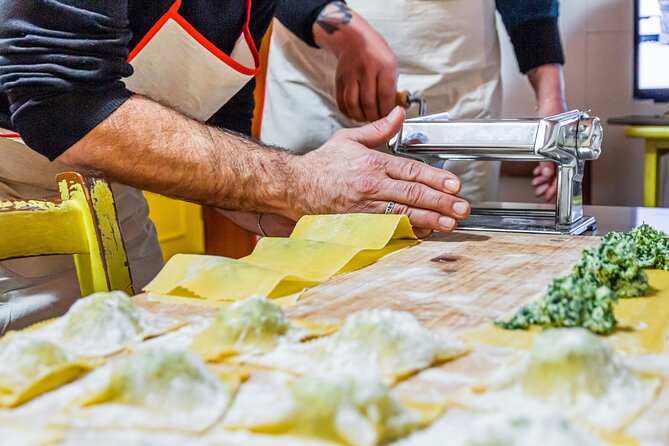
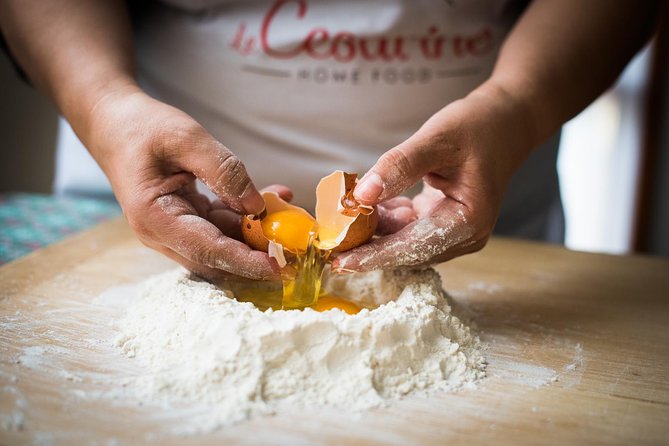
The central idea is simple: you are welcomed into a local home and taught to cook the food that Sicilian families actually make. That change of setting matters. You are not seated at a restaurant while someone else handles the difficult work. You mix the dough, feel its texture, shape the pasta, and then eat the result.
The class is offered in English, which makes the instruction practical for international visitors. The meeting point is in Palermo, and the activity ends back there. It is near public transportation, so you can fit it into a day of sightseeing without arranging a separate transfer.
The maximum group size is 10. That is small enough for direct instruction, though the exact feel will depend on how many people book your time. A smaller class should give you more chances to ask questions and practice each step. A full group may feel more social and lively, but you will share the work surface and the host’s attention.
The experience is also booked well ahead on average, around 36 days before the date. If your Palermo visit falls during a busy period, I would not leave this until the last day of trip planning.
More Home Cooking Classes in Italy:
- Pastamama, Home Cooking Classes at Grace’s Home
★ 5.0 · 521 reviews - Small Group Pasta and Tiramisu Class at Local’s Home in Venice
★ 4.5 · 236 reviews - Catania: Pistachio Ravioli, Pasta Home Cooking Class w/ Wine
★ 4.7 · 204 reviews
The Welcome: Aperitif, Snacks, and Introductions
The class begins with a traditional Italian welcome. You have a small appetizer and an aperitif while meeting the host and the other participants. This opening is more than a polite gesture. It gives you time to settle in before handling flour, eggs, cheese, or sauce.
The food served at this point can vary by host. Pina, for example, has been described as offering snacks and regional wine while the group worked. Other hosts may add local cheeses or small bites. The included menu lists fresh pasta as the main food, while the welcome items are part of the social rhythm of the class rather than a separate meal.
This is a useful moment to ask about the dishes you will make. The menu is not fixed to one single pasta shape. Possible examples include busiate, ravioli, tagliatelle, gnocchi, and anellini. The description also names scialatielli and fettuccine, so you should expect the exact selection to depend on your host and the day.
That flexibility is a strength if you want a personal experience. It is less ideal if you have booked one particular dish and expect it without variation. If a certain pasta matters to you, ask about it when you arrive or contact the provider before booking.
Mixing and Kneading Pasta by Hand
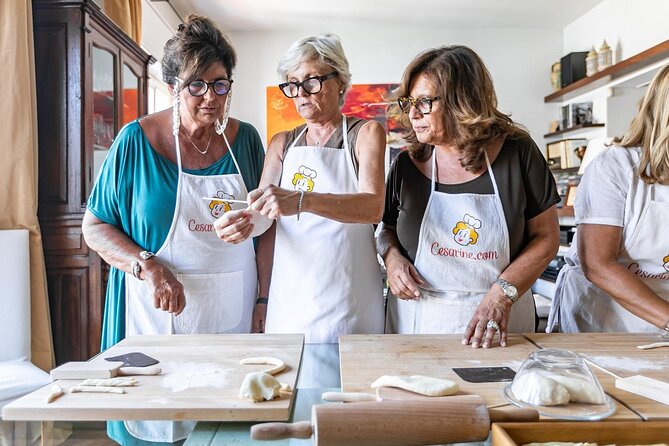
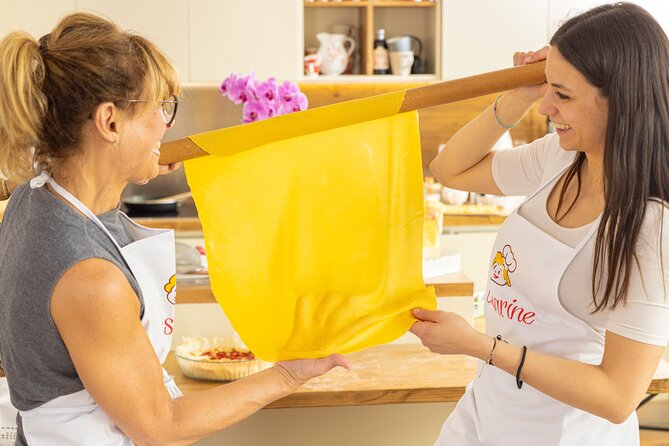
The most valuable part of the class is the hands-on work with the dough. You mix the ingredients, knead the dough, and learn to judge when it has the right texture. That last point is hard to pick up from a recipe alone.
Pina’s instruction has been praised for teaching participants to feel the dough rather than simply follow a clock. She demonstrates each step, explains it, and then lets you practice. This is the sort of practical lesson you can use at home because dough changes with moisture, flour, and handling. A written recipe can tell you quantities. It cannot easily tell you how the dough should feel in your hands.
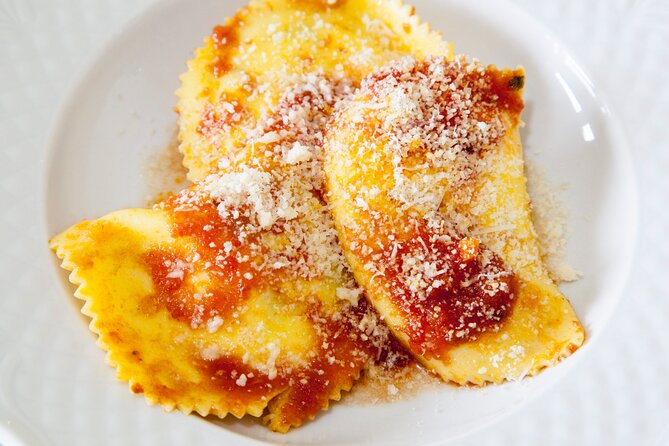
You may work on several shapes during the class. Ravioli calls for filling and sealing. Tagliatelle and fettuccine involve cutting the dough into ribbons. Busiate has its own shape, while gnocchi requires a different approach altogether. Anellini is another traditional form you may encounter.
The class may also include sauce preparation. One especially praised session covered a tomato sauce, pasta alla Norma, and pasta with sausage and tomato sauce. Another included gnocchi with a cheese cream sauce. These examples show the range of Sicilian cooking you might meet, but they should not be treated as a guaranteed menu.
The instructor’s skill matters here. Rosa Maria has been described as a patient teacher who shared traditional Sicilian food in a welcoming kitchen. Antonio has been praised for explaining the small tricks behind pasta dough and tomato sauce. The tone is meant to be friendly and practical, not formal or technical.
Three Pasta Dishes and Classic Sicilian Flavors
The advertised format centers on three traditional pasta dishes with classic sauces. That gives you a useful snapshot of the region instead of one narrow recipe.
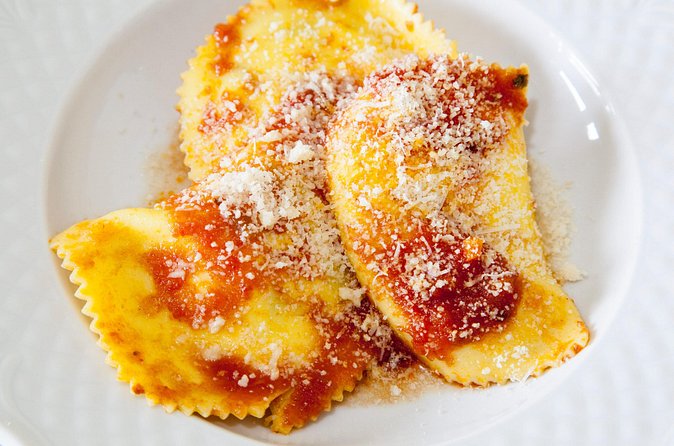
Pasta alla Norma is strongly associated with Sicily and pairs pasta with tomato-based flavors. Sausage and tomato sauce offers a heartier version. Gnocchi with a cheese cream sauce shows a softer, richer style. You might also prepare filled pasta such as ravioli or a regional shape such as busiate.
The appeal is variety. You are not just learning one dough and one sauce. You see how different shapes work with different preparations, and you get a chance to compare textures. For someone who enjoys cooking, this is far more useful than a demonstration where the host does all the work.
The tradeoff is that three dishes in 90 minutes require a brisk pace. You should expect a compact class with active participation, not a long discussion of Sicilian food traditions. There may be little time for repeated attempts at every shape. If you want detailed culinary training, seek a longer class. If you want a memorable introduction that sends you home with a few techniques, this shorter format works well.
The food itself is also the payoff. You finish by eating the pasta you helped prepare, rather than receiving a separate meal cooked in advance. That makes the lunch or dinner feel earned, even if your shapes are not perfectly uniform.
More pasta classes around Italy:
- Florence: Pasta Cooking Class with Unlimited Wine
★ 4.9 · 10,285 reviews - 3 in 1 Cooking Class near Navona: Fettuccine, Ravioli & Tiramisu
★ 5.0 · 7,376 reviews - Florence Pizza or Pasta Class with Gelato Making at a Tuscan Farm
★ 5.0 · 6,801 reviews - Florence: Pasta & Tiramisu Cooking Class with Unlimited Wine
★ 4.9 · 6,708 reviews
Sitting Down to Eat With Your Host
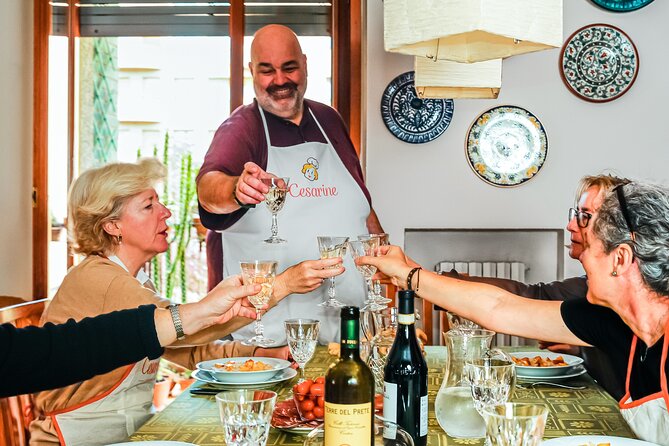
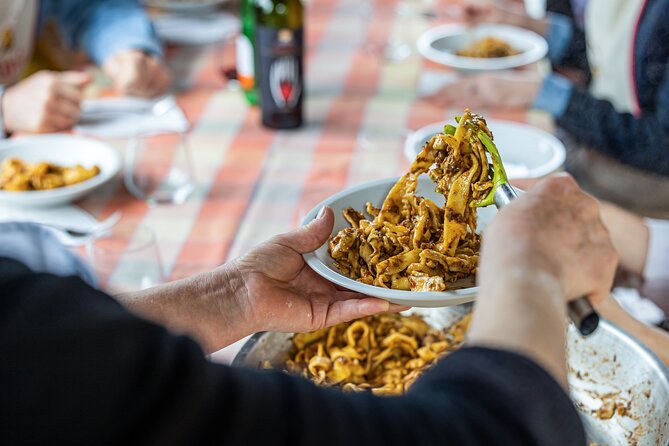
After the pasta is prepared, you gather around the table and eat together. This is where the cooking lesson becomes a social meal. The host serves the finished food, and you can compare the dishes you made with the techniques you just practiced.
Wine is included at a rate of one bottle for every three participants. That is enough for a shared toast and a modest serving, but it is not an open wine tasting. If you do not drink alcohol, the supplied details do not specify a replacement, so ask the provider in advance.
The meal may include more than the listed pasta. Pina’s class, for example, has included appetizers, wine, and in some sessions tiramisu. Another pasta class included an easy tiramisu alongside ravioli and busiate. These extras are not guaranteed in the sample menu, so treat them as possible additions rather than promises.
The setting can make the meal memorable. One session took place in an apartment with views toward the mountains and sea, followed by a meal on a balcony. That kind of detail will depend entirely on the home and host you receive. Still, it shows why this experience feels different from eating at a standard restaurant.
Hosts also share personal food traditions. Pina has explained techniques as the way her mother did them. That kind of family instruction is the real value of the class. You are not only collecting recipes. You are learning small habits, such as how to judge dough or balance sauce, that are usually passed from one cook to another.
What the Price Means at $95.18
At $95.18 per person, this is not the cheapest way to eat pasta in Palermo. A restaurant meal will usually cost less, and a market lunch will cost much less. The price makes more sense when you treat the class as both a meal and a private cultural activity.
You are paying for roughly 90 minutes of instruction, ingredients, a welcome aperitif and appetizer, the meal you prepare, and shared wine. You also receive the chance to cook inside a local home, which is something a restaurant cannot offer. The smaller group limit adds value because the host can guide you directly.
For a couple, family, or small group that enjoys food, the price is easier to justify. Several participants have described the class as the favorite excursion of a longer European trip or Mediterranean cruise, including a family with children and adults in their seventies. That range suggests the activity can work across generations, especially because the tasks are social and tactile.
Families should note that the experience is not described as a children’s class. Still, a previous session worked well for six-year-old twins, and another included a 10-year-old. Young children will need to stay involved around cooking equipment and food preparation, so adults should judge their own child’s comfort.
The price is less attractive if you want a formal chef-led course, a large meal with many courses, or a long afternoon of instruction. This is a warm home visit with cooking at its center.
Who Will Enjoy This Palermo Food Experience
I would choose this class if you want food to introduce you to Palermo. It works particularly well for:
- Couples seeking a personal evening activity
- Families with children who enjoy making things by hand
- Cruise passengers with a short stop in Palermo
- People who prefer local homes to formal tourist venues
- Beginners who want practical pasta skills
- Food lovers who want to learn Sicilian shapes and sauces
It also suits people who are not expert cooks. The hosts explain the steps and let you practice, so you do not need prior pasta-making experience.
I would think twice if you dislike eating in private homes, prefer a strict menu, or want a long technical workshop. The exact pasta shapes and sauces can vary, and the 90-minute schedule leaves little room for a slow, detailed course.
The class is also a good choice for a return visit to Palermo. If you have already seen the main churches, markets, and historic streets, cooking gives you a different way to understand the city. You take home a method, not just a photograph.
Booking Details and Practical Planning
Confirmation arrives at booking, and you can use a mobile ticket. The experience is offered in English and starts in Palermo, with the return to the meeting point at the end.
The listed duration is approximate, at 1 hour 30 minutes. Build in a little extra time around it if you are connecting to another activity, especially if you are visiting Palermo from a cruise ship. The food portion may finish on schedule, but private home experiences can have a more relaxed rhythm than a timed museum entry.
Free cancellation is available if you cancel at least 24 hours before the local start time. A cancellation within 24 hours is not refundable, and late changes are not accepted. That policy is worth noting if your Palermo plans depend on ship schedules or uncertain transport.
The activity is available to a maximum of 10 people. Since it is often booked well in advance, I would reserve before finalizing the rest of your Palermo day.
Should You Book This Pasta Class?
Yes, if you want a personal food experience rather than another restaurant meal. The strongest reasons to book are the home setting, the chance to work directly with the dough, and the meal shared with a host such as Pina, Rosa Maria, Velia, or Antonio.
You should book with the understanding that the exact menu may change. Ask ahead if you have dietary needs or a particular pasta in mind. If you want a polished cooking school with a fixed recipe list, this may feel too informal. If you want to sit at a Sicilian table, learn family methods, and leave knowing how fresh pasta should feel in your hands, the $95.18 price is reasonable.
FAQ
Where does the pasta class take place?
The class takes place in a local home in Palermo, Sicily. The activity starts and ends at the Palermo meeting point.
How long does the experience last?
The class lasts approximately 1 hour 30 minutes.
What pasta dishes might I prepare?
Possible dishes include busiate, ravioli, tagliatelle, gnocchi, anellini, scialatielli, and fettuccine. The exact selection can vary by host.
Is wine included?
Yes. The experience includes a bottle of wine for every three participants, served with the meal.
Is the class offered in English?
Yes. The experience is offered in English.
How many people can join?
The maximum group size is 10 participants.
Can I cancel for a refund?
Yes. You can receive a full refund if you cancel at least 24 hours before the local start time. Cancellations or changes made less than 24 hours before the start are not accepted for a refund.
Fresh off the board around Italy
- Vicenza: Pasta & Tiramisu Cooking Class at a Local’s Home★ 5.0 · 5 reviews
- Verona: Pasta & Tiramisu Cooking Class at a Local’s Home★ 5.0 · 16 reviews
- Volterra: Fresh Pasta Cooking Class at a Tuscan Farmhouse★ 5.0 · 33 reviews
- Verona: Tortellini Cooking Class and Lunch with Mamma Ivana★ 5.0 · 20 reviews
- Verona: My Granny’s secrets making gnocchi★ 5.0 · 7 reviews
- Verona: Prosecco and Pasta Making Class at a Local’s Home★ 5.0 · 10 reviews
- Venice: Share Your Pasta Love in a Local’s Home★ 4.8 · 20 reviews
- Verona: Pasta Cooking Class with Wine Tasting★ 5.0 · 4 reviews
Home Cooking Classes, class by class.
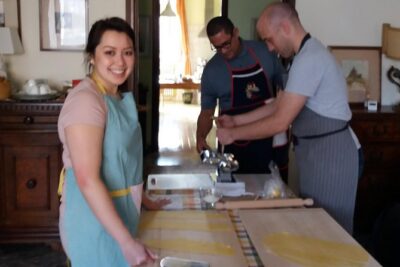
Pastamama, Home Cooking Classes at Grace’s Home
Read our review →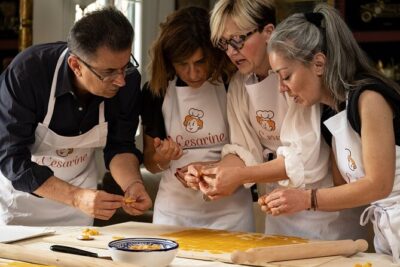
Small Group Pasta and Tiramisu Class at Local’s Home in Venice
Read our review →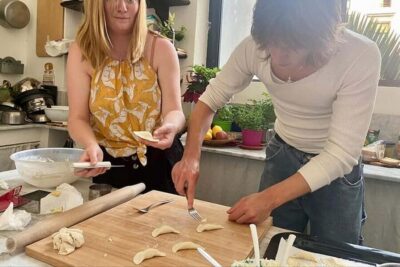
Pistachio Ravioli, Pasta Home Cooking Class w/ Wine
Read our review →
Cesarine: Small group Pasta and Tiramisu class in Varenna
Read our review →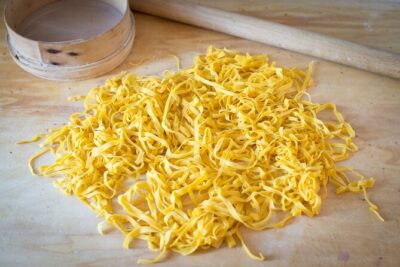
Cesarine: Small group Pasta and Tiramisu with Mamma in Lucca
Read our review →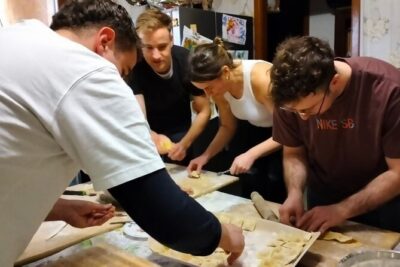
Authentic Bologna Home Cooking Class: Tagliatelle & Tortellini
Read our review →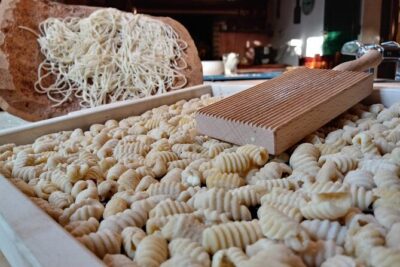
Alghero Home Cooking Pasta Class at a Farmhouse with Wine
Read our review →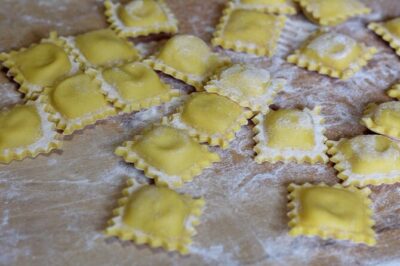
Ravioli & Tagliatelle Cooking Class at a Local’s Home in Positano
Read our review →Lists this class appears in