
Review · PERUGIA
Ravioli, Pasta and Tiramisu Class at a Local’s Home in Perugia
The best part of this Perugia cooking class is that you do not simply watch a chef work. You make pasta in a local home, learn family methods, and then sit down to eat the meal together. Hosts such as Valeria, Laura, and Luca turn a three-hour lesson into a social evening with wine, conversation, and homemade food.
I like the private format, since your group gets the host’s full attention rather than sharing a crowded restaurant kitchen. I also like the chance to learn several dishes, including filled pasta and tiramisu, instead of spending the whole class on one recipe. The main consideration is that the exact menu and host can vary, so do not book expecting one fixed set of dishes.
Key points
- Cook in a real Perugia home: Your Cesarina welcomes you into a private residence, creating a more personal setting than a standard cooking school.
- Make pasta from scratch: Depending on the menu, you may prepare ravioli, tagliatelle, pappardelle, pici, or gnudi.
- Tiramisu is part of the lesson: Dessert is not just an afterthought. You prepare it during the class and eat it afterward.
- A meal follows the work: You sit down with your host and eat the pasta you helped prepare, with wine and, in some cases, homemade aperitifs or limoncello.
- Private and English-speaking: The activity is for your group alone and is offered in English.
- Good value for food lovers: At $117.95 per person, the price covers instruction, a private home setting, the meal, and a social Italian experience.
A Perugia kitchen instead of a cooking-school classroom
This class gives you a look at Italian food from the family side of the table. You meet a Cesarina, the name used for these local home cooks, at a carefully selected home in Perugia. Rather than arriving at a commercial kitchen with rows of workstations, you enter a place where the host normally cooks and eats.
That setting matters. Pasta is not only a restaurant dish in Italy. It is a household skill, shaped by local habits, family recipes, and the ingredients people know best. A home setting lets the lesson feel less polished and more useful. You can ask how the dough should feel, how thin to roll it, and how to tell when the pasta is ready without relying only on a printed recipe.
The experience lasts about three hours. That is enough time for a relaxed lesson and a full meal, but not so long that the cooking begins to feel like a full-day commitment. I would plan it as an evening activity, especially since the class can include wine, aperitifs, and a shared meal.
The tour begins and ends in Perugia, Province of Perugia, Italy. It is near public transportation, though the supplied details do not specify the precise home address or the best route. Confirm the meeting instructions before setting out, and allow time to reach the starting point without rushing.
More Tiramisu Classes in Italy:
- 3 in 1 Cooking Class near Navona: Fettuccine, Ravioli & Tiramisu
★ 5.0 · 7,376 reviews - Florence: Pasta & Tiramisu Cooking Class with Unlimited Wine
★ 4.9 · 6,708 reviews - Rome: Pasta & Tiramisu Class with Fine Wine by the Vatican
★ 4.9 · 4,852 reviews
Learning two pasta dishes, not just one
The cooking portion focuses on two pasta dishes and tiramisu. The sample menu lists pappardelle, pici, or gnudi as possible pasta choices, while the class experience can also include ravioli and tagliatelle. That range is important because each type teaches a different skill.
Ravioli gives you practice with filled pasta. You work with dough, filling, sealing, and shaping, all of which require care. The filling must be enclosed properly, and the edges need to hold during cooking. This is the sort of lesson where a host’s small hand movements can save you from ending up with pasta that opens in the pot.
Tagliatelle provides a useful contrast. Instead of filling and sealing each piece, you learn to roll and cut the dough into long ribbons. The result is familiar, but the method still teaches you how thin the dough should be and how to keep the strands from sticking.
Pappardelle are broad ribbons, while pici are thick, hand-rolled strands associated with central Italy. Gnudi are a softer preparation made from a filling without the pasta wrapper used for ravioli. Since the exact combination is not fixed in the information provided, you should see the menu as a group of likely possibilities rather than a promise of every item.
That flexibility can be a plus. You may get a dish that feels especially local to your host’s family tradition. It can also be a drawback if you have your heart set on ravioli or pici. If one dish matters to you, ask about the planned menu when arranging the experience.
Tiramisu gives the class a sweet finish
Tiramisu is included in the class, so the lesson covers both savory cooking and dessert. You prepare it before the pasta meal, then let it be ready for the final course.
This is a smart part of the experience. Dessert gives you a different kind of kitchen lesson, with attention to layering, texture, and timing rather than dough and shaping. It also creates a natural rhythm for the class. You make the sweet course first, work on pasta, watch the host finish the sauces, and then sit down to eat.
Do not expect a separate pastry workshop. The class centers on a shared Italian meal, not technical culinary training. Still, learning tiramisu in a local home gives you a recipe you can repeat after returning home, and it rounds out the experience better than a pasta-only lesson.
The hosts are a major part of the experience
The Cesarina is not simply there to demonstrate a recipe. The host welcomes you into the home and guides the cooking in a personal way. That makes the quality of the experience closely tied to the person assigned to your group.
Valeria is one example of the kind of host you might meet. During one private class, she began with wine and homemade aperitifs, then guided the group through tiramisu, ricotta-filled ravioli, and tagliatelle. She also made the sauce and cooked the ravioli while explaining useful tips along the way.
That combination of instruction and conversation is the real appeal. You are not just moving from one recipe step to another. You have time to talk with the person teaching you, ask questions, and learn how the food fits into home life. Valeria’s warm, encouraging manner, along with a little humor and motherly care, made the lesson feel relaxed rather than rigid.
Laura and Luca are another host pairing associated with the class. They welcomed a birthday group for an evening of homemade pasta. That detail makes the experience particularly suitable for a small celebration, though you do not need a special occasion to enjoy it.
The host names are useful to know, but you should not assume you will meet a particular person. Cesarine hosts vary, and the assigned cook depends on availability. The important point is the format: a local person teaches you in a private home and shares the table with you afterward.
More Ravioli and Gnocchi Classes in Italy:
- Rome: 3-in-1 Fettuccine, Ravioli, and Tiramisu Cooking Class
★ 4.9 · 2,704 reviews - Rome: Fettuccine Pasta Cooking Class in Rome’s City Center
★ 4.8 · 2,414 reviews - Become a Masterchef in Rome: Pasta, Ravioli and Tiramisù Class
★ 5.0 · 2,156 reviews - Fettuccine & Tiramisù: Cooking Class with Wine & Limoncello
★ 4.9 · 2,103 reviews
From kitchen lesson to a three-course meal
The class does not end when the pasta is shaped. You move into the eating portion, where the host cooks the prepared pasta and serves the courses.
A typical flow might look like this:
- You arrive at the Perugia home and meet your Cesarina.
- You begin with conversation and, possibly, wine or homemade aperitifs.
- You prepare tiramisu.
- You make two pasta dishes, such as ravioli and tagliatelle, or another combination from the available menu.
- You watch the host prepare the sauce and cook the pasta.
- You sit down to eat the meal together.
- You finish with tiramisu and may be offered homemade limoncello.
The cooking and eating are closely linked. You see the dough go from work surface to plate, which helps you understand why each step matters. When the host cooks the pasta, you can watch timing and sauce preparation instead of having to manage every pot yourself.
Wine may be served with the meal, and the experience can include homemade aperitifs and limoncello. These details are not guaranteed as a fixed menu, but they help explain why the class feels like an evening in someone’s home rather than a short demonstration.
I like this shared meal because it gives the class a natural ending. You are not left standing around after cleaning up. You eat what you made, talk with the host, and have a chance to enjoy the food without concentrating on the next instruction.
Why the private format is worth the price
At $117.95 per person, this is not the cheapest way to eat pasta in Perugia. You can find a restaurant meal for less. The value comes from what happens before the meal: personal instruction, hands-on preparation, access to a local home, and time with the cook.
A private class also changes the pace. You can ask for clarification, take part at your own level, and spend more time on a difficult task if needed. A beginner who has never made pasta will benefit from that attention. A confident home cook may appreciate the chance to compare methods and ask about local versions of familiar dishes.
The price makes the most sense for people who would otherwise pay for both a meal and a cooking activity. It includes the meal created during the class, though the precise food and drinks can vary. You are also paying for a social experience that is hard to recreate by ordering pasta at a restaurant.
For a birthday, anniversary, or small group outing, the private format adds value. Laura and Luca’s evening with a 50th birthday group shows how well the experience can fit a celebration. You can talk, cook, and eat together without being mixed into a larger class.
If you are only looking for a quick meal or a formal culinary certificate, the price may feel high. This is best viewed as a cultural activity with food at its center.
What the three-hour length means for your day
Three hours gives the class room to breathe. You are not forced to rush through rolling dough, and there is enough time for the meal afterward. It also means you should protect a substantial part of your afternoon or evening.
The timing may vary with the host and the dishes. Ravioli takes more shaping than simple pasta ribbons. Conversation and the meal can also stretch the pace. Plan on staying for the full approximate duration rather than treating the start time as a quick appointment.
Because the activity begins and ends at the meeting point in Perugia, it works well as a planned part of a day in the city. You can arrange it around sightseeing, but leave a margin before the start. The home address is not specified in the supplied information, so check the exact meeting details and transport plan before you go.
The activity is offered in English. That makes the instruction accessible to English-speaking visitors, though the level of detail and style will naturally depend on your host.
Who will enjoy this class most
I would choose this experience if you want food to open a door into local life. It suits couples, families, friends, and small groups who enjoy sitting around a table as much as learning a recipe.
It is also a good fit for beginners. You do not need to arrive with pasta-making skills. The host’s job is to show you the process, encourage you, and help you through the steps. The private setting should make it easier to ask simple questions without feeling self-conscious.
Food-focused visitors will get the most from the class, especially anyone interested in regional pasta shapes and home cooking. A birthday group or other small celebration can also work well, since the evening combines an activity with dinner.
I would think twice if you dislike social meals, do not want to cook, or prefer a tightly fixed menu. The format depends on being welcomed into a home and spending time with the host. It is not a quick, anonymous kitchen lesson.
The class is also less suitable if you need a precisely guaranteed dish. Pappardelle, pici, gnudi, ravioli, and tagliatelle are all associated with the experience, but the exact menu can differ. Ask ahead if dietary needs or a particular recipe are important to you. The supplied details do not list dietary adaptations.
Practical details before you book
Confirmation is provided at the time of booking, and the activity is available with a mobile ticket. Bring the ticket in a form you can access easily on your phone.
The tour is private, meaning only your group participates. That is useful for groups with different cooking levels, since the host can focus on your pace rather than keeping up with a large class.
Sanitary equipment is provided in the home, including paper towels for handwashing and hand sanitizer. The instructions also call for maintaining one meter of distance when possible, with masks and gloves if that distance cannot be kept. These rules may reflect the operating guidance in place for the activity, so follow the host’s directions on the day.
Free cancellation is available if you cancel at least 24 hours before the local start time. A cancellation made within 24 hours is not refunded, and late changes are not accepted. That policy is worth remembering if your Perugia plans are still uncertain.
Should you book the Perugia pasta class?
Book it if you want more than a plate of pasta. The strongest part of this experience is the full arc: entering a local home, working with a Cesarina, learning family methods, watching the food cook, and eating together afterward.
The $117.95 price is fair for a private three-hour lesson and meal, especially for a small group or special occasion. I would book with an open mind about the exact pasta dishes, then confirm any must-have recipe before committing.
Skip it if you want a fixed menu, a fast activity, or a restaurant-only evening. But if you like cooking, conversation, and food that comes with a human connection, this is one of the more personal ways to spend an evening in Perugia.
FAQ
Where does the cooking class take place?
The class takes place in a carefully selected local home in Perugia, Italy. The activity starts and ends in Perugia, Province of Perugia.
How long does the experience last?
The cooking class lasts approximately three hours.
Is the class private?
Yes. Only your group participates in the activity.
Is the class offered in English?
Yes. English is one of the listed languages for the experience.
What food will I learn to make?
You will learn to make two pasta dishes and tiramisu. Possible pasta dishes include pappardelle, pici, gnudi, ravioli, and tagliatelle, but the exact menu may vary.
Will I eat the food I prepare?
Yes. After the cooking session, you sit down to eat the meal prepared during the class. Wine, homemade aperitifs, and limoncello may also be included depending on the host and menu.
Is the activity near public transportation?
Yes. The experience is listed as being near public transportation.
Can I cancel for a full refund?
Yes, if you cancel at least 24 hours before the experience’s local start time. Cancellations made less than 24 hours in advance are not refunded, and late changes are not accepted.
More Home Cooking Classes in Italy
- Pastamama, Home Cooking Classes at Grace’s Home
★ 5.0 · 521 reviews - Small Group Pasta and Tiramisu Class at Local’s Home in Venice
★ 4.5 · 236 reviews - Catania: Pistachio Ravioli, Pasta Home Cooking Class w/ Wine
★ 4.7 · 204 reviews - Cesarine: Small group Pasta and Tiramisu class in Varenna
★ 5.0 · 195 reviews
Fresh off the board around Italy
- Vicenza: Pasta & Tiramisu Cooking Class at a Local’s Home★ 5.0 · 5 reviews
- Verona: Pasta & Tiramisu Cooking Class at a Local’s Home★ 5.0 · 16 reviews
- Volterra: Fresh Pasta Cooking Class at a Tuscan Farmhouse★ 5.0 · 33 reviews
- Verona: Tortellini Cooking Class and Lunch with Mamma Ivana★ 5.0 · 20 reviews
- Verona: My Granny’s secrets making gnocchi★ 5.0 · 7 reviews
- Verona: Prosecco and Pasta Making Class at a Local’s Home★ 5.0 · 10 reviews
- Venice: Pasta Carbonara Cooking Class with Wine★ 5.0 · 3 reviews
- Venice: Share Your Pasta Love in a Local’s Home★ 4.8 · 20 reviews
Tiramisu Classes, class by class.
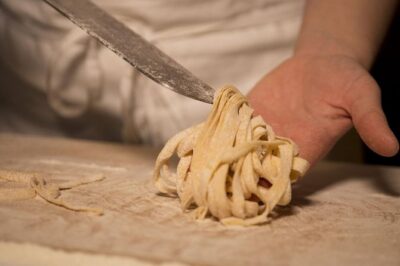
3 in 1 Cooking Class near Navona: Fettuccine, Ravioli & Tiramisu
Read our review →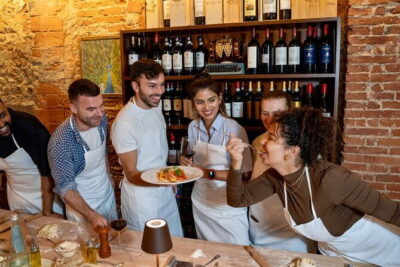
Pasta & Tiramisu Cooking Class with Unlimited Wine
Read our review →
Pasta & Tiramisu Class with Fine Wine by the Vatican
Read our review →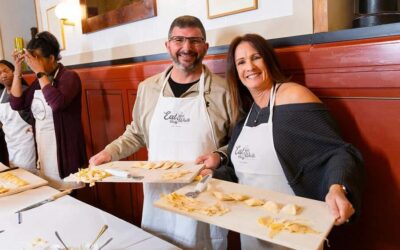
3-in-1 Fettuccine, Ravioli, and Tiramisu Cooking Class
Read our review →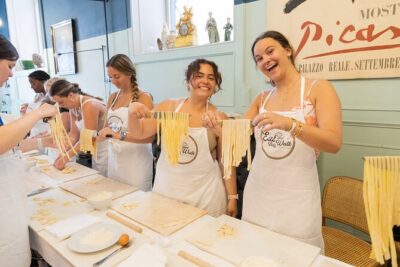
Learn to Make Pasta & Tiramisu with Wine and Limoncello Included
Read our review →
Become a Masterchef in Rome: Pasta, Ravioli and Tiramisù Class
Read our review →
Fettuccine & Tiramisù: Cooking Class with Wine & Limoncello
Read our review →
Pasta & Tiramisu Cooking Class near the Spanish Steps
Read our review →Lists this class appears in