
Review · ITALY
Monopoli: Parco Rurale Guided Tour with Pasta-Making Lab
The best part of this experience is the mix of old farm architecture and hands-on cooking. At Masseria Spina, you walk through a rupestrian settlement, an ancient underground olive press, a citrus grove, and fortified buildings before sitting down to shape Apulian pasta yourself.
I like the small group size, capped at 10 people, and the way the pasta lesson gives you something useful to take home. The main consideration is simple: the pasta is not cooked and eaten during the class, so you should not book this expecting a full lunch.
Key points
- Three pasta shapes from scratch: Follow the guide through a practical lesson using included ingredients.
- Masseria Spina Grande: See the farm’s striking red exterior and its grand main structure.
- Underground olive press: Learn how olive oil production once worked below ground.
- A compact historical walk: Visit the necropolis, Minor Church, citrus grove, fortified tower, dye works, and Baroque Church of the Immaculate Conception.
- Small English or Italian group: With no more than 10 participants, it is easier to ask questions and get help with the dough.
- Pasta to take home: The shapes can be brought away for tasting later, but cooking and food service are not included.
A rural history lesson before the pasta table
This tour works because it does not treat food as a separate activity. You first see the place that produced and used it. Then you sit down to work with one of the region’s most familiar staples.
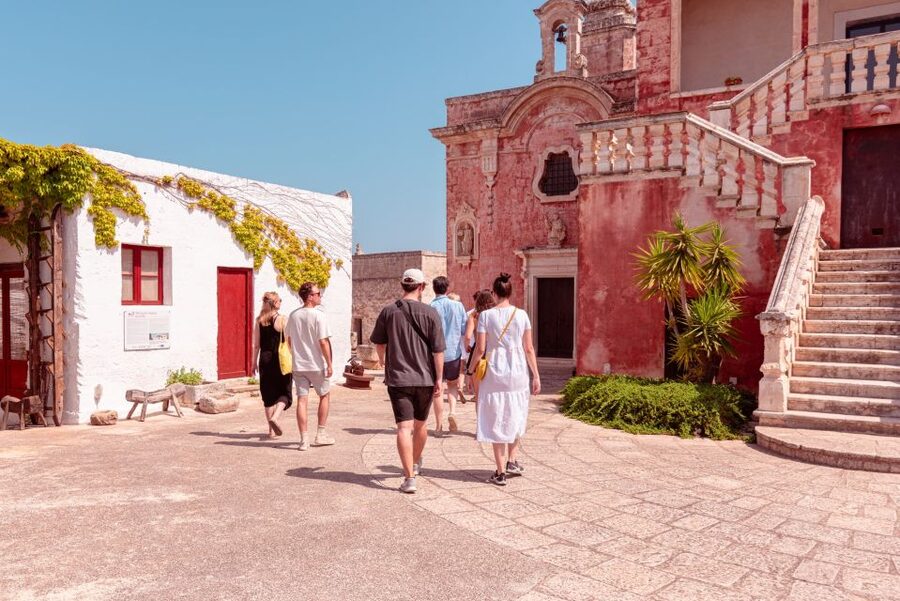
The setting is Masseria Spina in Monopoli’s Parco Rurale, a historical park built around a fortified farmhouse complex. The route moves through several layers of the site, including a rupestrian settlement, a necropolis, religious buildings, work spaces, and defensive structures. You are not simply looking at a pretty country estate. You are seeing how people lived, worshipped, worked, and protected themselves in this part of Apulia.
The walk lasts as part of a total experience of about 2.5 hours. That is long enough to give the site proper attention, but short enough to fit neatly into a day exploring Monopoli. I would allow extra time around the scheduled activity if you want to arrive calmly or spend a few minutes taking in the grounds afterward.
The meeting point is Masseria Spina Resort in the Parco Rurale, at the location marked for the historical tour, tasting, and experiences. Hotel pickup and drop-off are not included, so you need to arrange your own way there.
More Fresh Pasta Workshops in Italy:
- Rome: Pasta Making Class with Wine, Limoncello, and Dessert
★ 4.9 · 3,177 reviews - Pastamania – Florence Pasta Making Class
★ 5.0 · 3,050 reviews - Enjoy Spritz and Pasta Making in Piazza Navona
★ 5.0 · 1,681 reviews
What you see at Masseria Spina
The opening walk introduces you to the site in a clear sequence. Your guide leads you through the settlement and points out the main structures rather than leaving you to guess what each one once did.
The rupestrian settlement gives the tour an older, more intimate starting point. These spaces are tied to the way people made use of the rock and the ground itself. The route also includes a necropolis, which adds a solemn note to the visit and shows that this was not only a place of farming and defense.
You then reach the Minor Church and the Spina Piccola Fortified Tower. The tower is described as the first fortified structure in the complex, so it helps explain the development of the larger masseria. In practical terms, this stop gives the walk a useful sense of time: the site did not appear all at once, but grew around changing needs for shelter, work, worship, and protection.
The internal citrus grove provides a welcome change from stone and masonry. It also connects the tour to the productive side of the estate. Citrus trees, olive trees, pasta, and farm buildings all belong to the same local food story. The grove is not just a photo stop. It helps you picture the masseria as a working rural property.
The ancient underground olive press is one of the more distinctive parts of the route. Olive oil has long been central to Apulian cooking, and seeing the press below ground gives you a better sense of the labor behind that familiar ingredient. The dye works add another layer, showing that the property supported more than one type of rural craft.
The red facade and the churches
Masseria Spina Grande is the visual centerpiece. Its defining red exterior makes it easy to remember, and the large main structure gives the complex a strong sense of scale. Your guide also discusses the architecture, so you get more than a quick look at the facade.
The route includes the Baroque Church of the Immaculate Conception. Along with the Minor Church, it shows the religious side of the estate and its surrounding community. The shift from fortified tower to church to work spaces keeps the walk varied. You are not spending the whole time examining one kind of building.
I like this part of the tour because it gives you useful context before the cooking lesson. The pasta class would still be enjoyable on its own, but the walk explains why food traditions matter here. Apulian cooking developed around rural homes, local crops, preserved ingredients, and practical shapes that could be made by hand.
The guide leads in Italian or English. Elaina is named in the available information as a guide who explained the history of the area clearly and answered questions. Guide assignments can change, but the experience is designed around live guidance rather than an audio recording or self-guided visit.
Making Apulian pasta by hand
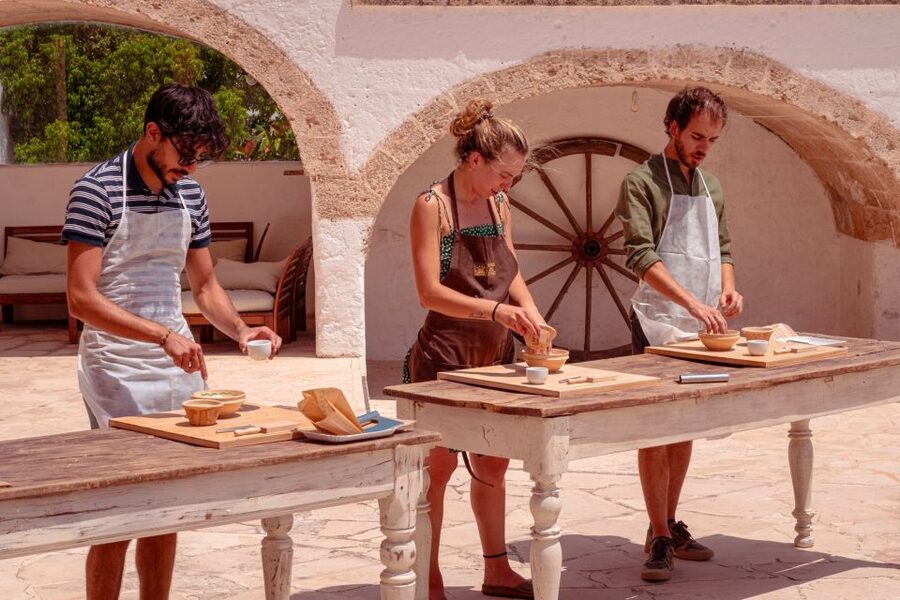
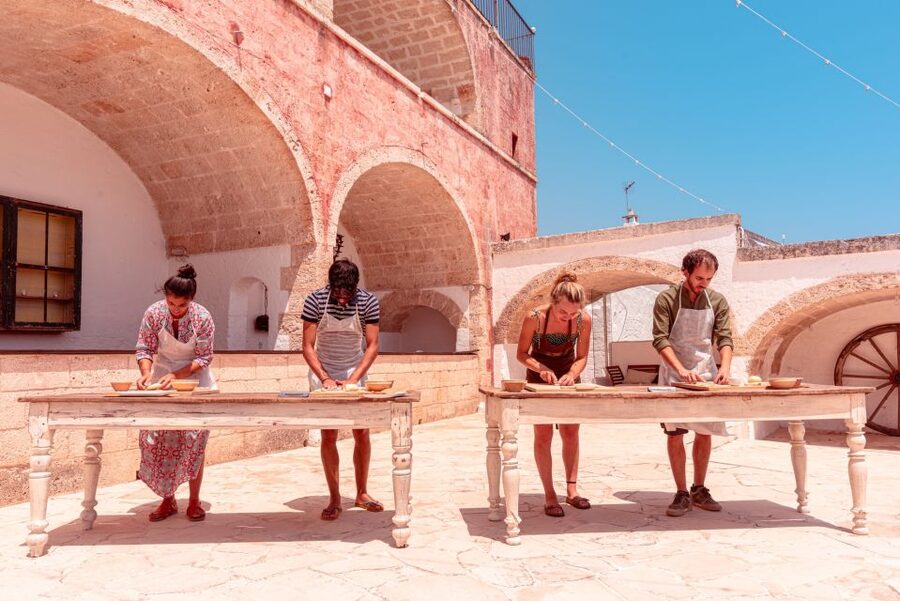
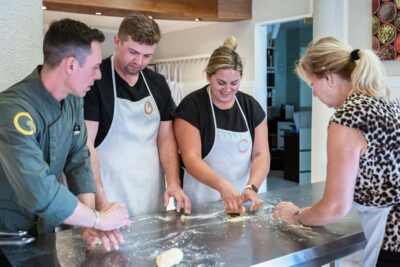
After the historical walk, you move to the pasta lab. This is the active part of the experience, and it is where the small group size matters most.
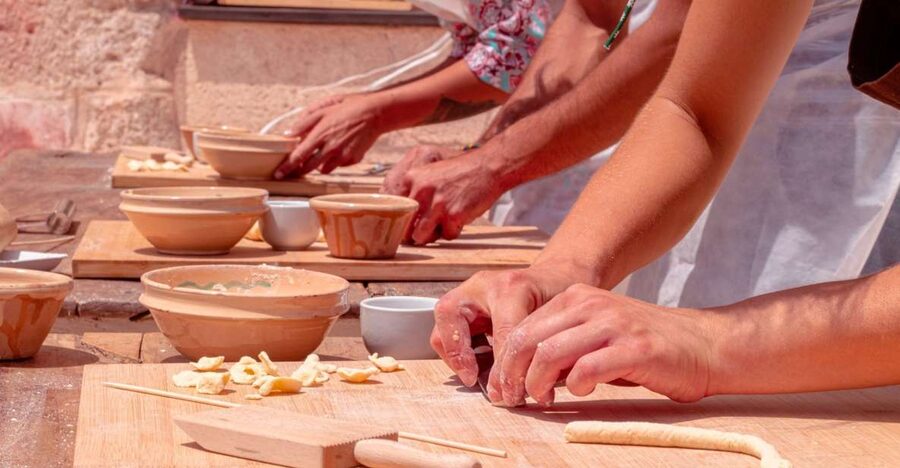
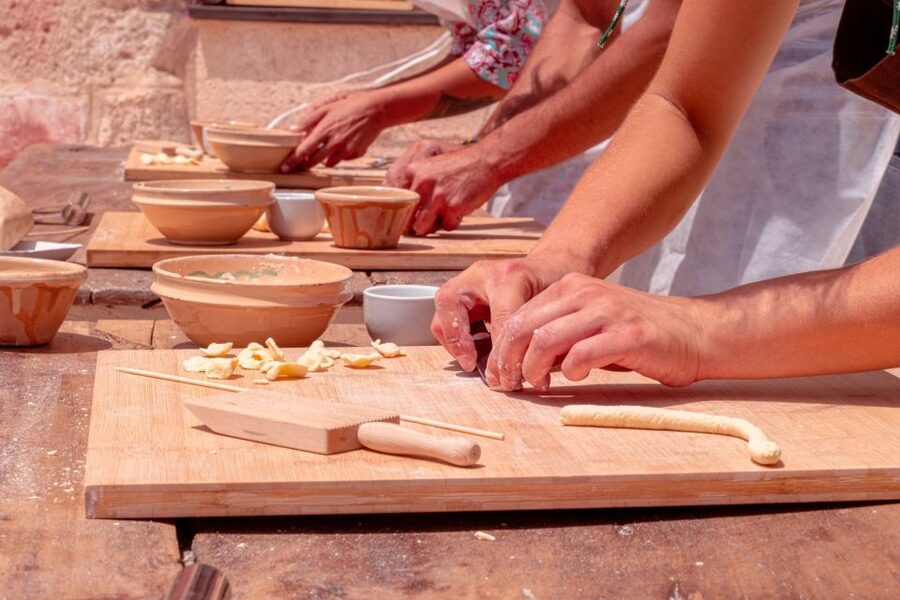
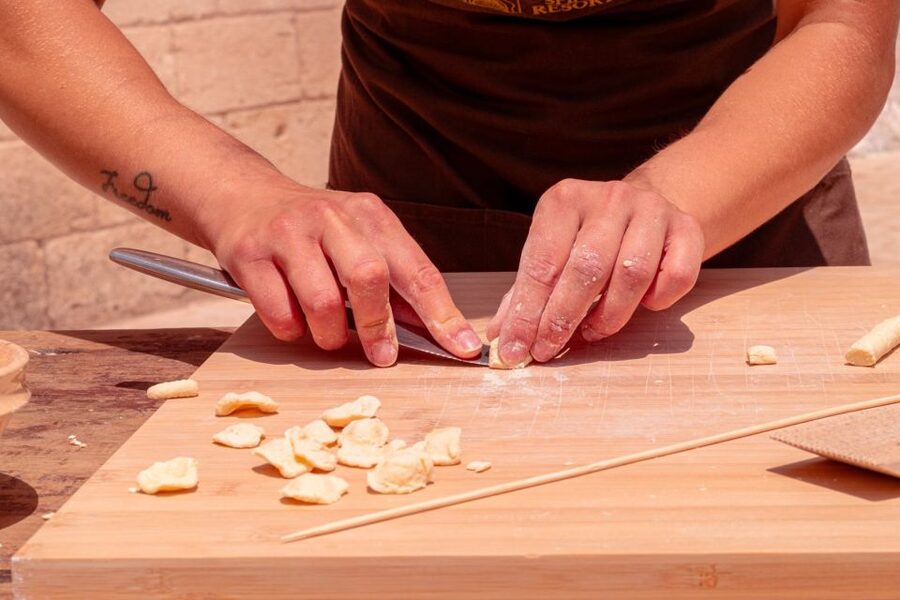
The ingredients are included, and your guide takes you through the process of creating typical Apulian pasta shapes. One participant specifically enjoyed learning three different shapes from scratch. That detail gives you a fair idea of the class: this is not only a demonstration where you watch someone else work. You roll up your sleeves and practice the shapes yourself.
Expect flour, dough, repetition, and a few imperfect pieces at first. That is part of the fun. Hand-shaped pasta is not meant to look machine-made, and the lesson gives you a direct connection to a regional skill that is easy to understand once you try it.
The cooking instructor, referred to as the chef in the available comments, helps make the class practical. You can ask questions while working, and the small group should make it easier to see the technique and get corrections when needed.
The most important detail to understand before booking is that the pasta is not cooked and served during the activity. You can take your pasta shapes home, ready to taste later, but food and drinks are not included. If you are hoping for a meal after the workshop, plan to eat separately.
That limitation is not necessarily a problem. The class is priced as a guided tour and pasta workshop, not as a cooking-and-dining experience. Still, it changes the value calculation. You are paying for access, interpretation, ingredients, instruction, and the chance to make the pasta yourself. You are not paying for lunch.
More Guided Tours in Italy:
- From Taormina: Private/Guided Godfather with appetizer and Pasta
★ 5.0 · 233 reviews - Olbia: Traditional Pasta-Making Guided Workshop
★ 4.5 · 73 reviews - People of Bari unusual guided tour with pasta making at Grandma house
★ 5.0 · 54 reviews - Olbia: Sardinian Pasta-Making Guided Workshop
★ 5.0 · 51 reviews
Why the small group matters
The group is limited to 10 participants. That is a useful middle ground. You get the social energy of a group activity without the crowded feel of a large coach tour.
A smaller class is especially helpful when working with dough. You can watch the guide’s hands, compare your shapes, and ask for help without having to compete with a room full of people. It also makes the historical walk easier to follow, since the guide can speak to the group without shouting.
The group size may also suit families and couples who want an activity with some participation but not a full-day commitment. The lesson is structured, so you do not need previous cooking experience. You simply need to be willing to try.
The tour is offered in Italian and English. If you are booking for a mixed-language group, check the selected departure details carefully, since the language offered matters to how much you will get from the historical explanations and pasta instruction.
Price and what you receive for $71
At $71 per person, this is not the cheapest way to spend a morning or afternoon in Monopoli. The price makes more sense when you count the parts separately: entry to the historical park, a guided walk through a private-feeling rural complex, the pasta ingredients, and a guided workshop.
I see the strongest value in the combination. A simple pasta class would give you the cooking activity but not the site. A standard historical visit would show you the buildings but leave you as a spectator. Here, the two parts support each other.
The included park entry also means you are not paying an extra admission fee on arrival. The pasta ingredients are provided, so you do not need to shop beforehand. You should still budget for your own transport and any meal or drink afterward.
The experience has a 4.9 rating from 13 reviews, with especially strong praise for the beautiful grounds, the clear history explanation, and the pasta lesson. Elaina receives specific praise for explaining the area, while the pasta class is described as thorough and enjoyable. One person called the overall experience good value for the time and professional instruction.
I would call the price fair for visitors who want both culture and an activity. It is less compelling if you only want a meal, since no food is served, or if you have little interest in historic farm buildings.
What to know before you book
The meeting point is at Masseria Spina Resort in the Parco Rurale. There is no hotel pickup or drop-off, so transport planning is your responsibility.
The total duration is 2.5 hours. Starting times vary, so check availability for your date. The schedule should work well as a morning or afternoon addition to a Monopoli visit, but remember to leave time around it for getting to the masseria.
Wear something suitable for walking and hands-on food preparation. The route includes outdoor areas and historic structures, while the pasta lab involves working directly with ingredients. The supplied information does not specify accessibility details, so contact the provider if you need particular assistance.
Cancellation is flexible up to 24 hours before the activity for a full refund. You can also reserve and pay later, which helps if your Apulia plans are still shifting.
The tour includes a ticket-line skip, though the real convenience is having the park entrance and guided route arranged together. You do not need to plan a separate visit to each part of the complex.
Who will enjoy this experience most
I would recommend this tour to people who want a taste of Apulia beyond the main streets and beaches. It suits you if you like learning where local food comes from, prefer small groups, and enjoy activities where you make something with your own hands.
It is also a good fit for first-time visitors to the area. The guide supplies the historical frame, while the pasta lesson gives you an easy way to connect with local culture without committing to a full-day cooking course.
Families may enjoy the change of pace, especially if children are old enough to follow instructions and work with dough. Couples and friends get a shared activity that produces a take-home result. Solo visitors can join a small group without needing to arrange a private class.
I would think twice if your priority is a sit-down meal. The pasta is made during the class but not cooked and served, and drinks are not included. You should also consider the walking portion if you want a purely culinary experience with no historical sightseeing.
Should you book the Masseria Spina pasta tour?
Book it if you want two connected experiences in one: a guided look at an unusual rural complex and a practical lesson in Apulian pasta. The red Masseria Spina Grande, underground olive press, citrus grove, fortified tower, and old religious buildings give the walk plenty of variety. The pasta workshop then turns the visit from a passive tour into something you take part in.
The main warning is the missing meal. Bring the right expectation, make the pasta, take it home, and plan your own food afterward. At $71, the tour offers solid value for a small group activity with park admission and ingredients included. It is a good choice for curious eaters and history-minded visitors, but not for anyone booking mainly for lunch.
FAQ
Where does the Masseria Spina tour meet?
You meet your guide at Masseria Spina Resort in the Parco Rurale, at the location for the historical tour, tasting, and experiences.
How long does the experience last?
The activity lasts 2.5 hours, including the guided walk and pasta-making lab.
What languages are available?
The tour is offered with a live guide in Italian or English.
How many people are in the group?
The group is limited to 10 participants.
Is pasta included in the price?
Ingredients for the pasta lab are included. You make typical Apulian pasta shapes and can take them home, but the pasta is not cooked and served during the activity.
Are food and drinks included?
No. Food and drinks are not included, so plan a separate meal or refreshment.
Is hotel transportation provided?
No. Hotel pickup and drop-off are not included. You need to arrange your own transportation to and from Masseria Spina.
Can I cancel the booking?
Yes. You can cancel up to 24 hours in advance for a full refund. Reserve-now, pay-later booking is also available.
Fresh off the board around Italy
- Vicenza: Pasta & Tiramisu Cooking Class at a Local’s Home★ 5.0 · 5 reviews
- Verona: Pasta & Tiramisu Cooking Class at a Local’s Home★ 5.0 · 16 reviews
- Volterra: Fresh Pasta Cooking Class at a Tuscan Farmhouse★ 5.0 · 33 reviews
- Verona: Tortellini Cooking Class and Lunch with Mamma Ivana★ 5.0 · 20 reviews
- Verona: My Granny’s secrets making gnocchi★ 5.0 · 7 reviews
- Verona: Prosecco and Pasta Making Class at a Local’s Home★ 5.0 · 10 reviews
- Venice: Pasta Carbonara Cooking Class with Wine★ 5.0 · 3 reviews
- Venice: Share Your Pasta Love in a Local’s Home★ 4.8 · 20 reviews
Fresh Pasta Workshops, class by class.
Pasta Making Class with Wine, Limoncello, and Dessert
Read our review →

Enjoy Spritz and Pasta Making in Piazza Navona
Read our review →
Pasta Making & Wine Tasting with Dinner in Frascati from Rome
Read our review →
The Secrets to Learn Fresh Pasta and Tiramisù in a Glam Home
Read our review →
Handmade Pasta & Dessert Class with Unlimited Wine
Read our review →Lists this class appears in