Review · BOLOGNA
Handmade Pasta making Class with Chef Antonio
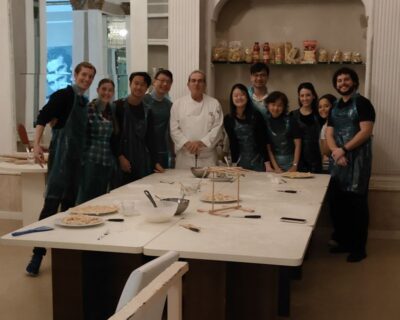
Bologna’s best food lesson may be the one held in a real home kitchen, where Chef Antonio teaches you to make pasta by hand rather than watching a polished demonstration. You will mix and work the dough, shape tagliatelle and tortelloni, cook ragù alla Bolognese, and then eat the results with wine. The four-person limit keeps the lesson personal.
I like the direct contact with a professional chef who once owned a local restaurant, and I like that the recipes come afterward so the class can continue in your own kitchen. The main consideration is the setting: this is a humble home laboratory, not a large, spotless cooking school. That is part of its charm, but it will not suit anyone seeking a formal studio.
Key points
- A true small-group lesson: No more than four people take part, so Antonio can watch your dough, pasta shapes, and technique.
- Two classic pasta forms: You make silky tagliatelle and delicate tortelloni from fresh egg pasta.
- Ragù alla Bolognese from scratch: The sauce is prepared as part of the meal, not simply served on the side.
- A meal at the end: Sit down with the pasta you made and a bottle of red wine, or white if you prefer.
- Recipes to take home: Antonio sends slides containing the recipes prepared during the class.
- Easy but not central: The meeting point is about a 20-minute walk from Bologna’s center and is also near public transportation.
What the three-hour Bologna class is really like
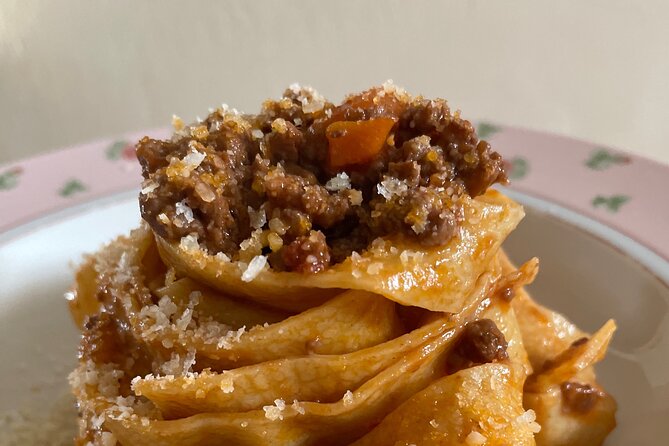
This is not a quick pasta demonstration followed by a plate of food. You work through the main stages yourself, with Antonio directing the process and explaining the small choices that affect the final texture.
The lesson lasts about three hours. That gives you time to prepare the dough, shape more than one kind of pasta, make the sauce, eat, and talk. The pace can also stretch beyond the allotted time, especially if the conversation is flowing. Plan your evening around the class rather than trying to squeeze in another timed activity afterward.
The group size matters. With a maximum of four people, Antonio can correct the way you knead, show you how thin the dough should be, and help you understand why one batch behaves differently from another. In a large class, those details are easy to miss. Here, your hands do most of the work.
The class is offered in English. Antonio is described as warm, funny, and full of stories, so the session is as much a personal meeting as a technical lesson. One particularly nice touch is that he often gives practical suggestions for your time in Bologna while you cook.
More Chef-Led Pasta Classes in Bologna
- Bologna: Pasta & Wine Lesson Private Chef & Sommelier
★ 4.4 · 40 reviews - Bologna: Tortellini Masterclass at a Local’s Home
★ 5.0 · 8 reviews - Make traditional handmade pasta from scratch with a local chef!
★ 4.5 · 8 reviews
Starting at Via Antonio di Vincenzo 50
The meeting point is Via Antonio di Vincenzo, 50, 40129 Bologna. The class begins and ends at the same address.
The location is not in the middle of Piazza Maggiore. One account places it at about a 20-minute walk from the heart of Bologna, which is useful to know when planning your day. Allow enough time to find the address without rushing. The area is also near public transportation, and service animals are allowed.
Antonio has sent clear directions before the class, including help with getting to his home. That is worth keeping in mind if you are arriving after a long day of sightseeing or carrying a phone with limited data. Confirm the address and timing in advance, then use the mobile ticket provided with your booking.
The home setting creates a different mood from a commercial school. You are stepping into a working kitchen with personal touches, not a theatrical set built for large groups. If you want a polished classroom with identical workstations, this may feel informal. If you want to see how a local cook creates food in a personal space, the setting is a major reason to choose this lesson.
Making fresh egg dough by hand
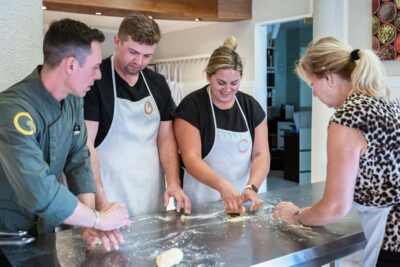
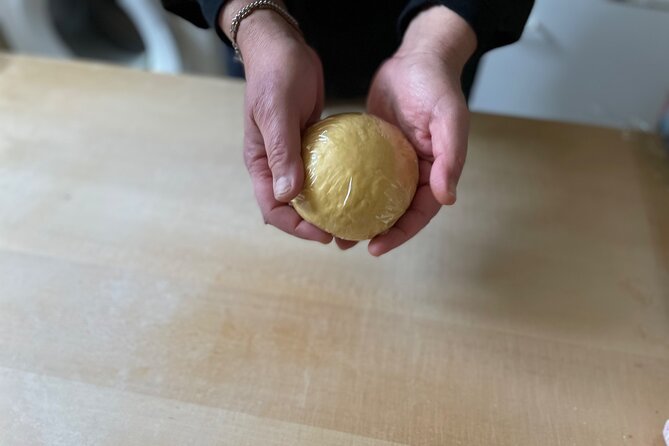
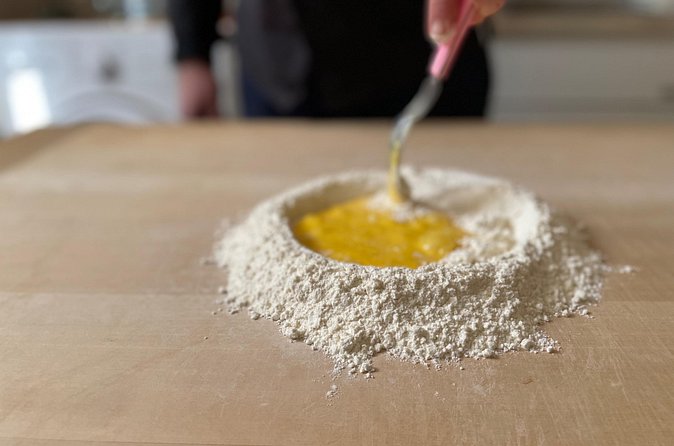
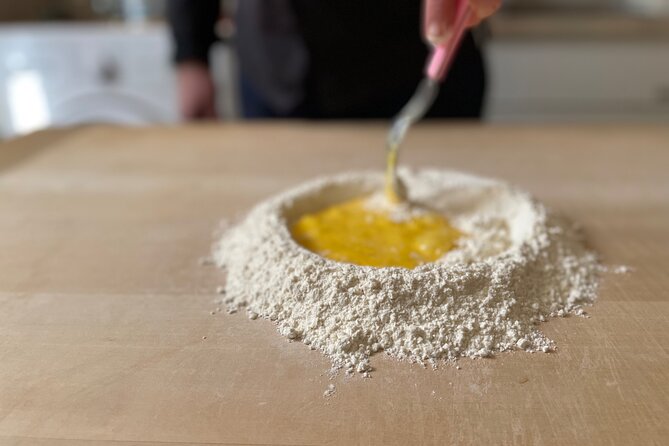
The central exercise is the pasta dough. You combine flour and eggs, then work the mixture until it becomes smooth and elastic. That sounds simple. It is not always simple in practice.
The amount of flour, the size of the eggs, the moisture in the room, and the way you knead all affect the result. Antonio shows you the texture to look for instead of asking you to follow a rigid clock. This is the kind of instruction that helps once you return home, because your own dough will rarely behave exactly like the dough in a recipe video.
Be ready to use your hands and put in some effort. One detailed account describes the pasta making as more demanding than simply adding eggs to flour and hoping for perfect dough. That is good news for anyone who wants a useful lesson rather than a staged activity. You learn that fresh pasta depends on touch, patience, and practice.
The small group helps here. Antonio can point out when the dough needs more work or when you are close to the right consistency. You will not simply watch him perform the difficult part while you receive a prepared ball of dough.
Rolling and cutting tagliatelle
Once the dough is ready, you roll it thin and cut it into tagliatelle. The same basic dough becomes a different food through thickness and cutting, so this part teaches an important idea in Italian cooking: technique matters as much as ingredients.
You may also work with a wider cut, such as pappardelle, as one account describes. The exact shape can depend on the group and the flow of the class, but the focus remains handmade pasta rather than packaged noodles.
The work requires care. Roll too thickly and the pasta can feel heavy. Cut unevenly and some strands cook faster than others. Antonio’s guidance helps you see what an experienced cook notices by instinct.
This is also the part where a little humor helps. Handmade pasta has a way of making everyone look less expert than expected. The class seems designed to encourage you instead of making you feel tested.
More Fresh Pasta Workshops in Bologna
- Bologna: Traditional Bolognese Pasta Making with Meal
★ 4.8 · 97 reviews - Traditional bolognese pasta making with a meal
★ 4.5 · 69 reviews - Learn and taste the real bolognese ragù and pasta making
★ 4.8 · 32 reviews - Bologna: Pasta-Making Class at a Local’s Home
★ 5.0 · 23 reviews
Folding tortelloni and creating the filling
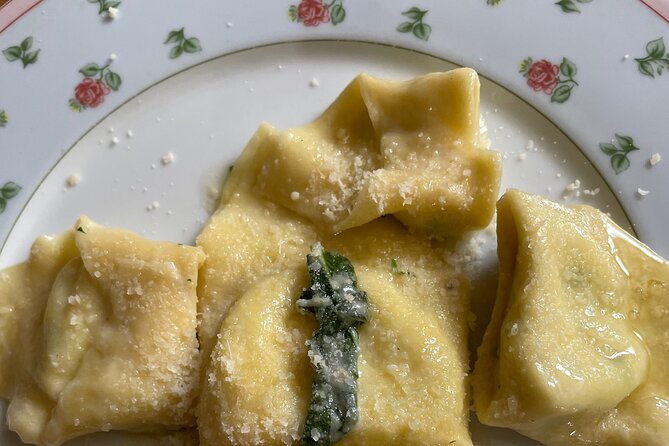
The second pasta is tortelloni, a larger filled shape that takes more patience than tagliatelle. You prepare the filling, place it on the pasta, and learn how to fold and seal each piece without trapping too much air or letting the filling escape.
The filling can be adjusted to suit your taste. Antonio encourages you to decide if it needs more Parmesan, salt, or another personal touch. That small choice turns the lesson from a fixed recipe into a useful cooking skill. You learn how to taste and correct rather than follow instructions blindly.
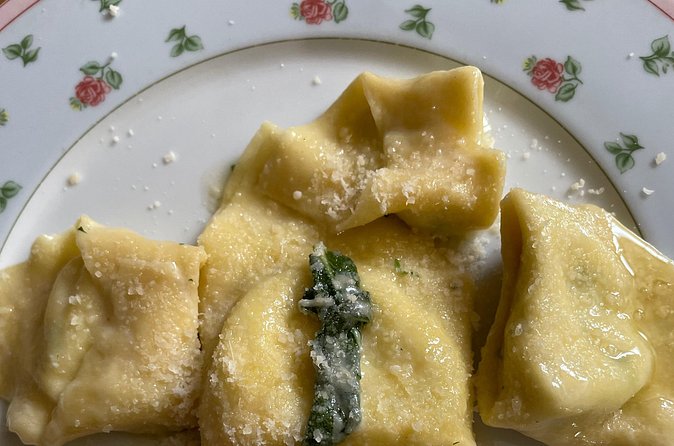
Tortelloni also gives you a second helping of food at the end. The menu includes tagliatelle with ragù alla Bolognese and tortelloni. One account describes the tortelloni with a butter sauce, which shows that the finished dish may use a simpler sauce that lets the filled pasta speak for itself.
Do not expect every tortelloni to look like a machine-made product. The point is to learn the fold and understand the process. Handmade pasta has small differences, and those differences are part of the pleasure.
Cooking ragù alla Bolognese
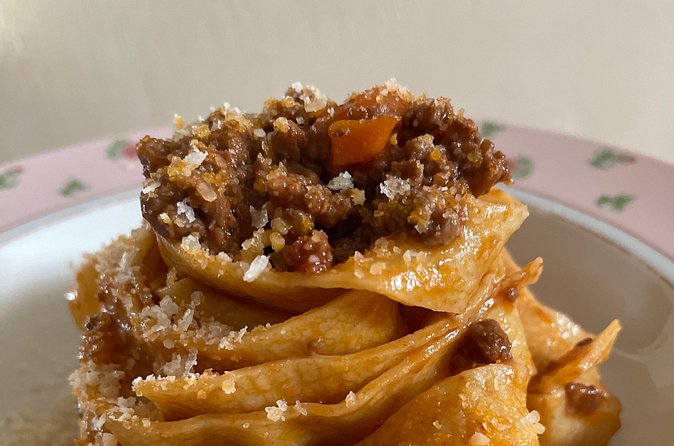
The ragù is a major part of the lesson. You prepare an authentic ragù alla Bolognese to serve with the tagliatelle, learning how the sauce develops its flavor rather than simply opening a jar or adding a quick topping.
The class gives the sauce enough attention to make it more than a side task. Antonio explains the cooking process and shares the kind of practical tips that are easy to remember once you have smelled, stirred, tasted, and adjusted the sauce yourself.
This is where the experience connects to Bologna’s food identity. Tagliatelle with ragù is not just a famous menu item. It is a dish built around fresh pasta and a sauce that needs to work with it. The pasta should carry the ragù, and the ragù should not bury the pasta.
A striking account describes the finished sauce as especially full of flavor. The useful lesson for you is not just the final taste. It is learning how small adjustments affect the balance. You can ask about seasoning, texture, and timing while the sauce is still in front of you.
Sitting down with wine and your own food
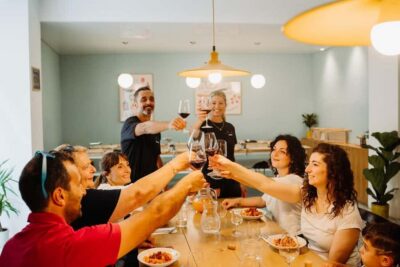
After the cooking, you eat the meal together. The standard drink is a good bottle of red wine, although white wine is available if you prefer it.
This final meal changes the tone. You are no longer standing over dough or concentrating on folds. You can relax, taste what you made, and talk with Antonio. The food is not prepared in advance for you. You helped make the pasta and sauces, so the meal feels like the payoff for the work.
The wine is included as part of the shared meal atmosphere, but this is not described as a tasting class. Choose it for the food and conversation first. If you do not drink wine, confirm your preference with Antonio before or during the session.
The relaxed pace is one of the better features of the class. Several accounts describe staying longer than the planned time because the cooking and conversation continued naturally. Still, do not assume the schedule will always run long. The listed duration is about three hours, so keep your evening flexible without counting on an extra hour.
Antonio’s teaching style
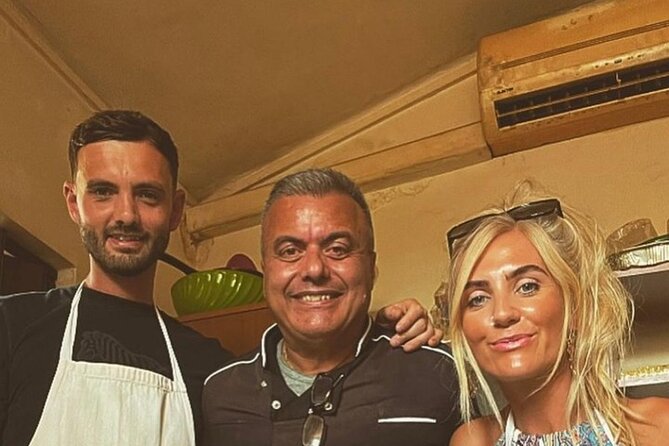
Antonio is the center of the experience. He is a professional chef with restaurant experience, but the class is not presented as a stern technical exam. His style is personal, energetic, and conversational.
He explains the food while telling stories, offers tips beyond the recipes, and encourages you when the dough or pasta shapes do not go perfectly. He also takes an interest in the people at his table. One account even notes a long conversation about Major League Baseball, a reminder that the evening can wander beyond food.
That personal approach will suit you if you enjoy meeting the person behind the meal. It may not suit you if you prefer to keep conversation limited and focus only on precise culinary instruction. The experience is private, with only your group taking part, so the social side is unavoidable.
The language is English, which makes the cooking details easier to follow. Antonio’s warmth also seems to be a big part of why the class feels memorable. You are not simply buying access to a kitchen and a recipe sheet. You are spending several hours with the chef who runs it.
What you take home besides a full stomach
Antonio sends slides with the recipes prepared during the class. That adds real value. Fresh pasta is easy to enjoy once, but the useful test is whether you can repeat it at home.
The slides give you a reference for the dough, tagliatelle, tortelloni, and ragù. They will not replace practice, especially when it comes to judging dough by touch, but they can help you reconstruct the meal later.
Bring a willingness to take notes if a technique matters to you. You may also want to ask questions while the food is in progress, since the best tips often concern timing, texture, and corrections rather than ingredient lists.
The experience works well for couples, siblings, parent and adult child combinations, friends, and solo cooks who are comfortable joining a very small private group. It also suits people who want a food activity with genuine conversation rather than a crowded classroom.
Is $83.08 a fair price?
At $83.08 per person, the price is not simply paying for a plate of pasta. You are paying for about three hours of instruction, a meal, wine, a private group capped at four people, and recipe material to use later.
That is good value if you want hands-on attention. In a larger class, the cost might be lower, but you could spend much of the session watching someone else knead and shape. Here, the limited group size gives Antonio room to help with your technique.
The value is also stronger for anyone who plans to cook Italian food at home. If you only want dinner, a restaurant will be simpler. If you want to understand how Bologna’s pasta is made and then eat what you prepared, the class offers more than a meal.
The price may feel high to someone who expects a quick activity or a formal culinary course with a certificate. It is better understood as a private cooking lesson combined with a friendly home dinner.
Practical details before you book
The experience is free to cancel up to 24 hours before the start time for a full refund. Cancellations or changes made less than 24 hours before the start are not refunded or accepted, and the cut-off follows Bologna’s local time.
Confirmation arrives when you book. The activity uses a mobile ticket, and the meeting point is also the end point.
Most people can participate, and service animals are allowed. The available information does not describe specific accessibility features inside the home, so ask ahead if you need details about stairs, seating, or kitchen access.
Book ahead if your dates are fixed. The experience is booked, on average, 38 days in advance, and the four-person limit naturally keeps capacity low.
Should you book Chef Antonio’s pasta class?
Book it if you want a small, personal food lesson where you actually make the pasta, learn a proper ragù, eat with wine, and leave with recipes. It is especially suited to food lovers, home cooks, and anyone who prefers a local home setting to a commercial cooking school.
Think twice if you need a polished studio, a tightly timed schedule, or a class with little conversation. The setting is informal, and Antonio’s personality is a large part of the experience.
For most people, the strongest reason to choose it is the combination of hands-on work and human contact. You do not just hear about Bologna’s pasta traditions. You handle the dough, shape the pasta, taste the sauce, and sit down with the chef who taught you. That makes the $83.08 price easier to justify, especially if you plan to recreate the meal at home.
FAQ
Where does the pasta-making class start?
The class starts at Via Antonio di Vincenzo, 50, 40129 Bologna BO, Italy.
Where does the activity end?
The activity ends back at the same meeting point.
How long does the class last?
The class lasts approximately three hours. It can sometimes run longer depending on the pace of the cooking and conversation.
How many people can join?
The class is private and limited to a maximum of four people.
What food will I prepare?
You will make fresh egg pasta, including tagliatelle and tortelloni, and prepare ragù alla Bolognese. The meal includes tagliatelle with ragù and tortelloni.
Is wine included?
After cooking, you eat the meal with a bottle of red wine. White wine is available if you prefer it.
Will I receive the recipes?
Yes. Antonio sends slides containing the recipes prepared during the class.
Is the class offered in English?
Yes. The experience is offered in English.
Fresh off the board around Bologna
- 3 hour Lasagna Bolognese cooking class★ 5.0 · 6 reviews
- Cesarine: Small group Tortellini Class at Local’s Home in Bologna★ 5.0 · 18 reviews
- Tortelloni and Tagliatelle Cooking Class in Bologna + Wine★ 3.0 · 2 reviews
- Colorful Pasta Workshop in Bologna with meal★ 5.0 · 2 reviews
- Cesarine: Pasta & Tiramisu Class at a Local’s Home in Bologna★ 5.0 · 29 reviews
- Pasta Making Class: Tagliatelle & Bolognese Sauce★ 5.0 · 15 reviews
- Pasta and Tiramisu Masterclass with organic wines★ 3.5 · 3 reviews
- Home Cooking: Pasta Making with Natural Colors in a Tiny Group★ 5.0 · 6 reviews
Fresh Pasta Workshops, class by class.
Pasta Making Class with Wine, Limoncello, and Dessert
Read our review →

Enjoy Spritz and Pasta Making in Piazza Navona
Read our review →
Pasta Making & Wine Tasting with Dinner in Frascati from Rome
Read our review →
The Secrets to Learn Fresh Pasta and Tiramisù in a Glam Home
Read our review →