Review · BOLOGNA
Traditional bolognese pasta making with a meal
Making pasta by hand is the heart of this Bologna experience. In Irene and Marco’s family home, you’ll roll, cut, fold, and shape three kinds of fresh pasta, then sit down to eat what you made. I like the small-scale family setting and the chance to learn pasta technique rather than simply watching a demonstration.
I also like the three-course pasta tasting, with each shape prepared differently, plus wine and a sweet finish. The main caution is value: at $102.58 per person, the meal can feel modest if you arrive expecting a full restaurant lunch with side dishes, bread, or large portions. Transportation is another consideration, since the meeting point is outside Bologna’s historic center and pickup costs extra.
Key points at a glance
- Three pasta shapes in one class: Depending on the season, you may make tortelloni, ravioli, and tagliatelle, with farfalle also used in some classes.
- Irene is the main teacher: She is described as patient, encouraging, funny, and comfortable teaching in English.
- A real family home: The class takes place in a domestic setting with Irene and Marco, not a formal cooking school.
- You eat your own work: The handmade pasta is cooked with different sauces and served as lunch or dinner with wine and dessert.
- Pickup costs extra: A host-arranged transfer is available for €20 per person, including pickup and drop-off, but it must be booked at least two hours before the start.
- Best for hands-on learners: Families, couples, solo participants, and teenagers can all take part, but the portions may not satisfy a very hungry adult.
Three shapes, one traditional pasta dough
The class begins with a basic pasta dough, which you then divide and turn into different shapes. That is a useful approach because you learn how one simple mixture becomes several classic Bolognese forms.
You’ll work with a rolling pin and special hand tools rather than relying only on a pasta machine. That matters. The rolling pin gives you a feel for the dough’s texture and thickness, while folding tortelloni or ravioli teaches the small movements that make fresh pasta look and hold together properly.
The exact shapes can change with the season. The usual combination is tortelloni, ravioli, and tagliatelle. Some classes have made farfalle instead of one of those shapes. You should think of the menu as three traditional pasta forms rather than a fixed promise of three specific shapes every time.
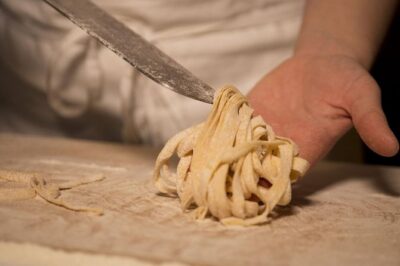
Tagliatelle is the most straightforward of the three. You roll the dough thin, cut it into ribbons, and learn how to keep the strands from sticking. Ravioli and tortelloni require more care. You need to place filling in the right amount, seal the edges, and avoid trapping air inside.
That mix gives the lesson a nice rhythm. One shape helps you learn cutting, another teaches filling and sealing, and another adds a more decorative folded form. Even if your finished pieces look a little uneven, they can still be cooked and enjoyed at the table.
More Fresh Pasta Workshops in Bologna
- Bologna: Traditional Bolognese Pasta Making with Meal
★ 4.8 · 97 reviews - Learn and taste the real bolognese ragù and pasta making
★ 4.8 · 32 reviews - Bologna: Pasta-Making Class at a Local’s Home
★ 5.0 · 23 reviews
Irene’s patient, practical teaching style
Irene is the key personality in this experience. She leads the class in English and explains each step while you work. The teaching style is encouraging rather than formal, which helps if you are not confident in the kitchen.
You do not need to arrive with professional cooking skills. The class is designed for beginners, and Irene’s patience is often singled out as one of its strongest features. She gives help while allowing you to do the work yourself, which is exactly what you want from a pasta lesson.
I like that the instruction includes more than hand movements. Irene also talks about Italian family cooking traditions and food from the Emilia-Romagna area. That gives the lesson some local character. You are not simply learning how to make noodles. You are learning why fresh pasta matters in Bologna and how it fits into home cooking.
English is offered, and the teaching is described as clear enough for children and teenagers to follow. One family took the class with an 11-year-old child, while another group included teenagers. The class can work well for families because the activity is tactile and social, though younger children may spend as much time playing with the dough as shaping it.
If you have a dietary restriction, tell the host in advance. Irene has accommodated gluten-free pasta for a child in the past, but the supplied details do not establish a standard gluten-free menu for every session.
A family home instead of a cooking studio
The setting is part of the appeal. Irene and Marco welcome you into a family-run home, creating a more personal atmosphere than you would get in a large culinary school.
That also means you should keep your expectations realistic. One class took place in a fairly small apartment with eight participants. The maximum group size is listed as 40, although the reported classes include much smaller groups. Your actual group size can therefore matter a great deal.
A compact home kitchen can feel warm and social, but it may also be busy when several people are rolling dough, reaching for tools, and washing up. One participant wished there had been more clean hand towels. This is a minor point, but it tells you something useful: the experience favors home hospitality over polished restaurant-style presentation.
The family setting lets you meet other people at the table. Solo participants can be paired with a group, and the shared work naturally gives everyone something to talk about. Couples and families will also find it easy to participate together.
I would choose this class if you want conversation, personal instruction, and a look at everyday Italian food culture. I would choose a formal culinary school instead if you want a carefully staged professional kitchen, a highly controlled schedule, or restaurant-level presentation.
Turning handmade pasta into lunch or dinner
Once the pasta is shaped, the class moves to the best part: eating it. The pasta is cooked and served in three preparations, usually with different sauces so you can taste how each shape works with a particular style of dish.
This is more useful than being served one large bowl of pasta. You get to compare the shapes and see how filling, thickness, and cutting affect the final result. A folded pasta may carry a filling or sauce differently from a thin ribbon of tagliatelle.
Wine is included with the meal, and the food is followed by dessert. The sweet ending can be homemade or one of Marco’s creations, depending on the day. Coffee has also been part of the meal in some sessions.
The meal is filling for many people, especially after the pasta-making work. Still, the portions are tied to how much pasta the class produces. Adults working steadily will generally make more than young children, who may spend time handling the dough without producing as much usable pasta.
This is the main food-related caveat. The advertised meal centers on the three pasta dishes, dessert, and wine. It does not promise a salad, bread course, appetizer, or extra restaurant-style side dishes. If you arrive very hungry and expect a large Italian lunch with several additional courses, you may feel shortchanged.
For me, the value is in eating pasta that you helped make, not in receiving the largest possible meal for the price. If your priority is quantity, a restaurant will likely give you more food. If your priority is a shared activity with a meal attached, the arrangement makes more sense.
More Ravioli and Gnocchi Classes in Bologna
- Bologna: Pasta Tagliatelle al Ragu Cooking Class with Wine
★ 4.7 · 225 reviews - Authentic Bologna Home Cooking Class: Tagliatelle & Tortellini
★ 4.5 · 136 reviews - Bologna: Original Lasagna & Gelato Class at a Cooking School
★ 4.9 · 59 reviews - Bologna: Tagliatelle & Ragù Home Cooking Class with wine
★ 4.5 · 55 reviews
What the $102.58 price really covers
At $102.58 per person, this is not a cheap lunch. The price pays for instruction, ingredients, the use of the family home, the hands-on activity, wine, dessert, and the time spent preparing and serving the meal.
The value depends on how you judge a cooking class. You are paying partly for food, but also for personal guidance and the chance to repeat the techniques at home. The class becomes more worthwhile if you plan to keep making fresh pasta after your trip.
Ingredient quality has been questioned by at least one participant, while the hosts explain that they use local products such as ricotta, Parmesan, parsley, fruit, eggs, flour, and regional wine. The hosts also identify local producers and brands used for some ingredients. Since tastes and expectations differ, I would not book this expecting luxury dining. Think of it as a home cooking lesson with a generous social component.
The meal itself may look modest beside a €100-plus restaurant bill. The experience can still be good value for someone who wants instruction and a personal connection. It is less convincing for someone who only wants to eat a large, elaborate meal.
Getting to Viale Abraham Lincoln
The meeting point is Viale Abraham Lincoln 56, Bologna. The activity ends back at the same meeting point.
Pickup and drop-off are available for an extra €20 per person. The host-arranged transfer must be booked at least two hours before the experience begins, and payment is made directly to the host by cash or credit card. The listed pickup price is separate from the tour price.
Do not assume pickup is included just because it is offered. Confirm the arrangement before the class, including the exact meeting location and timing. One reported pickup caused confusion, with a wait at the original address followed by instructions to move to another location. That problem was not typical of the praise for the class, but it is a good reason to keep the host’s contact details handy.
The location is near public transportation, though the supplied information does not specify a particular bus or route. If you are unfamiliar with Bologna, allowing extra time is sensible. The paid transfer can be worthwhile if you are carrying bags, traveling with children, or prefer not to manage local transport before a timed class.
Who will enjoy this pasta class most
This is a strong fit for several kinds of visitors:
- First-time pasta makers: The process is explained step by step, and the work is manageable for beginners.
- Families with older children: Children and teenagers have taken part successfully, especially when they enjoy hands-on activities.
- Couples and friends: You work side by side, then share a meal in a relaxed home setting.
- Solo participants: You can join a mixed group and meet people during the class and lunch.
- Food-focused visitors: You get a closer look at Bolognese pasta traditions than you would from simply ordering tagliatelle in a restaurant.
I would be more cautious if you dislike group activities, need a quiet and formal environment, or have strict dietary needs that have not been confirmed with the host. The class is also not the best choice if your main goal is a large meal with several side dishes.
Service animals are allowed, and the activity is near public transportation. The provider lists a maximum of 40 participants, so ask about the expected group size if a smaller class is important to you.
Timing, booking, and cancellation
The experience lasts about two and a half hours. That is long enough to make several pasta shapes and sit down for the meal without taking up an entire day in Bologna.
It is commonly booked well ahead, with an average booking time of about 34 days in advance. If this is important to your schedule, I would reserve it early, especially for a preferred date.
Confirmation is provided at booking, and a mobile ticket is accepted. Free cancellation is available when you cancel at least 24 hours before the start time. Cancellations or changes made inside that 24-hour window are not accepted for a refund.
Should you book it?
Book this experience if you want to make pasta with your own hands, learn from a patient local teacher, and eat the results in a family home. Irene and Marco’s warmth, the English instruction, and the three different pasta preparations give the class a clear sense of place.
Think carefully about the price if you mainly want a big meal. The food is the reward for the work, not the only reason to attend, and additional courses such as salad or bread are not part of the stated menu. Also plan the trip to Viale Abraham Lincoln 56 carefully, or reserve the €20-per-person transfer in advance.
For families, couples, curious solo visitors, and anyone who wants to take home a practical Bologna food skill, this is a personable choice. For a formal cooking-school setting or a restaurant-sized feast, choose something else.
FAQ
How long does the pasta-making experience last?
The experience lasts approximately 2 hours and 30 minutes.
Where does the class begin?
The meeting point is Viale Abraham Lincoln 56, 40139 Bologna BO, Italy. The activity ends back at the meeting point.
Is pickup included in the price?
No. Pickup and drop-off are available for an extra €20 per person. The transfer must be booked at least two hours before the experience and paid directly to the host by cash or credit card.
Which pasta shapes will I make?
The usual seasonal selection includes tortelloni, ravioli, and tagliatelle. Some sessions may make farfalle instead, so the exact shapes can vary.
Is the class offered in English?
Yes. The experience is offered in English, and Irene leads the instruction.
Is a meal included?
Yes. Lunch is included, and the experience description also refers to a lunch or dinner service. You eat the pasta made during the class with sauces, wine, and a sweet dessert.
Can children participate?
Yes. Families with children and teenagers have taken part, and the class is described as suitable for family groups. Children may produce less pasta than adults because they can spend more time playing with the dough.
What is the cancellation policy?
You can cancel up to 24 hours before the start time for a full refund. Cancellations or changes made less than 24 hours before the start time are not accepted.
Fresh off the board around Bologna
- 3 hour Lasagna Bolognese cooking class★ 5.0 · 6 reviews
- Cesarine: Small group Tortellini Class at Local’s Home in Bologna★ 5.0 · 18 reviews
- Tortelloni and Tagliatelle Cooking Class in Bologna + Wine★ 3.0 · 2 reviews
- Colorful Pasta Workshop in Bologna with meal★ 5.0 · 2 reviews
- Pasta Making Class: Tagliatelle & Bolognese Sauce★ 5.0 · 15 reviews
- Cesarine: Pasta & Tiramisu Class at a Local’s Home in Bologna★ 5.0 · 29 reviews
- Pasta and Tiramisu Masterclass with organic wines★ 3.5 · 3 reviews
- Home Cooking: Pasta Making with Natural Colors in a Tiny Group★ 5.0 · 6 reviews
Ravioli and Gnocchi Classes, class by class.
3 in 1 Cooking Class near Navona: Fettuccine, Ravioli & Tiramisu
Read our review →
3-in-1 Fettuccine, Ravioli, and Tiramisu Cooking Class
Read our review →
Fettuccine Pasta Cooking Class in Rome’s City Center
Read our review →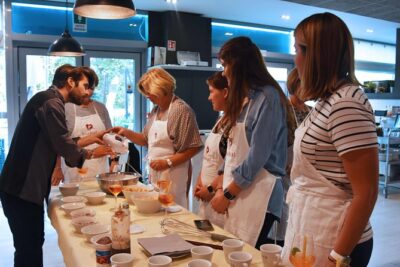
Become a Masterchef in Rome: Pasta, Ravioli and Tiramisù Class
Read our review →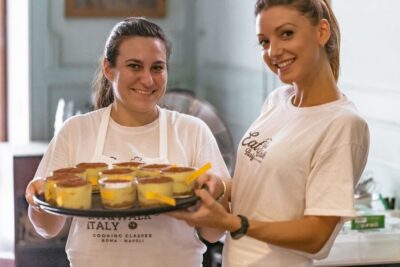
Fettuccine & Tiramisù: Cooking Class with Wine & Limoncello
Read our review →
Rome Pasta and Tiramisu Class: Ravioli, Fettuccine & Fine Wine 5*
Read our review →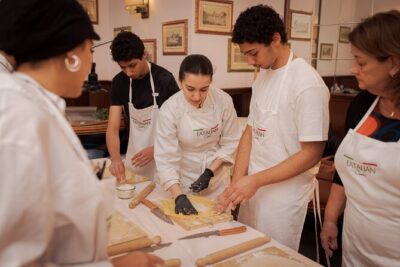
Pasta Cooking Class in Rome – Fettuccine Class in Piazza Navona
Read our review →