
Review · BOLOGNA
Bologna: Express Pasta-Making Class with Tasting
Bologna’s best food lesson may be the one that gets you working quickly. In 90 minutes, you roll fresh dough with a pin, shape tortellini, tagliatelle, and farfalle, and sit down to eat what you made. Alessia Fiocchi leads the class in English, Italian, or French, with a warm style that feels closer to cooking at home than watching a formal demonstration.
I like the small group of up to 10, since you get real time at the table rather than standing at the back of a crowded kitchen. I also like the clear connection between pasta shapes and sauces: tortellini go into broth, tagliatelle meet ragù, and farfalle are served with tomato and basil. The main thing to keep in mind is timing. The advertised class lasts 90 minutes, but a relaxed meal and conversation can run well over that.
Key points to know before booking
- You make several classic Bolognese shapes, including tortellini, tortelloni, tagliatelle, farfalle, balanzoni, and lasagne.
- Everything is rolled by hand, using a rolling pin rather than a pasta machine.
- You eat the pasta you prepare, matched with broth, ragù, and tomato-basil sauce.
- Alessia Fiocchi teaches in three languages, English, Italian, and French.
- The small class size matters, with no more than 10 participants.
- Pol and Ruby, the host’s kittens, may keep you company while you cook.
Why this short Bologna class works
Bologna is a fine place to learn pasta because the food here is not treated as a side project. Fresh egg pasta is part of the local identity, and the class focuses on shapes that belong to Bologna and Emilia-Romagna. You are not simply stirring a sauce or assembling a quick dish. You are learning how dough becomes the pasta that appears on local tables.
The 90-minute format is useful if you have only a short stay in town. It fits neatly into a busy day of porticoes, piazzas, and food markets. You still get to knead, roll, cut, fill, cook, and taste, without giving up half a day of sightseeing.
That short schedule also has limits. You will learn several forms, but you should not expect a slow, advanced course on every detail of pasta making. The class is best for people who want a lively introduction and a meal, not for someone seeking a professional culinary workshop.
The mood is one of the biggest draws. Alessia is described as friendly, clear, and attentive, and the class is held in a home setting. That changes the feel. You are not just moving from station to station in a commercial kitchen. You can ask questions, work beside other people, and enjoy wine, coffee, tea, and an appetizer along the way.
More Fresh Pasta Workshops in Bologna
- Bologna: Traditional Bolognese Pasta Making with Meal
★ 4.8 · 97 reviews - Traditional bolognese pasta making with a meal
★ 4.5 · 69 reviews - Learn and taste the real bolognese ragù and pasta making
★ 4.8 · 32 reviews
Arriving at the gray gate on Via Sabotino
The meeting point is Via Sabotino, 27. The instructions ask you to go in front of a gray gate for cars, so read that detail carefully before you arrive. It is the kind of small practical point that can save you from standing at the wrong entrance.
The activity is wheelchair accessible, and comfortable clothing is the only stated item to bring. An apron, rolling pin, and necessary materials are provided. Smoking is not allowed indoors.
The class is limited to 10 people. That is large enough for a social meal, but still small enough for Alessia to watch your technique and correct your dough or shaping. If you are new to cooking, this matters. Pasta dough can look simple until it begins sticking, cracking, or resisting the rolling pin.
Children under six are not allowed. Older children can enjoy the class if they are interested in hands-on work. One family brought three children between nine and twelve, and the children took part in making and eating the pasta. Keep in mind that this is a real cooking session, not a show designed to keep young children entertained every minute.
Rolling pasta the traditional way
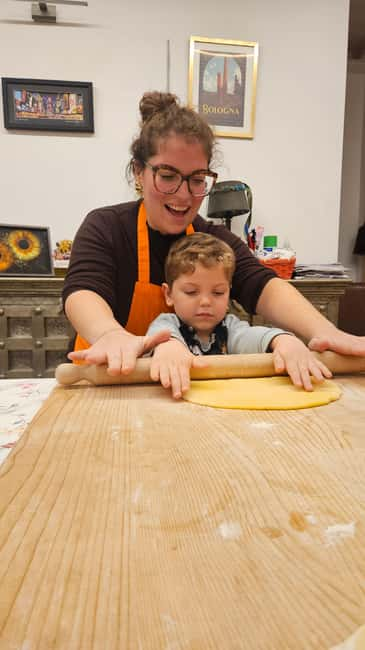
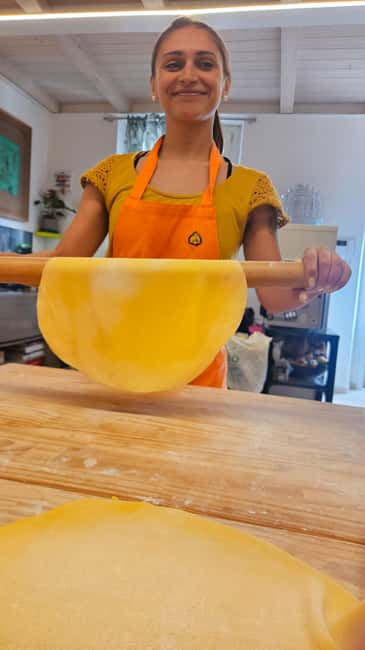
The central lesson is simple: flour, dough, pressure, and patience. You learn to roll the pasta with a rolling pin, which gives you a closer connection to the old Bolognese method than using a modern pasta machine.
This is also where the class can be more demanding than it first sounds. Rolling dough evenly takes practice. You may need to press firmly, turn the dough, and keep checking its thickness. Alessia is there to explain each step and point out when the dough is not quite right.
The class lets you make different pasta types, including:
- Tortellini
- Tortelloni
- Tagliatelle
- Balanzoni
- Farfalle
- Lasagne
The exact work is built around the main tasting dishes, with tortellini, tagliatelle, and farfalle receiving special attention. You may also customize the pasta color, which adds a playful element without taking the class away from its traditional focus.
The lesson is practical because you are shaping the pasta yourself. You will not simply watch Alessia fold a perfect tortellino and then receive one on your plate. You get to try, adjust, and see the difference between a neat fold and one that may open during cooking.
Three shapes, three different sauces
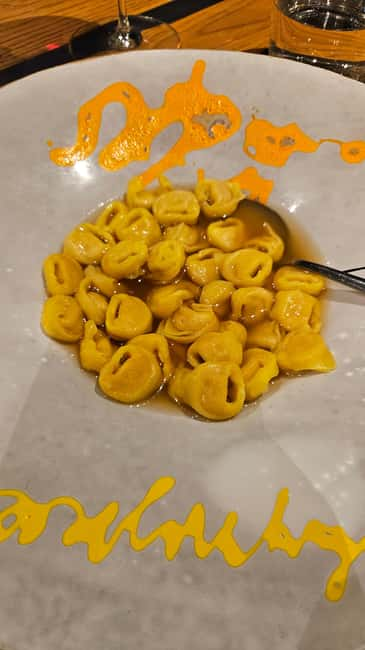
The tasting is planned around the idea that shape and sauce should work together. This gives the meal more purpose than a general bowl of pasta at the end.
Same flour, a different shape to roll:
- Bologna Food & Market Tour with 6 Tastings, Pasta, Wines & More
★ 5.0 · 1,328 reviews - Bologna: Pasta Cooking Class, Ragu, Spritz, Wine & Gelato
★ 4.9 · 775 reviews - Bologna Local Pasta Cooking Class, Ragu, Spritz, Wine & Gelato
★ 5.0 · 527 reviews - Pastamama, Home Cooking Classes at Grace’s Home
★ 5.0 · 521 reviews
Tortellini in broth
Tortellini are served in broth, one of Bologna’s classic combinations. The broth lets you notice the pasta’s delicate shape and filling without a heavy sauce covering it. Since tortellini are small and folded, they also tend to be the most fiddly shape to make.
This part of the meal rewards patience. If your first few pieces look uneven, that is fine. They are still part of the learning process, and the broth gives them a proper local setting.
Tagliatelle with ragù
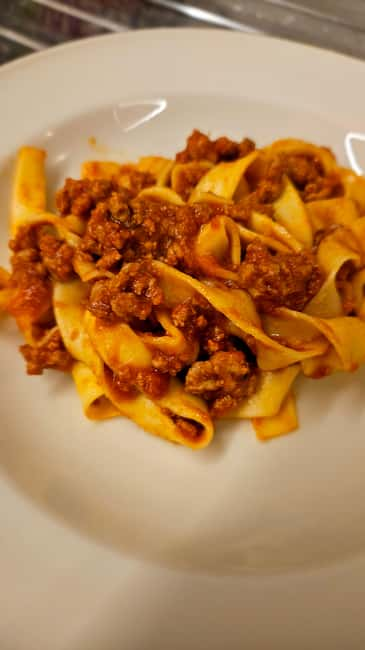
Tagliatelle are served with ragù, the pairing many people associate most strongly with Bologna. The wide ribbons hold the sauce well, and you get to see why the shape matters.
For you, this is likely the most recognizable plate of the class. It is also a useful lesson in proportion. A good fresh pasta dish is not just about pouring on sauce. The width and texture of the pasta help carry it.
Farfalle with tomato and basil
Farfalle are paired with tomato and basil sauce. Their bow-tie shape is more playful and can be a little easier to enjoy as a group activity, especially if children are taking part.
The three sauces also give the meal variety. Broth is light and delicate, ragù is hearty, and tomato with basil is fresh and direct. You are tasting the difference between the pasta forms rather than eating three versions of the same dish.
Wine, mortadella, and a meal at home
The food does not begin and end with the pasta. The class includes an appetizer and wine, and the experience can also include salami and mortadella. Coffee and tea are available as part of the listed refreshments.
This opening food is valuable for two reasons. First, it gives you something to enjoy while the dough and pasta are being prepared. Second, it places the pasta in a wider Bolognese food tradition. Mortadella is not just a sandwich filling here, and cured meats are a natural match for a relaxed meal before the main dishes.
The social side is just as important. You eat together after the preparation, which turns the class into a shared lunch or dinner rather than a lesson that ends at the kitchen door. Wine helps set an easy pace, but the host’s cats, Pol and Ruby, are likely to be the more memorable company for some people.
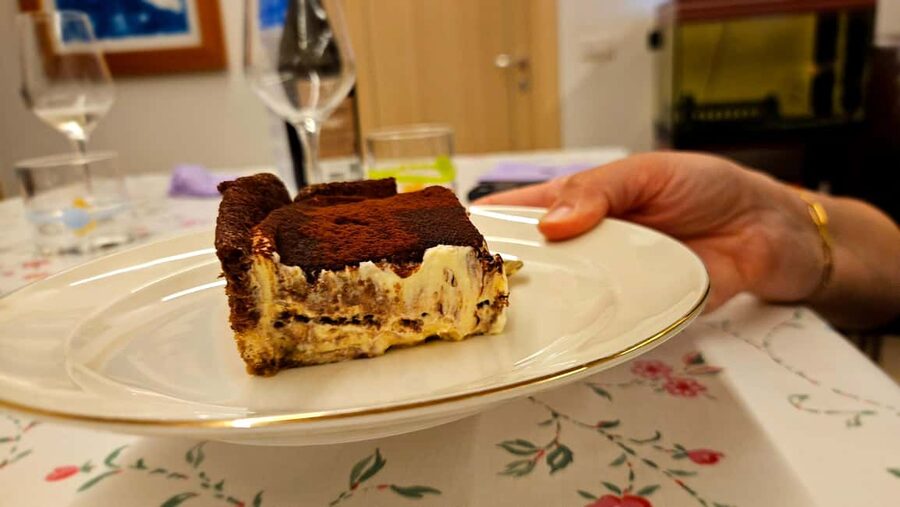
One class also included tiramisu, though that should not be treated as a guaranteed part of every booking. The fixed focus is fresh pasta and its sauces.
The pace may be longer than 90 minutes
The listed duration is 1.5 hours, and that is the basic cooking period. In practice, the full visit can run longer once you add the meal, wine, conversation, and serving the different pasta dishes.
One participant reported that the activity with lunch lasted more than three hours. Another noted that the session ran over time but considered the extra time part of the pleasure. That is useful advice: do not book this immediately before a train, museum entry, or other fixed appointment.
If you have a tight schedule, ask yourself what you value more. The advertised 90 minutes makes the class easy to fit into a day, but the home-style format may encourage a slower finish. You might be ready to leave after the last plate, while the table is still enjoying wine and conversation.
I would leave at least two hours free, and more if your next plan is important. That is not a complaint about poor organization. It is a warning that the meal can become the evening’s main event.
What the $62 price includes
At $62 per person, the cost is strong for a small-group cooking class that includes food, wine, equipment, and the meal you prepare. You are not paying only for a demonstration. You receive an apron, rolling pin, pasta materials, color customization, an appetizer, and the chance to eat several finished dishes.
The value improves if you were already planning to pay for lunch or dinner in Bologna. The class gives you a meal plus instruction and a local social setting. It can also replace a standard restaurant visit with something you are more likely to remember and repeat at home.
The price is less attractive if you want a long, technical cooking course. The class is compact and designed for an enjoyable introduction. You will learn useful methods, but you should not expect a full professional syllabus or a recipe book filled with every regional variation.
The 5 out of 5 rating from 21 reviews supports the idea that the main strength is value combined with hospitality. Specific praise centers on Alessia’s teaching, the quality of the food, and the relaxed atmosphere. The best match is someone who wants to cook, eat, and talk, not someone who wants to rush through a checklist.
Who should book this experience
I would recommend it to couples who want an evening activity with a meal built in. It also suits families with children old enough to follow kitchen instructions, especially from age nine upward based on the family experience described.
It is a good choice for people who do not cook often. One participant arrived with little home-cooking experience and still found the lesson useful for learning both Bolognese traditions and general cooking skills. You do not need to arrive with perfect knife skills or pasta knowledge.
It also suits experienced home cooks who want to compare their technique with a local teacher. Alessia’s approach includes correcting mistakes rather than letting them pass, which is useful if you genuinely want to improve.
You may want to skip it if you dislike group meals, cats, wine, or hands-on cooking. You should also avoid it if your schedule cannot absorb a late finish. This is a social class with food at its center, not a quick activity that ends the instant the clock reaches 90 minutes.
Language, access, and booking flexibility
Alessia teaches in French, Italian, and English, so English-speaking visitors can follow the steps without needing to translate every instruction. The group size is capped at 10, which helps keep the language exchange manageable.
The class is wheelchair accessible. Comfortable clothing is recommended, and you do not need to bring cooking equipment. The activity is indoors, so smoking is not permitted.
You can cancel up to 24 hours before the start for a full refund. The reserve-now-and-pay-later option also gives you some flexibility while arranging your Bologna plans. Starting times vary, so check availability before choosing your day.
Should you book the Bologna pasta class?
Book it if you want to learn by doing and you have room for a relaxed meal afterward. The strongest reasons are the small group, Alessia’s patient instruction, the traditional rolling-pin method, and the chance to taste tortellini, tagliatelle, and farfalle with sauces suited to each shape.
The class is especially good value at $62 because the price covers the lesson, materials, appetizer, wine, and your meal. Just protect your schedule. The 90-minute label describes the class, not always the complete home-style visit.
For a short Bologna stay, this is one of the better ways to connect food with place. You leave with a full stomach, a few practical techniques, and the chance to make the same pasta again at home.
FAQ
How long does the pasta-making class last?
The stated class duration is 1.5 hours. The complete experience may last longer because it includes sitting down to eat, wine, and conversation.
Where does the class meet?
The meeting point is Via Sabotino, 27, in Bologna. You should go in front of the gray gate for cars.
Who teaches the class?
Alessia Fiocchi leads the experience.
Which languages are available?
The class is offered in English, Italian, and French.
How many people can join the class?
The group is limited to 10 participants.
Which types of pasta can you make?
The class covers tortellini, tortelloni, tagliatelle, balanzoni, farfalle, and lasagne. The tasting specifically includes tortellini, tagliatelle, and farfalle.
Will I eat the pasta I make?
Yes. You eat the pasta you prepare, with tortellini served in broth, tagliatelle with ragù, and farfalle with tomato and basil sauce.
What is included in the price?
The experience includes the pasta-making class, materials, an apron, a rolling pin, pasta color customization, an appetizer, and wine.
Is the class suitable for young children?
Children under six are not allowed. Older children can participate, and the activity is wheelchair accessible.
Fresh off the board around Bologna
- 3 hour Lasagna Bolognese cooking class★ 5.0 · 6 reviews
- Cesarine: Small group Tortellini Class at Local’s Home in Bologna★ 5.0 · 18 reviews
- Tortelloni and Tagliatelle Cooking Class in Bologna + Wine★ 3.0 · 2 reviews
- Colorful Pasta Workshop in Bologna with meal★ 5.0 · 2 reviews
- Cesarine: Pasta & Tiramisu Class at a Local’s Home in Bologna★ 5.0 · 29 reviews
- Pasta Making Class: Tagliatelle & Bolognese Sauce★ 5.0 · 15 reviews
- Pasta and Tiramisu Masterclass with organic wines★ 3.5 · 3 reviews
- Home Cooking: Pasta Making with Natural Colors in a Tiny Group★ 5.0 · 6 reviews
Fresh Pasta Workshops, class by class.
Pasta Making Class with Wine, Limoncello, and Dessert
Read our review →

Enjoy Spritz and Pasta Making in Piazza Navona
Read our review →
Pasta Making & Wine Tasting with Dinner in Frascati from Rome
Read our review →
The Secrets to Learn Fresh Pasta and Tiramisù in a Glam Home
Read our review →
Handmade Pasta & Dessert Class with Unlimited Wine
Read our review →Lists this class appears in