
Review · ITALY
Share your Pasta Love: Small group Pasta and Tiramisu class in Trento
The best part of this Trento cooking class is that you do not just watch pasta being made. You work with the dough, prepare two different pasta styles, and finish with tiramisù in a local home. The welcome aperitivo with Prosecco and snacks helps everyone loosen up before the flour starts flying.
I like the small-group format, which allows more room for questions and hands-on help. I also like the care shown by host Costanza, who contacted a booking group in advance to check ingredients for a guest with a dairy intolerance. That is the sort of practical attention you want in a cooking class.
The main consideration is the price: $154.76 per person is a serious spend for three hours. The value depends on how much you want personal kitchen time, a home setting, and a full meal rather than a quick demonstration. The class can also include up to 12 people, so ask about the group size if close instruction matters to you.
Key points at a glance
- Two fresh pasta styles: You prepare one stuffed pasta and one cut pasta, so the class covers more than a single basic shape.
- Tiramisù from scratch: The dessert is part of the cooking lesson, not just a sweet finish placed on the table.
- A real home setting: Cesarine host the class in their own homes in Trento and share family cooking methods.
- Costanza’s thoughtful hosting: She checked dairy-free ingredient needs before one class, a useful sign for diners with dietary concerns.
- Aperitivo and shared tasting: Prosecco and snacks begin the session, followed by a relaxed meal of the food you made.
- Three hours in a small group: The timing gives you enough room to cook, ask questions, and eat without rushing.
What this Trento cooking class is really like

This is a cooking lesson built around participation. You meet in Trento and go to a carefully selected local home, where a Cesarina, the name used for the host cooks, welcomes you into her kitchen. The activity starts and ends at the meeting point, and the total time is about three hours.
That setting changes the feel of the experience. You are not sitting in a restaurant watching a chef perform at a distance. You are in a private home, learning dishes that belong to an Italian family cooking tradition. The result is more personal, but also less polished and predictable than a formal culinary school.
The class is shared, with a maximum of 12 people. That is still a manageable number, though the experience will feel most intimate if the actual group is smaller. If all 12 places are filled, you may have to share counter space and wait your turn for certain steps.
More Tiramisu Classes in Italy:
- 3 in 1 Cooking Class near Navona: Fettuccine, Ravioli & Tiramisu
★ 5.0 · 7,376 reviews - Florence: Pasta & Tiramisu Cooking Class with Unlimited Wine
★ 4.9 · 6,708 reviews - Rome: Pasta & Tiramisu Class with Fine Wine by the Vatican
★ 4.9 · 4,852 reviews
Starting with Prosecco and a friendly aperitivo
The first few minutes are designed to break the ice. You begin with Prosecco and snacks before getting down to work. That small pause matters because cooking with strangers can feel stiff at first, especially in someone else’s home.
The aperitivo also sets the tone. This is not meant to be a rushed lesson where you arrive, cook, and leave. You have a chance to meet the host and the other people in the group before handling flour, eggs, fillings, and dessert ingredients.
Do not treat the opening drinks as the main event. The food and cooking take center stage, and the snacks are best understood as a warm welcome. If you want a long wine tasting or a large pre-meal spread, this is not that kind of activity.
Making two kinds of pasta by hand
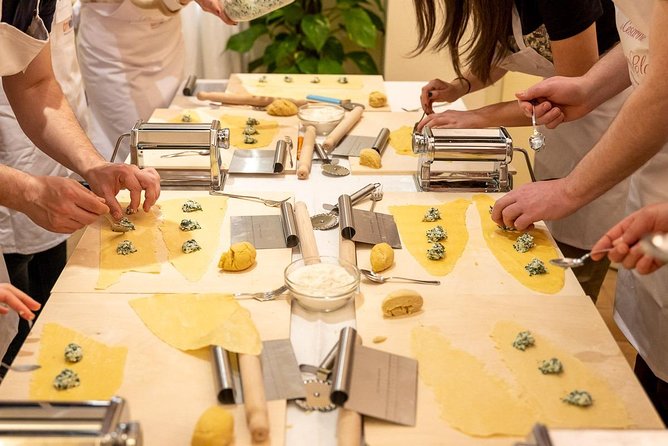
The pasta portion is the heart of the class. You prepare two types of fresh pasta, one stuffed and one cut. That gives you a useful comparison between pasta that needs a filling and pasta that depends on clean rolling and careful cutting.
Stuffed pasta teaches a different set of skills. You need to prepare the filling, place it carefully, seal the dough, and avoid trapped air or weak edges. The technique rewards patience. A small mistake can cause the pasta to open during cooking, so this is where close help from the host is useful.
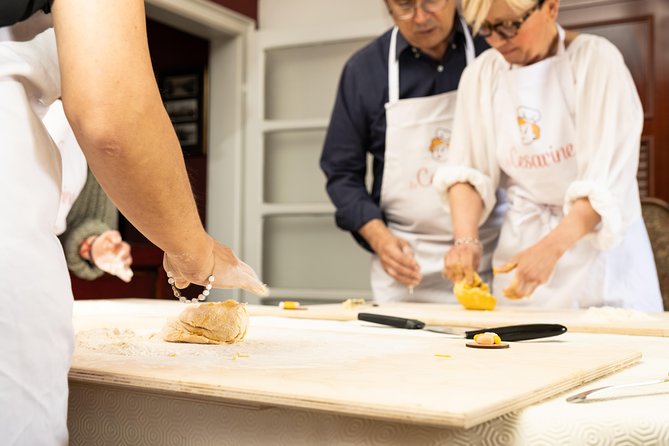
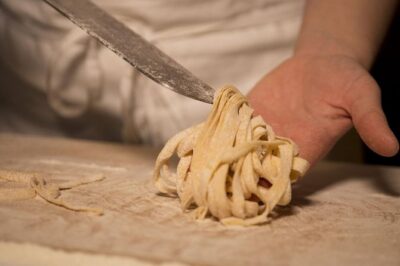
The cut pasta offers a simpler but no less practical lesson. You work toward sheets or strips that can be cut into a usable shape. The point is not just to copy a single recipe. You learn a method you can repeat at home with ordinary kitchen tools.
The phrase family cooking secrets can sound grand, but here it points to small choices that recipes often leave out. You may learn how the host judges dough texture, handles the filling, or decides when the pasta is ready. Those details are often more useful than a printed recipe because they help you adjust when your own dough behaves differently.
You should expect to do the work yourself. This is a hands-on class, not a demonstration with a tasting at the end. Wear something comfortable and practical, since flour and food preparation are part of the session.
Tiramisù adds a softer, sweeter lesson
Tiramisù balances the pasta work. Fresh pasta asks for touch and patience, while tiramisù teaches you how a few familiar ingredients come together into a finished dessert. You prepare it from scratch, then set it aside as the rest of the meal comes together.
The dessert also makes the class appealing to mixed groups. One person may be keen on pasta technique, while another is more interested in Italian sweets. Since both are covered, you are not locked into a single narrow recipe.
Dietary questions deserve attention before you book. Costanza and her husband made a point of communicating in advance when someone in a group had a dairy intolerance, checking whether the planned ingredients were suitable. That is encouraging, but you should still state your needs clearly at booking and confirm what can be changed.
The available information does not promise that every restriction can be handled. A dairy intolerance, allergy, or other special diet may require ingredient changes that affect the recipes. Ask early rather than arriving at the kitchen with an assumption.
More Small Group Pasta Classes in Italy:
- Milan: Pasta and Tiramisu Small Group Cooking Class with Wine
★ 5.0 · 660 reviews - Florence Small-Group Pasta Class with Seasonal Ingredients
★ 5.0 · 532 reviews - Bologna: Pasta and Tiramisu Small Group Cooking Class with Wine
★ 5.0 · 409 reviews - Palermo: Pasta and Tiramisu Small Group Cooking Class with Wine
★ 5.0 · 348 reviews
Eating what you prepared together
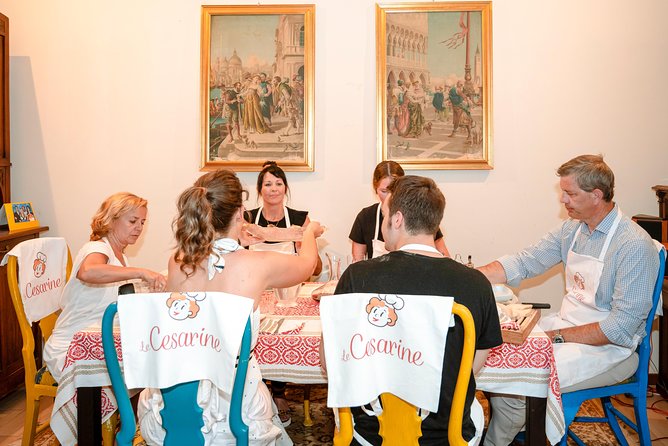
The final tasting is informal and shared. After the kitchen work, you sit down to sample the fresh pasta and tiramisù you helped make. This is where the three-hour format earns its keep. You are not simply leaving with a technique. You also get a meal and time to talk about the food.
I like this ending because it connects the lesson to everyday Italian cooking. The dishes are not treated as museum pieces. You make them, eat them, and get a sense of how they fit into a relaxed home meal.
The meal is also a useful test of your work. You can see how the pasta holds together, how the cut shape cooks, and how the dessert turns out. In a demonstration, you might admire the finished dish without understanding the steps that produced it. Here, the results are tied to your own hands.
Keep the word informal in mind. The tasting is not described as a formal restaurant meal with a set menu or elaborate service. The appeal is the host’s home and the shared cooking, not ceremony.
Is $154.76 a fair price?
At $154.76 per person, this class costs more than a casual meal in Trento. You are paying for about three hours of instruction, ingredients, an aperitivo, a meal, and access to a local home. The value is strongest if you would otherwise pay for a meal and a separate activity.
The price makes less sense if you only want to eat pasta. You can find a cheaper lunch, and you may already know how to make basic tiramisù. This class earns its cost through participation and personal attention.
The small-group setup helps. A group of six or eight would offer a better balance of social energy and kitchen access than a full group of 12. The host’s direct involvement also matters, especially when you are learning dough texture or sealing stuffed pasta.
I would see this as a special-occasion activity rather than a budget stop. It suits a couple, a family group, or friends who want one memorable food experience in Trento. If you are traveling alone, the shared format gives you a natural way to meet people, though the home setting means the experience depends partly on the mix of the group.
The fact that it is often booked 44 days ahead is a useful planning clue. You do not need to wait until the day before if the class fits your plans. Popular dates can fill early, especially when your schedule is fixed.
Getting there and planning the day
The meeting point is in Trento, in the Autonomous Province of Trento, and the activity ends back at that meeting point. It is near public transportation, which makes it easier to fit into a day without arranging a private transfer.
The exact home address and host details may be supplied after booking. Read the confirmation carefully and allow enough time to reach the starting point. Since the class takes place in a private home, showing up at the wrong address could be more awkward than missing a restaurant reservation.
A mobile ticket is provided, so you can keep the booking on your phone. Confirmation is received at the time of booking. I would save the meeting details before heading out, especially if you plan to rely on public transportation.
The class lasts about three hours. Leave room around it rather than booking another tight activity immediately afterward. Cooking, eating, and conversation do not always run like a train timetable, and the whole point is to avoid feeling rushed.
How personal is the instruction?
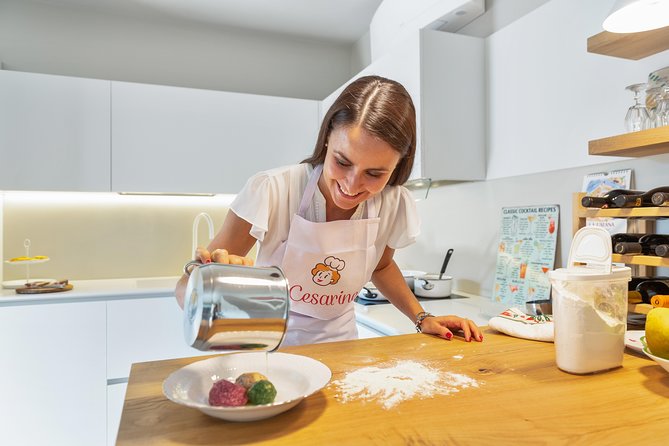
The format promises a more personal kitchen lesson than a large commercial class. The Cesarina teaches in her own home and shares the methods used in her family cooking. That can make the lesson feel more natural and flexible.
The host may adjust the pace based on the group. A class with several beginners could spend more time on dough handling. A group with kitchen experience might move faster. This flexibility is an advantage, though it also means the session may not follow a rigid, minute-by-minute program.
Costanza’s hosting is worth noting by name. Her advance communication about dairy intolerance shows attention beyond the basic recipe. Her husband also helps create the welcoming atmosphere described for the class. If you are looking for a host-led experience rather than an anonymous instructor, this is a meaningful detail.
Still, a home cook is not necessarily a trained restaurant chef. You should book this for family methods, conversation, and practical cooking, not for professional certification or advanced culinary theory.
Sanitary details and comfort
The hosts provide basic sanitary supplies in the home, including paper towels for handwashing and hand sanitizer. The guidance also asks people to keep one meter apart when possible and to wear masks and gloves when that distance cannot be maintained.
These instructions are part of the stated health guidance and may reflect the conditions in place when the activity was arranged. Bring your own comfort level and follow the host’s directions once you arrive.
Shared kitchen work naturally means touching common surfaces and working near other people. If you have health concerns, ask about current arrangements before booking. The group limit of 12 helps keep the activity from becoming a very large gathering, but it does not make the class private.
Who should book this experience?
I would recommend it most strongly to people who want a social cooking activity with a real home connection. It works well for couples, families, food-minded friends, and solo visitors who enjoy learning alongside others.
It is also a good choice for anyone who wants recipes they can repeat. The two pasta styles give you more to practice than a single shape, and the tiramisù adds a dessert you can make for future dinner parties.
You may want to skip it if you dislike group activities, cannot spend three hours standing or working in a kitchen, or only want a quick taste of local food. The class is not a sightseeing tour of Trento, and the supplied information does not promise city landmarks or a walking component.
Dietary needs are not an automatic reason to avoid the class, but they do require advance discussion. The response to a dairy intolerance was careful, yet you should confirm your own ingredients before arrival.
Should you book the Trento pasta and tiramisù class?
Book it if you value time with a local host, want to make rather than merely eat Italian food, and can justify the $154.76 cost. The combination of Prosecco, two fresh pasta styles, tiramisù, and a shared meal gives the three-hour visit a clear shape.
I would be more cautious if your main aim is low-cost dining or a polished chef demonstration. This experience works because it is personal and home-based. That is also its tradeoff: the group size, host style, and kitchen space can shape the day.
For a food-focused stay in Trento, this is a strong choice when reserved well ahead. Just confirm the meeting details, group size, and any dietary changes before you go.
FAQ
Where does the pasta and tiramisù class take place?
The class takes place in a carefully selected local home in Trento, in the Autonomous Province of Trento, Italy.
How long does the experience last?
The cooking class lasts about three hours.
What food will I prepare?
You will prepare two types of fresh pasta, one stuffed and one cut, along with tiramisù from scratch.
Is this a hands-on cooking class?
Yes. You take part in preparing the pasta and tiramisù under the guidance of a local home cook.
Does the experience include food and drinks?
It begins with Prosecco and snacks and ends with an informal tasting of the food you prepared.
How many people can join the class?
The activity has a maximum of 12 travelers.
Who hosts the class?
The class is hosted by a local Cesarina, the name used for the home cooks who welcome people into their homes. One host named in the available details is Costanza, who hosts with her husband.
Is the meeting point near public transportation?
Yes. The meeting point in Trento is near public transportation, and the activity ends back at the meeting point.
Can I cancel for a full refund?
Yes. You can cancel at least 24 hours before the local start time for a full refund. Cancellations or changes made less than 24 hours before the start time are not refunded, and the activity may also be canceled if its minimum number of participants is not reached.
Fresh off the board around Italy
- Vicenza: Pasta & Tiramisu Cooking Class at a Local’s Home★ 5.0 · 5 reviews
- Verona: Pasta & Tiramisu Cooking Class at a Local’s Home★ 5.0 · 16 reviews
- Volterra: Fresh Pasta Cooking Class at a Tuscan Farmhouse★ 5.0 · 33 reviews
- Verona: Tortellini Cooking Class and Lunch with Mamma Ivana★ 5.0 · 20 reviews
- Verona: My Granny’s secrets making gnocchi★ 5.0 · 7 reviews
- Verona: Prosecco and Pasta Making Class at a Local’s Home★ 5.0 · 10 reviews
- Verona: Pasta Cooking Class with Wine Tasting★ 5.0 · 4 reviews
- Venice: Pasta Carbonara Cooking Class with Wine★ 5.0 · 3 reviews
Tiramisu Classes, class by class.
3 in 1 Cooking Class near Navona: Fettuccine, Ravioli & Tiramisu
Read our review →
Pasta & Tiramisu Cooking Class with Unlimited Wine
Read our review →
Pasta & Tiramisu Class with Fine Wine by the Vatican
Read our review →
3-in-1 Fettuccine, Ravioli, and Tiramisu Cooking Class
Read our review →
Learn to Make Pasta & Tiramisu with Wine and Limoncello Included
Read our review →
Become a Masterchef in Rome: Pasta, Ravioli and Tiramisù Class
Read our review →
Fettuccine & Tiramisù: Cooking Class with Wine & Limoncello
Read our review →
Pasta & Tiramisu Cooking Class near the Spanish Steps
Read our review →Lists this class appears in