
Review · NAPLES
Cooking Lesson: Neapolitan pasta homemade
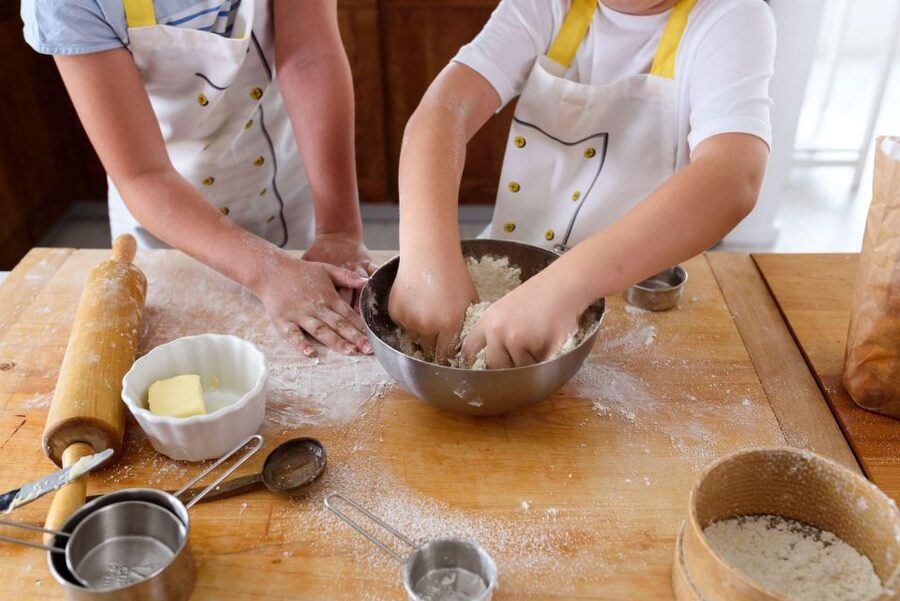
Fresh pasta is not hard to understand once your hands get involved. At the Naples Cooking Lab on Spaccanapoli, you learn to mix, knead, roll, and cut egg pasta using a rolling pin, then turn it into ravioli and fettuccine. The lesson follows an old family recipe, with time set aside for local tomato, bread, and other simple ingredients.
I like the no-machine method, because it shows you how pasta was made before a countertop appliance took over the job. I also like that your meal includes two finished dishes, tagliatelle with Neapolitan sauce and ravioli with ragu, rather than leaving you with a plate of uncooked dough. The main consideration is gluten: this is not suitable for anyone with gluten intolerance.
What makes this two-hour class worth your time
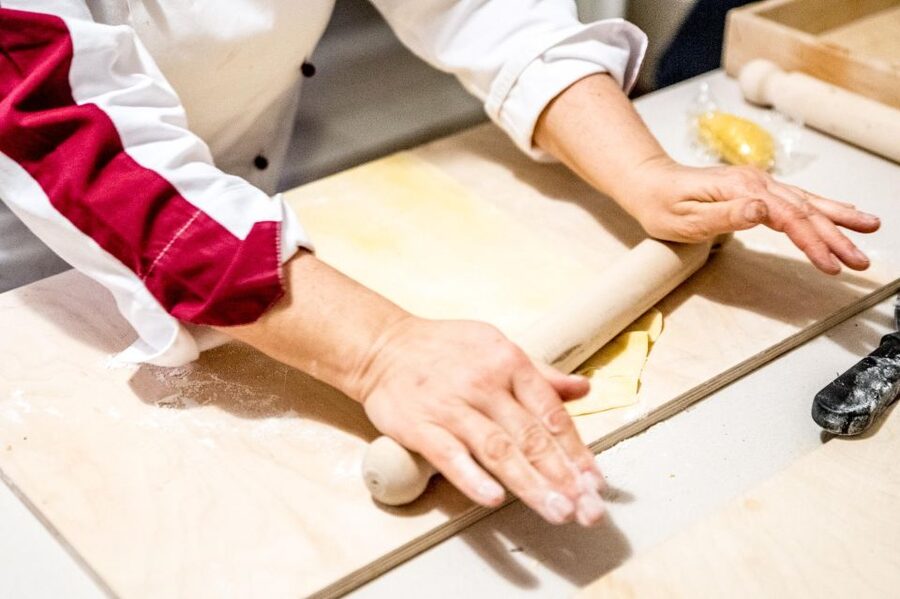
- Hand-rolled pasta: You work with a rolling pin and traditional methods rather than a pasta machine.
- Several pasta shapes: The class covers ravioli and fettuccine, with demonstrations of tagliolini and pappardelle.
- A taste of Campania: Vesuvio tomatoes, homemade bread, and organic local products help explain why simple Neapolitan cooking depends so heavily on good ingredients.
- A proper meal afterward: You eat fresh pasta with Neapolitan sauce and ragu, plus one alcoholic or non-alcoholic drink.
- Chef Amos leads the lesson: He explains each step and has been praised for being patient and ready to answer questions.
- Easy central location: The usual meeting point is on Spaccanapoli in Naples’ historic center, with an occasional change to Pizzeria Mammina in Galleria Umberto I.
Starting on Spaccanapoli with the right expectations
The usual meeting point is the Naples Cooking Lab on Spaccanapoli, right in the historic center. That matters because you can pair the class with a day of walking through central Naples, though the exact room may change. Sometimes the lesson takes place at Pizzeria Mammina in Galleria Umberto I, and you should check the notice you receive before setting out.
The class lasts two hours. That is enough time for the main steps and a meal, but it is not a long culinary workshop with repeated practice sessions. You will be part of a working group, so the pace depends partly on how many people are taking the lesson and how quickly the dough comes together.
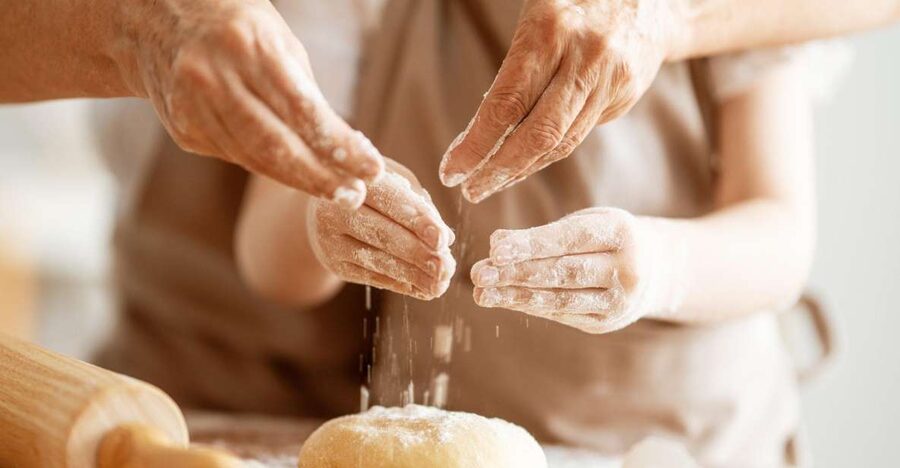
The supplied kitchen tools and apron are included. You do not need to arrive with cooking equipment, and the chef diploma at the end gives you a small souvenir of the session. It is a light touch, but a pleasant one for a first cooking class or a group celebration.
The class is offered in English, Italian, French, and Spanish. That gives you a useful choice when booking, especially for a group with mixed language needs. The cooking is hands-on, but clear explanations still matter when you are learning dough texture and pasta cutting.
More pasta classes around Naples:
- Naples: Pasta Making Class with Starter and Drink
★ 4.9 · 1,060 reviews - Naples Pasta Class: Fettuccine & Ravioli with Grandma’s Recipe
★ 5.0 · 506 reviews - Naples: Pasta Cooking Class with Tiramisù and a Drink
★ 4.6 · 415 reviews
Learning why pasta shapes are different
The first part covers the differences among pasta types. This may sound basic, but it gives the rest of the lesson a clear purpose. Fettuccine, tagliolini, pappardelle, and ravioli are not simply decorative variations. Their width, thickness, and shape affect how they hold sauce and filling.
You then begin making egg pasta according to the chef’s family recipe. The ingredients of the dough are explained before the mixing and kneading begin. The recipe is described as an 1800s dough, which gives the lesson a link to older home cooking rather than modern restaurant production.
This is where you should pay attention to feel instead of just measurements. The goal is not only to copy a recipe card. You are learning what the dough looks and feels like as it comes together, how it responds to kneading, and why it needs to rest before rolling.
The dough rests while you taste a local starter. This includes organic products, tomato from Vesuvius, and homemade bread. It is a useful pause rather than dead time, since the food gives you a direct example of the ingredient quality the chef wants you to notice.
The Vesuvian tomato is especially fitting in a Neapolitan cooking lesson. The class does not treat sauce as an afterthought. It shows you how a basic regional dish depends on tomatoes, bread, and other ingredients that are handled simply and chosen carefully.
Rolling the dough without a pasta machine
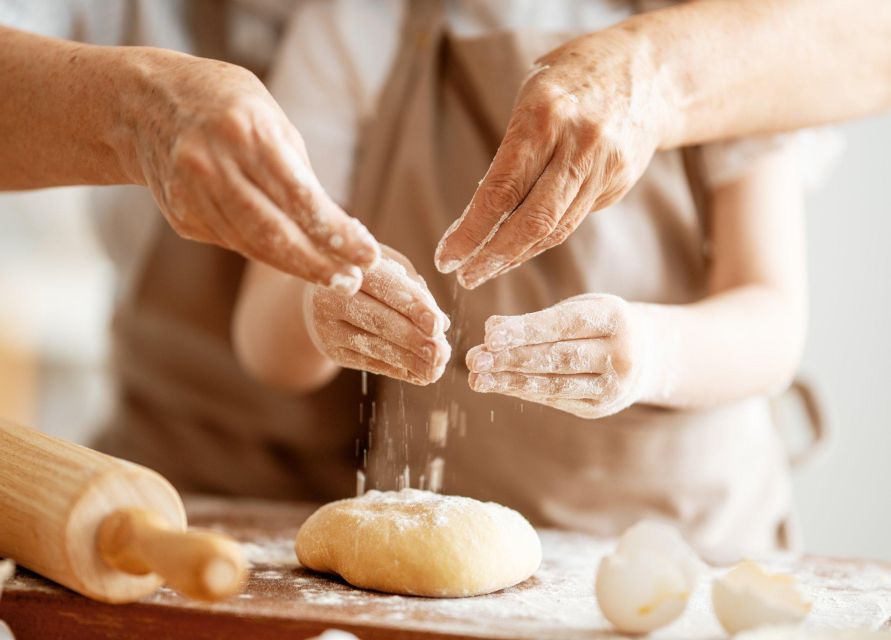
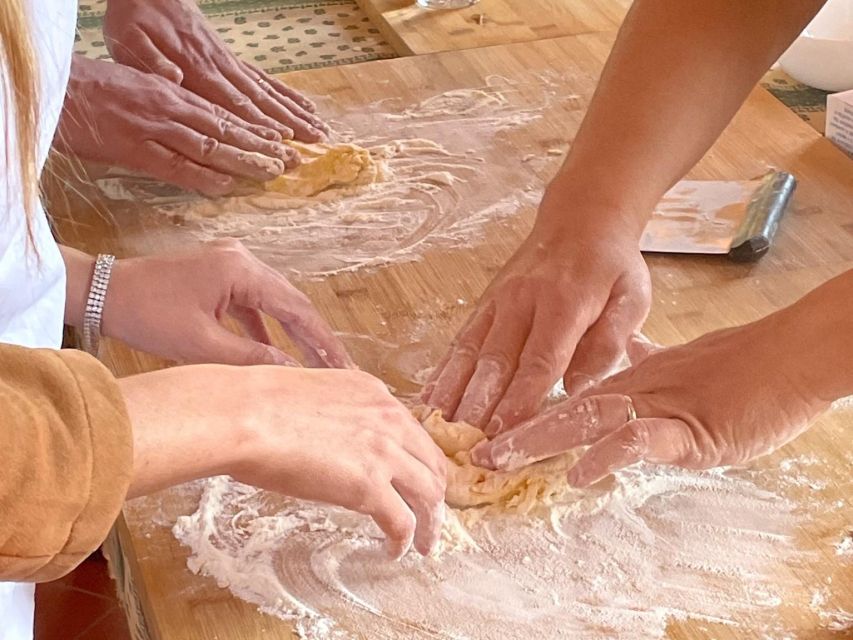
The most distinctive part of this class is the rolling. You use a rolling pin, not machinery, and follow methods associated with the instructor’s grandmother’s generation. For many home cooks, this is the part that makes the lesson useful after you return home.
A pasta machine can produce even sheets quickly, but it can also hide what is happening to the dough. With a rolling pin, you see the sheet change under pressure. You also get a better sense of how thin the pasta needs to be before cutting or filling.
This traditional approach has a tradeoff. It is more physical and may not create identical sheets as quickly as a machine. If you are hoping for a highly polished professional technique, this is not that kind of class. If you want to understand an old-fashioned home method, the slower process is the point.
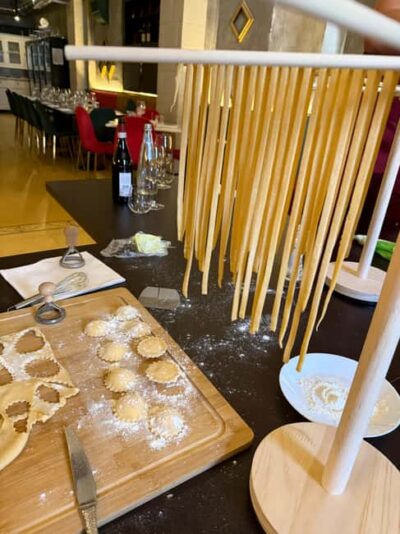
You will cut the rolled dough into fettuccine and prepare ravioli. The chef also shows you how tagliolini and pappardelle are made. That is a good amount of variety for a two-hour class, though your main finished dishes are fettuccine or tagliatelle and ravioli.
The distinction between learning and watching is important here. You are expected to knead, roll, and cut the pasta yourself. The class is not simply a chef demonstration followed by dinner. Your group creates the food that later reaches the table.
Filling ravioli and preparing two sauces
Once the pasta sheets are ready, you mix the ingredients for the ravioli filling. The information provided does not specify the exact filling, so you should think of this as a guided preparation rather than a chance to select from a menu of fillings.
The ravioli are then assembled with the filling inside. This step rewards care. Too much filling can make the pasta difficult to seal, while an uneven sheet can affect the final shape. The chef guides you through the process, making it suitable for beginners who have never formed filled pasta before.
The pasta is cooked in water for a few minutes. It then receives two different sauces. Your meal includes tagliatelle with Neapolitan sauce and ravioli al ragu, giving you two ways to taste the pasta you made.
That pairing is one of the strongest features of the class. You can compare a simple tomato-based Neapolitan preparation with a meat-based ragu. The shapes also give the meal different textures, since cut pasta and filled pasta do not eat in quite the same way.
One detail worth noting is that the included beverage is limited to one alcoholic or non-alcoholic drink. Additional drinks cost extra. The package does include the local starter and the pasta meal, so you are not paying separately for the main food served during the lesson.
Same flour, a different shape to roll:
- Napolitan Secrets: Pasta & Tiramisù Class for Food Lovers
★ 4.9 · 189 reviews - Amazing Pizza and Pasta Class at Savio’s kitchen cooking school
★ 5.0 · 104 reviews - Learn To Make Fresh Pasta With Love in Naples
★ 5.0 · 77 reviews - Hands-On Pasta Making and Traditional Tiramisu Workshop
★ 4.5 · 71 reviews
What the food tells you about Naples
This experience works best when you treat it as a lesson in Neapolitan habits, not just a chance to make Italian pasta. The instructor connects the dough to a family recipe, the break to Vesuvian tomatoes and homemade bread, and the final meal to familiar local sauces.
Naples is often associated with pizza, but pasta has an equally important place in the city’s food culture. Here, the lesson keeps the focus on food made by hand and served without unnecessary fuss. The ingredients matter because the recipes are straightforward. When a dish has only a few central elements, each one carries more weight.
The starter also breaks up the work in a sensible way. You get something to eat while the dough rests, and you can taste the products before using the skills you have just learned. For someone interested in cooking at home, that connection between ingredient quality and finished food is more useful than a long lecture.
The meal is served in the company of your work group. That makes the class a social activity as well as a cooking lesson. It may suit a small celebration, a couple looking for a food-focused outing, or a group that wants a shared activity in central Naples.
A verified booking for a bachelorette gathering described the session as fun and praised Chef Amos for being kind and ready to explain each part of the activity. That is useful context if you are planning a group occasion. The class has enough structure for beginners, but it still gives everyone a task.
Price, timing, and overall value
At $92 per person, this is not a bargain meal, but the price covers more than a plate of pasta. You receive the two-hour lesson, kitchen tools, an apron, the chef’s instruction, a local appetizer, the pasta meal, one drink, and a chef diploma.
The value depends on how much you want to participate. If you only want to eat fresh pasta, you can find cheaper meals in Naples. If you want a central cooking activity that includes food, instruction, and a practical skill you can repeat at home, the price is easier to justify.
The two-hour length also helps with planning. You can fit the lesson between visits to other sights in the historic center without giving up an entire day. At the same time, the schedule is compact, so you should not expect long free periods for photographing every step or practicing each pasta shape several times.
The activity offers free cancellation up to 24 hours before the start for a full refund. You can also reserve now and pay later, which is useful if your Naples plans are still changing. A separate entrance is available for the activity, described as a skip-the-line arrangement.
The class is wheelchair accessible. Gluten intolerance is the clear restriction, and the pasta lesson is not suitable if you need to avoid gluten. The supplied information does not list other dietary adaptations, so anyone with additional food requirements should confirm them before booking.
Who should book this pasta lesson
I would point this class toward first-time pasta makers, food-focused visitors, and anyone who wants a hands-on activity in central Naples. You do not need to know how to make dough in advance. The instructor explains the ingredients and leads you through the process.
It also works well for a group celebration. The bachelorette gathering mentioned above used the class as a shared activity, and the final meal gives the group a natural reason to sit together afterward. The chef diploma adds a modest keepsake without making the event feel formal.
This may be less suitable for someone who prefers a quiet, private lesson. The meal is taken with the work group, and the setting can change between the Naples Cooking Lab and Pizzeria Mammina. You should also avoid booking it if your main goal is to learn gluten-free pasta.
The class is a good choice for people who value old techniques. Rolling pasta by hand takes more effort than using a machine, and that is exactly why the method has appeal. You leave with a better idea of how traditional pasta was made, rather than only watching a professional do the work.
Should you book the Neapolitan pasta class?
Book it if you want to make fresh pasta with your own hands, eat the results, and learn a traditional method that you can try again at home. The strongest parts are the hand-rolled dough, the range of pasta shapes, the Vesuvian tomato tasting, and the two finished sauces.
Skip it if you want a long, advanced cooking course, a private kitchen, or a gluten-free menu. For most beginners, though, $92 is fair for a two-hour lesson that includes food, a drink, equipment, and instruction from Chef Amos in the heart of Naples.
FAQ
Where does the cooking lesson meet?
The usual meeting point is the Naples Cooking Lab on Spaccanapoli, in the heart of Naples’ historic center. Sometimes the lesson is held at Pizzeria Mammina in Galleria Umberto I, and you will be informed in advance if the location changes.
How long does the pasta class last?
The class lasts two hours. This includes the pasta lesson, the local starter served while the dough rests, and the final meal.
What pasta will I learn to make?
You will make ravioli and fettuccine. The chef also shows you how to prepare tagliolini and pappardelle.
Is a pasta machine used?
No. The dough is rolled with a rolling pin using traditional methods rather than a pasta machine.
What food and drink are included?
The experience includes a local appetizer, homemade fresh pasta, and one alcoholic or non-alcoholic drink. The meal includes tagliatelle with Neapolitan sauce and ravioli with ragu. Additional drinks are not included.
Is the class available in English?
Yes. Instruction is available in English, Italian, French, and Spanish.
Can someone with gluten intolerance take the class?
No. The activity is not suitable for people with gluten intolerance.
Fresh off the board around Naples
- Naples Hands-on Cooking Class: Gnocchi, Ravioli, Tiramisu & Wine★ 4.5 · 18 reviews
- Pasta Fresca Gnocchi and Ravioli a Napoli★ 5.0 · 2 reviews
- Private Pasta & Tiramisu Class at a Cesarina’s home with tasting in Ercolano★ 5.0 · 2 reviews
- Discovering Gragnano PGI pasta and the Valle dei Mulini★ 5.0 · 3 reviews
- Private Fettuccine Alfredo and Ravioli Class Grandma recipe★ 4.0 · 2 reviews
- Homemade Pasta And Seafood Cooking Class with Dinner★ 5.0 · 5 reviews
- Private Italian Pasta Masterpieces Class: Ravioli, Tortellini and Fettuccine★ 5.0 · 8 reviews
- Neapolitan pasta homemade Cooking Lesson★ 4.5 · 4 reviews
Naples Pasta Classes, class by class.
Naples Pasta Class: Fettuccine & Ravioli with Grandma’s Recipe
Read our review →
Napolitan Secrets: Pasta & Tiramisù Class for Food Lovers
Read our review →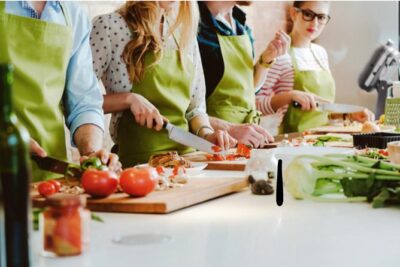
Amazing Pizza and Pasta Class at Savio’s kitchen cooking school
Read our review →
Hands-On Pasta Making and Traditional Tiramisu Workshop
Read our review →
Fresh Pasta Cooking Class and Dinner with a Local
Read our review →Lists this class appears in