
Review · ITALY
Pompeii: guided tour of the ruins and cooking class fresh pasta
Pompeii’s ruins make a powerful morning, but this experience gives the ancient city a satisfying second act: a private archaeological tour followed by lunch and pasta making in the Pompeian countryside. You’ll walk past theaters, bathhouses, shops, temples, and painted houses, then trade stone streets for olive and citrus trees with views toward Vesuvius and the Lattari Mountains.
I like the way the day joins serious history with ordinary food. I also like the personal scale. Guides such as Clelia, Carla, Lucy, and Lello have led the ruins portion, while Sabrina and her family host the cooking class. The main caution is timing: Pompeii admission costs an extra €20, and you may not have much time to explore alone after the guided walk unless you arrange it in advance.
Key points to know
- Two very different Pompeii experiences: ancient streets and temples in the morning, then a garden meal and cooking lesson.
- Archaeologist-led sightseeing: the two-hour route covers the theaters, Forum, major temples, thermal baths, brothel, houses, shops, and workshops.
- Hands-on regional cooking: you may prepare ravioli, gnocchi, or another Campania dish using ingredients from the family garden.
- Small private setting: the maximum group size is 10, which allows more help at the table than a large class.
- Views and local drinks: lunch takes place among olive and citrus trees, with Vesuvius in view and one glass of Gragnano DOC wine included.
- Plan your Pompeii time carefully: the entry ticket is not included, and the ticket allows only one entry.
Ancient Pompeii before lunch
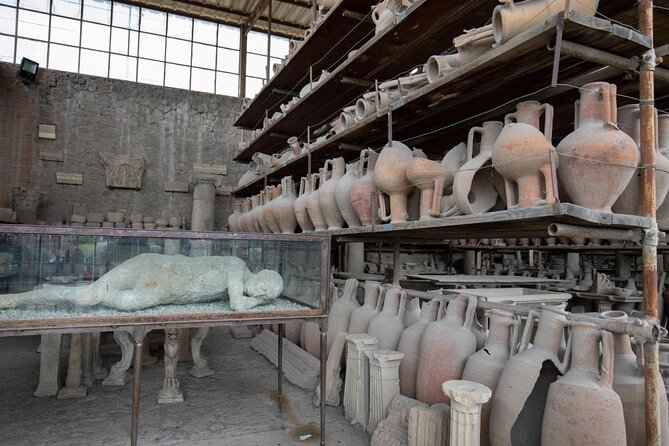
The day begins at Scavi di Pompei on Viale delle Ginestre. From there, a guide or archaeologist leads you through the Archaeological Park for about two hours. This is the right setting for a guide because Pompeii can otherwise feel like a giant field of broken walls, with the important details easy to miss.
Your route takes in the major public buildings and several of the city’s most recognizable streets. You’ll see the theaters, the Forum, the Basilica, and the temples of Apollo and Jupiter. You’ll also walk along Via dell’Abbondanza, Pompeii’s main commercial road, where shops and workshops help you picture the city as a working town rather than only a disaster site.
The thermal baths are another useful stop. Their rooms and decoration show how much daily life depended on public bathing, while the houses with frescoes give you a closer look at private life. The brothel, often called the house of pleasure, is also included.
A guide adds the context that signs and maps cannot provide. Lello, for example, has led the ruins portion with a strong grasp of the site, while Clelia, Carla, and Lucy have also guided the walk in English. The exact guide can vary, but the format remains focused on the places that matter most.
Two hours is enough for a solid introduction, not a complete study of Pompeii. The site is large, and you could spend most of a day here if you wanted to inspect every house and street. If the ruins are your main reason for coming, ask about the schedule before booking and request an earlier start if you want extra time inside the park.
More Fresh Pasta Workshops in Italy:
- Rome: Pasta Making Class with Wine, Limoncello, and Dessert
★ 4.9 · 3,177 reviews - Pastamania – Florence Pasta Making Class
★ 5.0 · 3,050 reviews - Enjoy Spritz and Pasta Making in Piazza Navona
★ 5.0 · 1,681 reviews
Why the guide matters at the Forum and Via dell’Abbondanza
Pompeii rewards close attention. A bakery, shop, painted wall, or worn paving stone may look minor until someone explains its purpose. The value of the guide is not just historical dates. It is the connection between the buildings and the people who used them.
The Forum gives you the city’s civic and religious center, with the surrounding temples and public buildings. Via dell’Abbondanza gives you the daily side of Pompeii, with commercial spaces and workshops lining the road. The theaters show how residents spent leisure time, while the baths and houses fill out the picture of home life and social habits.
The route also gives you a useful range of Pompeii’s remains. You are not spending two hours on one type of building. Instead, you move between public monuments, private rooms, business spaces, and places tied to entertainment. That variety makes the walk easier to follow, especially if this is your first visit.
Expect to walk on uneven ancient surfaces and to spend much of the two hours outdoors. The tour is described as suitable for most people, but a foot injury or limited mobility can slow the pace. One past group took a little longer because of a foot problem, so the guide can adjust, though a slower walk may affect the time available later.
From ruins to the Giardini Balestrieri
After Pompeii, private transportation takes you to the family garden in the Pompeian countryside. The contrast is part of the appeal. You move from streets frozen in antiquity to a living place where food is grown, prepared, and eaten.
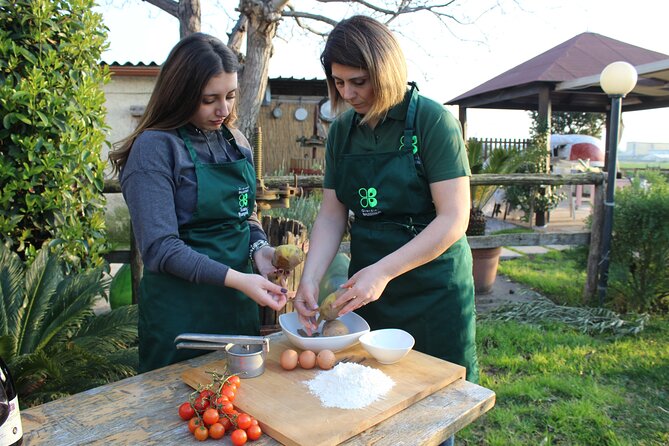
The garden contains olive and citrus trees, with views toward Mount Vesuvius and the Lattari Mountains. You may help pick ingredients before cooking, which gives the meal a direct connection to the ground around you. This is more personal than arriving at a restaurant and ordering a plate with no idea where the ingredients came from.
The setting also gives the second half of the day a slower rhythm. After two hours of walking through the ruins, you can sit down, talk with the hosts, and enjoy a drink before getting to work. The listed inclusions cover still and sparkling water, lunch or dinner, dessert, and one glass of Gragnano DOC wine.
Gragnano wine is a local specialty from the area near Naples, and it makes sense here with a Campania meal. The portion included is one glass, so do not assume the price covers unlimited drinks. Past cooking sessions have also included homemade limoncello or Prosecco for a special occasion, but those extras should not be treated as guaranteed parts of every booking.
Making ravioli, gnocchi, and dessert
The cooking class lasts about three hours. Sabrina is the central host named in the experience, with help from Rosalba and other members of her family on some occasions. The class is designed for participation, not just watching a demonstration.
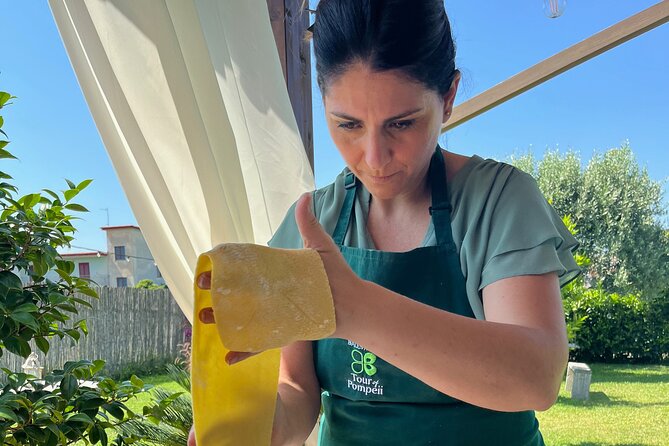
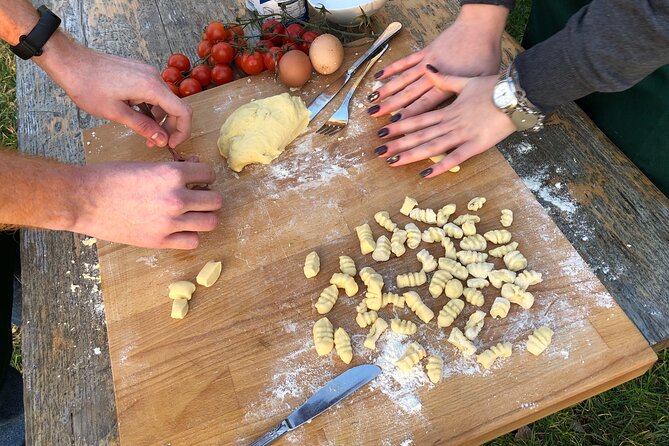
You may prepare a traditional dish from scratch, using produce gathered in the garden. Past menus have included ravioli with ricotta and spinach filling, finished with butter and sage, as well as potato gnocchi with fresh tomato sauce. The exact recipe can vary, but the focus is on a typical regional dish and simple methods you can use at home.
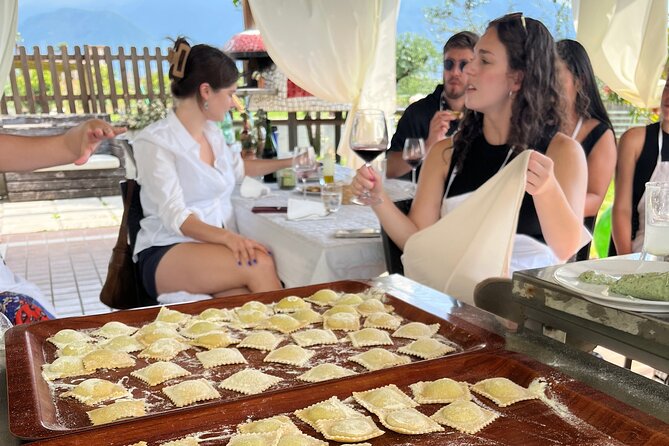
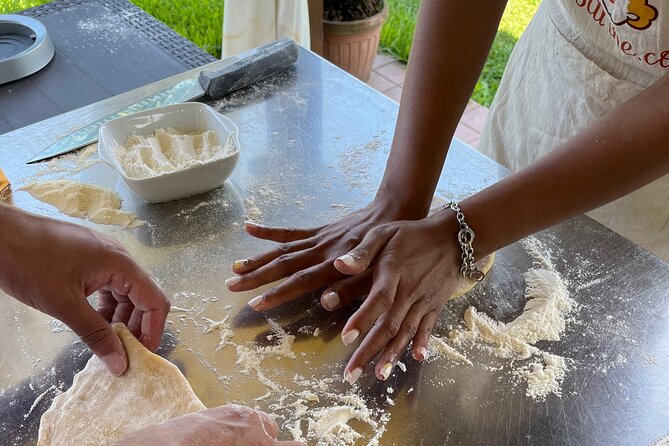
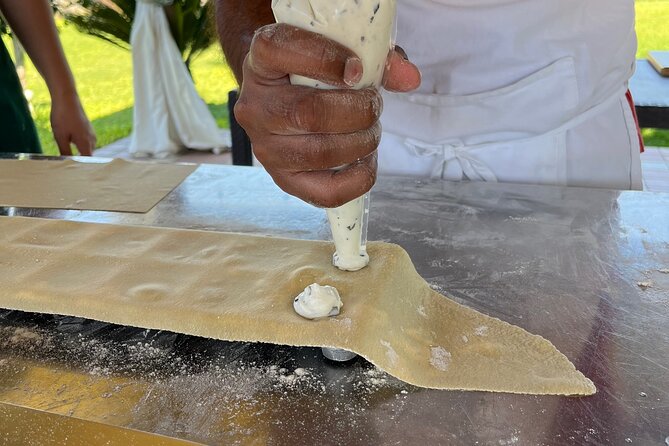
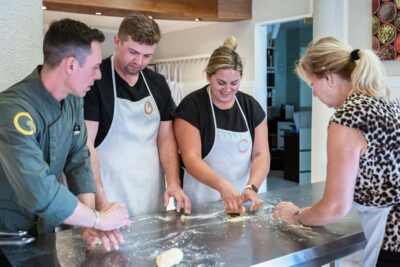
The ravioli session is especially hands-on. You receive the tools, work with the filling, shape your own pieces, and then eat what you made. Gnocchi offers a different kind of lesson, with attention to the dough and the shaping process. Either way, the meal is not just a tasting. You take part in preparing it.
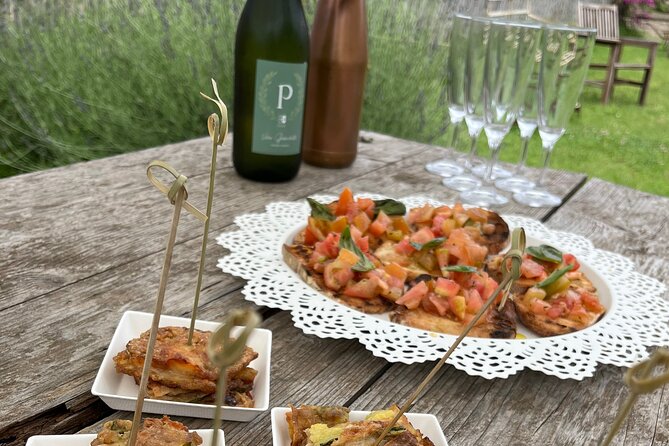
The meal may begin with bruschetta topped with fresh vegetables from the garden. Dessert has included lemon cake made together, and another family meal featured tiramisu. The supplied menu lists dessert, but it does not promise one specific sweet, so expect the recipe to depend on the day.
This is a good class for mixed-interest groups. One person can enjoy the food and scenery while another focuses on the history. Children and adults can work at the table together, although the information only confirms that most people can participate, not a specific minimum age.
More Guided Tours in Italy:
- From Taormina: Private/Guided Godfather with appetizer and Pasta
★ 5.0 · 233 reviews - Olbia: Traditional Pasta-Making Guided Workshop
★ 4.5 · 73 reviews - People of Bari unusual guided tour with pasta making at Grandma house
★ 5.0 · 54 reviews - Olbia: Sardinian Pasta-Making Guided Workshop
★ 5.0 · 51 reviews
The value of a $300.40 private experience
At $300.40 per person, this is not a budget way to see Pompeii. You also pay the archaeological park admission separately, listed at €20 per person. That extra cost matters when you compare the total price with a standard guided walk.
The value comes from combining several services in one day: a private or small-group ruins tour, transportation between the sites, a garden visit, a cooking class, lunch, dessert, water, and one glass of local wine. The group maximum is 10, which keeps the class more personal than a lesson with 20 or more people.
The private format is most useful if your group has different interests. You can ask questions during the ruins visit, get direct help with shaping pasta, and speak with a local family rather than moving through a large scheduled crowd. The cooking class also turns a sightseeing day into a social meal, which many people find more memorable than another restaurant stop.
Still, the price is harder to justify if you want only a detailed archaeological visit. In that case, you may prefer to spend the full day inside Pompeii and arrange food separately. You are paying for the complete combination here, not simply for entry and a guide.
A useful comparison is time. The full experience runs about five to six hours, with roughly two hours at the ruins and three hours in the garden. If you are arriving from a cruise ship or working around a tight transport schedule, the private transfer and flexible hosts can make the higher price more practical. One cruise group had port times changed at short notice and received help adjusting the plan, but you should still provide your exact schedule before the day begins.
Timing matters more than it first appears
The tour ends back at the meeting point, and the start point is the Scavi di Pompei area. Private transportation is included, which simplifies the transfer to the garden, but the day is still built around a fixed sequence.
The most important planning issue is your time inside the ruins. Pompeii tickets are valid for one entry, so you cannot leave for lunch and then return later on the same ticket. If you want to explore independently, ask for that time before the cooking class begins.
You might request an earlier archaeological visit, then use an hour or two to see additional streets before meeting the host. This depends on the day’s schedule, and the cooking portion cannot be pushed back without affecting the meal. Clear communication at booking is the best way to avoid disappointment.
The experience is offered in English. Confirmation is provided at booking, and the group can include no more than 10 people. Service animals are allowed, public transportation is nearby, and the activity is described as suitable for most people.
The cancellation terms are practical but firm near departure. You receive a full refund if you cancel at least 24 hours before the local start time. Changes or cancellations inside that window are not accepted for a refund. The activity also requires a minimum number of participants, and if that minimum is not met, you are offered another date or experience, or a full refund.
Who will enjoy this Pompeii day most
I would choose this for a couple, family, or small group that wants more than a standard ruin tour. It works particularly well if you want a local meal, enjoy learning by doing, and like the idea of meeting a family connected to the place.
It also suits a group with mixed priorities. The history-focused person gets the Forum, temples, houses, and baths. The food-focused person gets a real cooking lesson, garden ingredients, lunch, and dessert. The garden setting gives everyone a break between walking and sightseeing.
The experience may be less suitable if you want to cover every corner of Pompeii. Two hours goes quickly, and the guided route concentrates on highlights. It may also feel expensive for solo visitors or anyone who is not interested in cooking.
English is the listed language, so you should book with that in mind. The hosts have welcomed international groups, and Pasquale has spoken fluent English during some family-hosted meals, but the experience does not promise a particular host or guide.
Should you book it?
Book this experience if you want Pompeii to include both its ancient remains and its living food culture. The strongest part is the pairing: a focused walk with a guide such as Lello, Clelia, Carla, or Lucy, followed by Sabrina’s garden, family recipes, local wine, and a meal you help prepare.
Skip it if your priority is maximum archaeological time or the lowest possible cost. If you do book, ask for an early start and discuss extra time inside Pompeii before the cooking class. With that one planning step, the day offers a pleasant balance of temples, frescoes, pasta, citrus trees, and a clear view toward Vesuvius.
FAQ
How long does the Pompeii and cooking experience last?
The experience lasts approximately five to six hours. The Pompeii visit takes about two hours, and the cooking and garden portion takes about three hours.
Is the Pompeii entrance ticket included?
No. Admission to the Pompeii ruins is not included. The listed price is €20 per person.
What language is the experience offered in?
The experience is offered in English.
What places are visited inside Pompeii?
The route includes the theaters, major houses with frescoes and decorations, Via dell’Abbondanza, shops and workshops, the thermal baths, the brothel, the Forum, the temples of Apollo and Jupiter, and the Basilica.
What food and drinks are included?
Lunch or dinner, dessert, still and sparkling water, and one glass of Gragnano DOC wine are included. The recipe may feature dishes such as ravioli or gnocchi, but the exact menu is not fixed in the provided details.
How many people can join the activity?
The maximum group size is 10 people.
What is the cancellation policy?
You can cancel at least 24 hours before the local start time for a full refund. Cancellations or changes made less than 24 hours before the start are not refunded or accepted.
Fresh off the board around Italy
- Vicenza: Pasta & Tiramisu Cooking Class at a Local’s Home★ 5.0 · 5 reviews
- Verona: Pasta & Tiramisu Cooking Class at a Local’s Home★ 5.0 · 16 reviews
- Volterra: Fresh Pasta Cooking Class at a Tuscan Farmhouse★ 5.0 · 33 reviews
- Verona: Tortellini Cooking Class and Lunch with Mamma Ivana★ 5.0 · 20 reviews
- Verona: My Granny’s secrets making gnocchi★ 5.0 · 7 reviews
- Verona: Prosecco and Pasta Making Class at a Local’s Home★ 5.0 · 10 reviews
- Venice: Pasta Carbonara Cooking Class with Wine★ 5.0 · 3 reviews
- Venice: Share Your Pasta Love in a Local’s Home★ 4.8 · 20 reviews
Fresh Pasta Workshops, class by class.
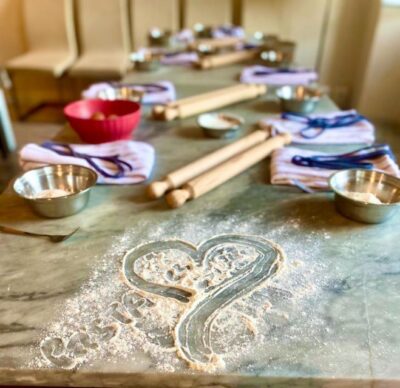
Pasta Making Class with Wine, Limoncello, and Dessert
Read our review →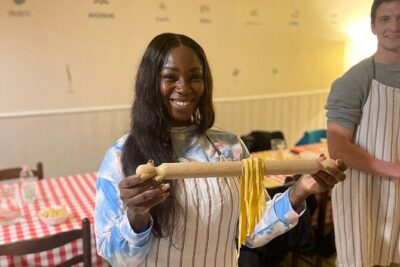

Enjoy Spritz and Pasta Making in Piazza Navona
Read our review →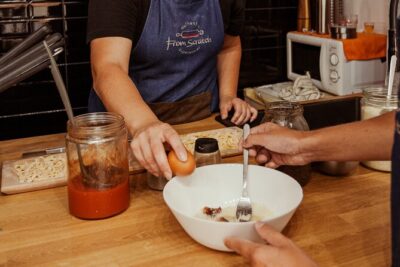
Pasta Making & Wine Tasting with Dinner in Frascati from Rome
Read our review →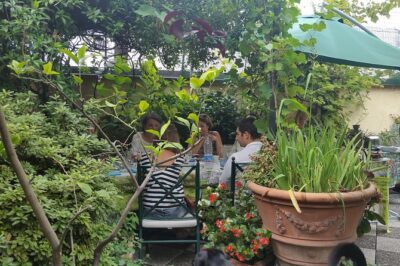
The Secrets to Learn Fresh Pasta and Tiramisù in a Glam Home
Read our review →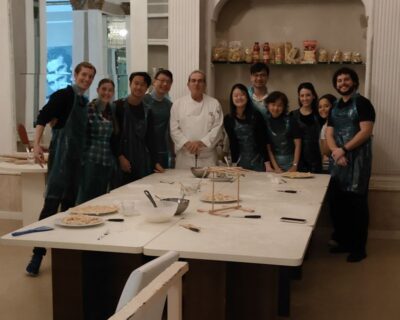

Handmade Pasta & Dessert Class with Unlimited Wine
Read our review →Lists this class appears in